
Livraison le jour même ou le lendemain

Qualité garantie

Débloquez vos offres de bienvenue: Livraison GRATUITE | Jusqu'à -80 % | 30 jours d'essai gratuits à JoyPlus
Téléchargez l'application
Between dinner leftovers, packed lunches, pasta, flour and spices, food storage containers quickly take up a lot of space in the kitchen. Yet choosing a set based solely on the number of pieces or a simple promise of being leak-proof can lead to a few unpleasant surprises.
Here are the criteria to consider when choosing a set of airtight containers, to better organise your cupboards and avoid models that don't suit your daily routine.
A lid that simply snaps on does not guarantee it won't leak. To transport soup, sauce or a meal in the car, look for a closure that is clearly described as leak-proof, with a seal or clip system. Also check that the lid remains compatible with the container after several washes and that it's easy to handle.
For dry foods, an airtight seal mainly helps to limit air exchange and prevent spills. It obviously doesn't replace the usual storage rules, especially for products sensitive to moisture.
Borosilicate glass is often valued for its resistance to temperature changes. However, this doesn't mean that all containers can go in the oven, freezer or microwave. These uses must be explicitly stated by the manufacturer.
Similarly, the mention BPA-free containers tells you about the stated composition of a specific product, but not about its impact resistance, the lifespan of the seal, or its heat compatibility.
A set of 20 or 30 pieces might seem appealing, but it quickly becomes bulky if the sizes don't stack well or if the lids get mixed up. Before choosing stackable storage containers, measure the available space in your cupboards and identify the volumes you actually use.
In a small flat, a few versatile sizes will often be simpler to manage than an XXL assortment.
Look for a precise description of the material: glass, plastic, bamboo or a combination of several components. For products intended for food contact, check the compliance information on the product page as well as any usage pictograms.
Glass allows you to easily see the contents and generally retains fewer odours. Plastic, on the other hand, is often more practical for packed lunches thanks to its lighter weight. However, the lids deserve as much attention as the containers: their material, closure system and cleaning instructions are crucial.
For individual portions, sizes from 250 to 600 ml are well suited for a snack, a side dish or an accompaniment. Containers from 800 ml to 1 litre are better suited for prepared meals and everyday leftovers. Large formats are mainly used for pantry storage or keeping family-sized batches.
Rectangular shapes generally make better use of fridge space. Tall containers are practical for pasta, rice or flour, provided the bottom remains easily accessible.
Read the instructions before putting a container in the dishwasher, microwave or freezer. A bamboo lid, for example, may require hand washing and thorough drying. To maintain an effective seal, carefully dry the seals and grooves before closing the container.
Do not pour piping hot food into a container whose thermal compatibility is not clearly stated. Also avoid immediately sealing a preparation that is still steaming: condensation can alter its texture and encourage moisture inside.
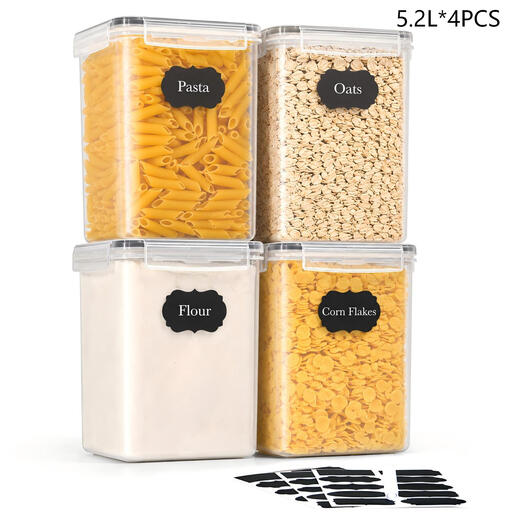
Why this choice suits this profile: This set is a good first step for organising a cupboard, with containers described as airtight and labels to identify dry ingredients.
The limited set reduces the risk of accumulating unused boxes, while the labels prevent confusion over stored items.
Four pieces, lids described as airtight and identification accessories for pasta, rice, sugar or flour.

Why this choice suits this profile: The five 1,040 ml containers and five 370 ml ones cover both prepared meals and smaller portions. The product page states the containers are made of borosilicate glass.
The two volumes prevent using a large container for a small amount, while the clip system is described as airtight.
Stated borosilicate glass and a 10-piece distribution suited to meal prep as well as lunch at the office.

Why this choice suits this profile: Eight different volumes, from 150 ml to 1,040 ml, allow you to match the container to portions, ingredients and leftovers of varying sizes.
The graduated assortment limits the use of oversized boxes and the rectangular shape makes fridge organisation easier.
Eight stated capacities, borosilicate glass and a portable format suitable for prepared meals.
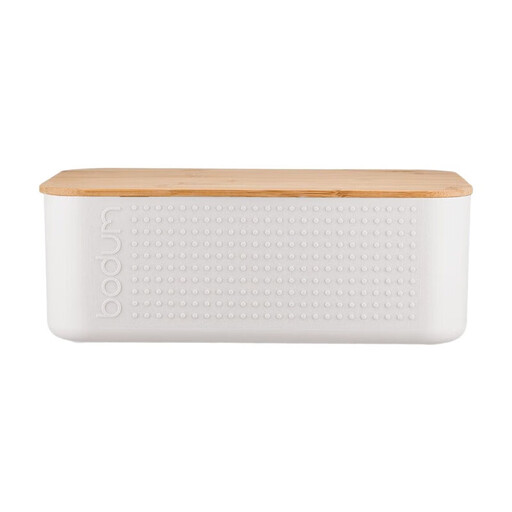
Why this choice suits this profile: This 10-litre bread box is designed to hold loaves, baguettes, rolls and pastries, without taking up containers meant for leftovers.
Its dedicated use prevents storing bread in an unsuitable airtight container. The bamboo lid should be hand washed and air dried.
A stated 10-litre capacity, a lid that can be used as a chopping board and a BPA-free plastic body according to the product page.
We have put together a comprehensive, real-time updated selection of products that meet these demanding criteria as well as European safety standards.
To prevent containers from piling up, assign a function to each size:
Spice jars and transparent boxes allow you to quickly spot their contents. Labels indicating the contents and storage date also make the pantry easier to navigate. Group lids by size to avoid mistakes when closing the containers.
Glass is suitable for those who prioritise visibility and better odour stability, while plastic helps reduce weight in a bag. In both cases, leak-proofing depends mainly on the lid, the seal and the closure system. Check the permitted uses before transporting liquids in them.
A student can start with a few individual sizes and one or two medium containers. A family will generally need several volumes, especially for leftovers and pre-prepared meals. The number of pieces depends on how often you cook, the available space and whether the boxes can be stacked.
Wash the containers according to the instructions, dry the lids thoroughly and avoid unauthorised temperatures. Regularly inspect the seals: any deformation, crack or less reliable closure justifies replacing the part in question.