
Livraison le jour même ou le lendemain

Qualité garantie

Débloquez vos offres de bienvenue: Livraison GRATUITE | Jusqu'à -80 % | 30 jours d'essai gratuits à JoyPlus
Téléchargez l'application
A well-organised kitchen isn’t just about how many cupboards you have. The choice of food storage containers affects how fresh your meals stay, how much space you have in the fridge, and how easy it is to transport food every day. Between airtight containers, storage jars and compartmented models, the differences aren’t always obvious from a photo.
Some marketing claims can even steer you towards an impractical purchase. Here are the points to check before choosing a lunch box, a storage set or a kitchen organisation accessory.
A clip-on or press-on lid can keep the container closed without stopping liquids from escaping. To transport soup, sauce or a dressed salad, check for a removable seal, the lid design and the manufacturer’s recommendations.
A container may be fine for dry foods but far less suitable for liquid preparations. If the product page doesn’t clearly state its leak-proof level, it’s best to reserve it for foods that won’t spill.
The stated capacity doesn’t always match the usable volume in daily life. Filled to the brim, a container is harder to close and leaves little room for mixing or reheating the contents. For your lunch, also compare its external dimensions with the space available in your bag, fridge or drawer.
Small snack box sizes are handy for dried fruit, fruit pieces or side dishes. Containers from 600 to 1,000 ml are better suited to a full meal, depending on portion sizes.
Lids with deep grooves, seals that can’t be removed and fixed dividers can trap residue. For everyday use, choose models where the different parts remain easy to access and check the washing instructions. Even when a container is labelled as dishwasher-safe, its lid may need hand washing to preserve the sealing components.
Borosilicate glass containers generally withstand temperature changes better than ordinary glass models. However, always check the instructions before using them in the oven or microwave. The lid may be made from a different material that can’t handle heat.
Plastic intended for food contact must be identified as such by the manufacturer. Look for mentions of food contact, usage pictograms and any restrictions regarding hot food, cold food or the dishwasher. Regulation (EC) No 1935/2004 governs materials intended to come into contact with food in the European Union; this reference doesn’t replace checking the product’s own instructions.
Stainless steel, particularly in a stainless steel lunch box, is great for transport and won’t break like glass. However, metal containers must never be placed in the microwave.
For airtight food containers, examine the shape of the seal, the number of clips and how easy it is to dismantle. A compartmented lunch box stops foods from mixing, but its dividers don’t necessarily guarantee independent leak-proofing between each compartment.
A lid with four fasteners can keep the container more secure during transport, provided it’s properly clicked shut. For very liquid foods, transport the container flat and avoid filling it to the maximum.
Measure your drawers, shelves and bags before ordering. Rectangular shapes usually stack more easily than round containers. To optimise kitchen storage, it’s better to choose complementary sizes than a set with lots of different formats that are hard to stack.
A cutlery drawer organiser can also free up space around the containers and lids. This organisation stops you storing accessories separately and wasting time finding the right lid.
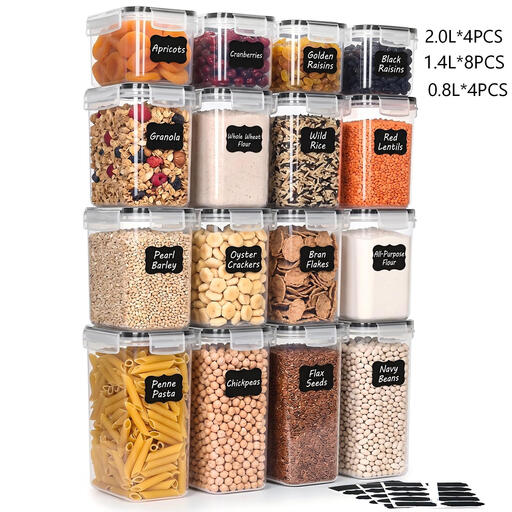
Why this choice suits this profile: This set lets you start organising your dry foods with several containers and labels, without having to buy lots of separate items.
The labels let you quickly identify the contents and avoid forgetting open packets at the back of the cupboard. However, check the dimensions before buying.
16-piece set designed for pasta, rice, flour, sugar and other dry goods, with labels and markers.
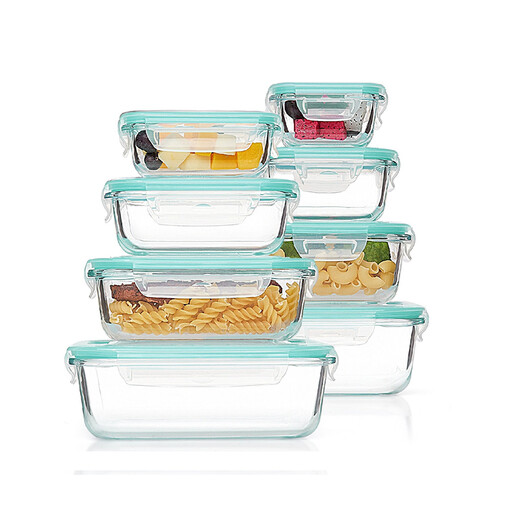
Why this choice suits this profile: The eight capacities, from 150 ml to 1,040 ml, let you organise leftovers, individual portions and prepared meals alike.
The different sizes stop you using a large container for a single portion. Check the instructions before reheating food.
Borosilicate glass, eight rectangular containers and a set suitable for meal prep in different sizes.
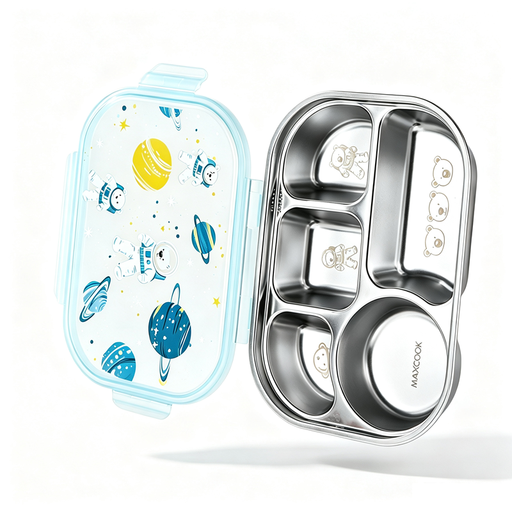
Why this choice suits this profile: This stainless steel lunch box with five compartments is aimed at people who regularly transport separate portions to the office, school or on a picnic.
The four fasteners let you visually check that the box is properly closed. The manufacturer recommends hand washing and advises against using it in the microwave or oven.
316L stainless steel, five compartments and a PP lid with four clips.
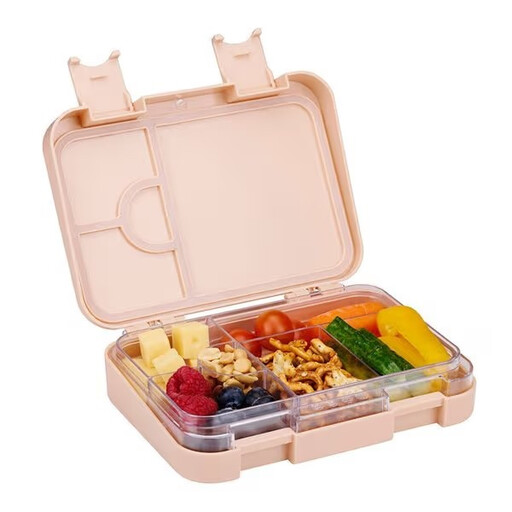
Why this choice suits this profile: Its size of 21 × 15 × 4.5 cm is ideal for meals made up of several small portions, in a school, work or sports bag.
The removable dividers make cleaning easier and limit food mixing. This model is not suitable for the microwave.
Six compartments, removable dividers, dishwasher compatibility and a stated weight of approximately 425 g.
We’ve put together a comprehensive, real-time updated selection of products that meet these demanding criteria and European safety regulations.
For meal prep, choose several stackable containers in different capacities, with a lid that’s easy to clean and a material compatible with your reheating method. A compartmented bento box is suitable for foods that need to stay separate. For saucy dishes, check the leak-proofing carefully and make sure there’s a seal.
An airtight container slows down drying and limits contact with air, but it doesn’t extend the shelf life indefinitely. Follow the storage times for each food, maintain the cold chain and put preparations in the fridge promptly. Clean the container as soon as possible after use and replace it if the seal is warped, cracked or has absorbed persistent odours.
Group containers by shape and capacity, then store the lids vertically in a tub. Storage jars can be reserved for dry foods, while flat containers are often more practical in the fridge. A cutlery drawer organiser can also free up a dedicated area for small accessories and lids.