
Livraison le jour même ou le lendemain

Qualité garantie

Débloquez vos offres de bienvenue: Livraison GRATUITE | Jusqu'à -80 % | 30 jours d'essai gratuits à JoyPlus
Téléchargez l'application
Whether it’s a packed lunch for the office, the kids’ snacks, homemade biscuits or dry goods to store in the cupboard, food storage containers don’t all serve the same purpose. Yet all too often, the choice is made based on a pretty picture or a promise of airtightness that’s hard to verify.
Here are the criteria to consider when comparing different sizes without being misled by marketing, along with a selection tailored to several user profiles in the UK.
A compartmentalised lunch box separates your food, but that doesn’t mean each section is leak-proof. Liquid-based dishes, sauces and very juicy fruits can seep from one compartment to another if the lid isn’t designed to hold them back.
For a meal made up of several components, it’s best to choose a clip-lock closure or a lid explicitly described as leak-proof. In any case, check the manufacturer’s recommendations and avoid filling the compartments right to the brim.
A product that looks convenient can quickly become a chore to clean if the lid holds onto odours, the seals can’t be removed, or certain nooks are hard to reach. And ‘dishwasher-safe’ doesn’t necessarily mean every part can go in the machine – the lid, seals or some decorative elements may need to be washed by hand.
Ease of cleaning is especially important for a lunch box, a snack box or any container you use every day.
A box that’s too large takes up unnecessary space in your bag or fridge. On the other hand, a model that’s too small limits your portions and risks squashing the food. Compare the external dimensions with those of the school bag, gym bag, drawer or shelf where the box will be stored.
The material alone doesn’t determine how long food will keep. Temperature, humidity, how fresh the food is when you store it, and how clean the container is are all just as important.
For an airtight food storage container, look for precise details about the closure system: clips, press-on lid, removable seal or locking mechanism. A simple ‘airtight’ claim should be taken with a pinch of salt if no specific use is mentioned.
Also check the pictograms:
A box measuring 21 × 15 × 4.5 cm can easily fit into a school bag or a compact work bag. A set of containers in different capacities is handy for preparing a variety of portions. For biscuits and treats, the internal height matters just as much as the width – it stops the more fragile items from getting crushed.
Compartments are useful for separating raw veg, carbs, fruit and snacks. However, they don’t replace a closure that’s genuinely suited to moist foods.
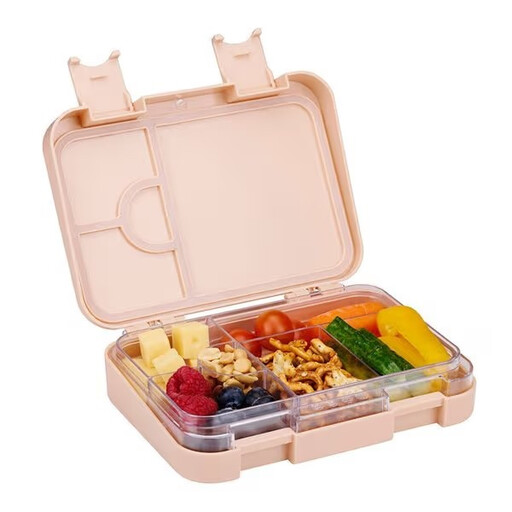
Why this choice suits this profile: Its compact size and six sections are ideal for snacks, small portions and simple meals to take to school or the office.
The removable compartments make cleaning easier and reduce food mixing. The product is not microwave-safe, and very liquid preparations are not recommended.
Dimensions of 21 × 15 × 4.5 cm, six compartments, stated weight of approximately 425 g and claimed dishwasher compatibility.
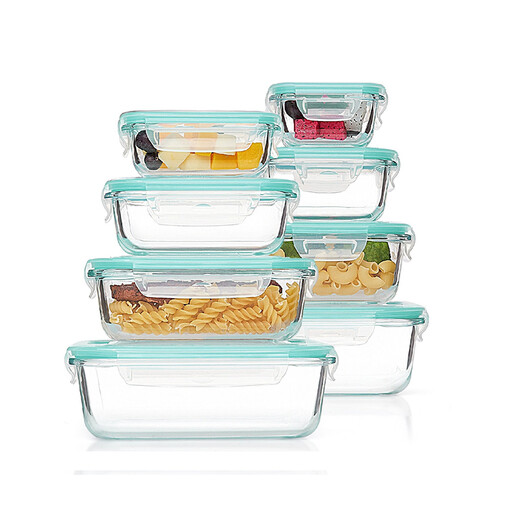
Why this choice suits this profile: With eight containers from 150 ml to 1,040 ml, this set is ideal for households that want to easily switch between individual meals and leftovers.
The different capacities mean you don’t have to use the same container for every portion. However, glass is heavier than a plastic box and requires more care when handling.
Borosilicate glass, eight pieces and capacities from 150 ml to 1,040 ml for the fridge, office or meal prep.
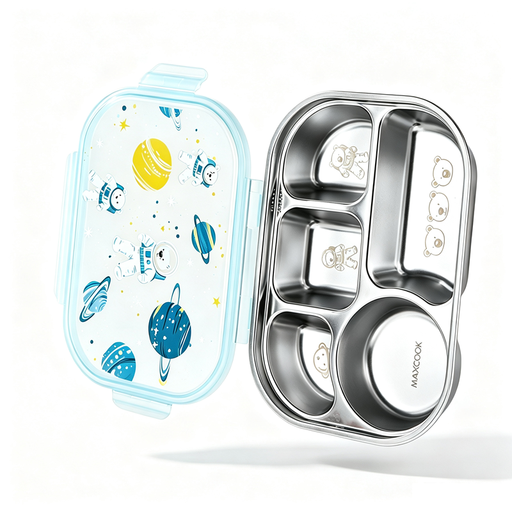
Why this choice suits this profile: Its five-compartment tray is ideal for prepared meals, separate portions and regular trips to the office, picnics or the gym.
The four latches make the closure easy to secure and reduce the risk of accidental opening. Hand-washing is recommended, while the microwave and oven are not suitable.
316L stainless steel, five compartments, PP lids and four closure latches.
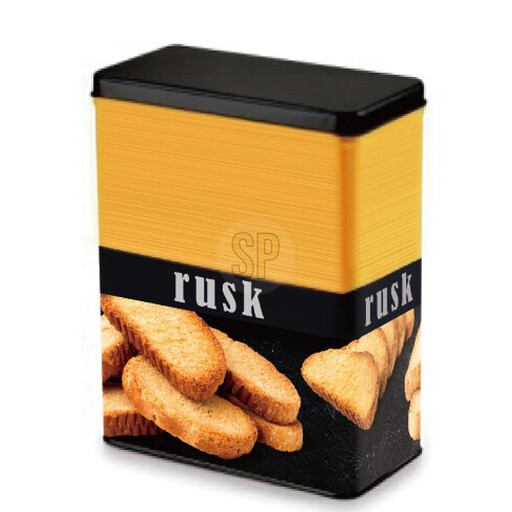
Why this choice suits this profile: This metal biscuit tin is perfect for homemade batches, dry goods and decorative storage on a worktop.
Its use is clearly intended for dry goods – so don’t use it for liquids or foods that need fridge storage.
Dimensions of 205 × 160 × 95 mm, metal construction and a size suited to storing biscuits and dry treats.
We’ve put together a comprehensive, real-time updated selection of products that meet these exacting criteria as well as European safety standards.
Before first use, wash the container following the supplied instructions, then dry the seals, lid and compartments thoroughly. With a compartmentalised lunch box, let your preparations cool down before closing the lid, unless the manufacturer explicitly allows hot storage.
Avoid mixing very moist foods with biscuits or crunchy items. For a treat tin or a metal biscuit tin, check regularly for condensation and store the container in a dry place. Finally, replace any box that has a crack, a warped lid or a damaged seal.
For a full meal, a bento box or a compartmentalised lunch box lets you separate different foods. Stainless steel is good for frequent transport, while glass makes it easier to see and organise portions, though it’s generally heavier.
No. Metal and stainless steel models must never be placed in the microwave. For glass or plastic containers, always check the instructions and pictograms on the product before reheating anything.
Avoid thermal shocks, don’t overfill the container and clean removable parts separately. Dry the box completely before closing or storing it, and regularly check the condition of the lid and seals.