
Livraison le jour même ou le lendemain

Qualité garantie

Débloquez vos offres de bienvenue: Livraison GRATUITE | Jusqu'à -80 % | 30 jours d'essai gratuits à JoyPlus
Téléchargez l'application
Between batch cooking, dinner leftovers, children's snacks and pantry organisation, food storage containers have earned their place in most British kitchens. But choosing the right ones isn't always straightforward: incompatible lids, stubborn odours or awkward sizes that won't fit in your cupboards can quickly make daily life more complicated.
Here are the key factors to consider before buying airtight containers, lunch boxes or takeaway packaging.
A lid that snaps on easily doesn't necessarily mean it can transport soup or sauce without leaking. For liquid foods, look for the terms leak-proof or airtight, then check the manufacturer's recommendations. A container designed for dry goods won't necessarily be suitable for carrying a meal.
The stated capacity isn't everything. A 2-litre container might be perfect for pasta or flour, but too bulky for a shallow fridge. Conversely, a small container works well for spices or individual portions, but you'll need multiple boxes to store a family-sized batch.
Before ordering, measure your shelf depth, drawer height and the space available in your lunch bag.
Not all materials can handle the same demands. A container may be fine for fridge storage without being suitable for the oven, microwave or direct heat. Care instructions also deserve your attention: hand wash or dishwasher safe, lid drying instructions and maximum temperature should all be checked on the product page.
For everyday use, choose a product whose page clearly states the material and permitted uses. BPA-free plastic, glass or plant fibre can meet different needs. However, none of these materials automatically makes a container oven or microwave safe.
For dry goods, storage containers mainly need to protect against moisture and odours. For prepared meals, leak-proofing and container stability become the priority. In all cases, wash the product before first use and follow the instructions on the packaging.
A set of multiple sizes simplifies pantry organisation: small formats for seeds and spices, medium containers for rice or pasta, and large models for flour and sugar. Labels also help you quickly identify contents and track opening dates.
In the fridge, stackable formats minimise wasted space. For lunch at the office or school, choose a container whose volume genuinely matches your portion, with a lid that's easy to open and close.
Disposable solutions should be chosen based on the context: occasional picnic, takeaway or family event. Terms like "biodegradable" or "plant fibre" aren't enough to tell you how to dispose of the product after use. Check local guidelines and the product page before throwing away any packaging.
Cling film can complement your containers for covering a bowl or wrapping food, as long as you respect its usage limits. The ALFAPAC film shown below, for example, must not be used in the microwave or placed near a flame or intense heat source.
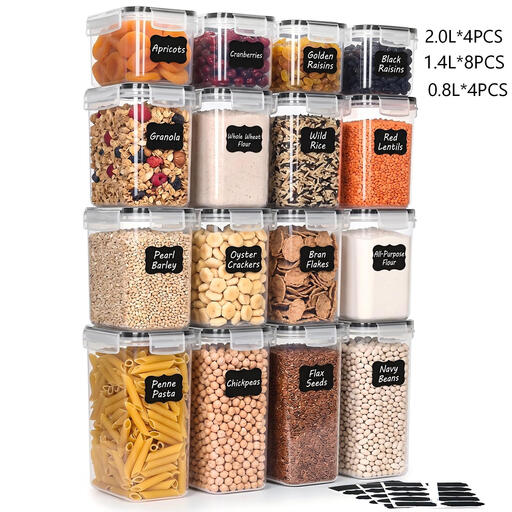
Why this choice suits this profile: This set provides a solid foundation for organising a pantry, with containers and labelling accessories suitable for pasta, rice, flour or sugar.
The dedicated storage sizes and labels prevent you from buying separate accessories that might not be compatible.
16-piece set, lids described as airtight and marking accessories included.
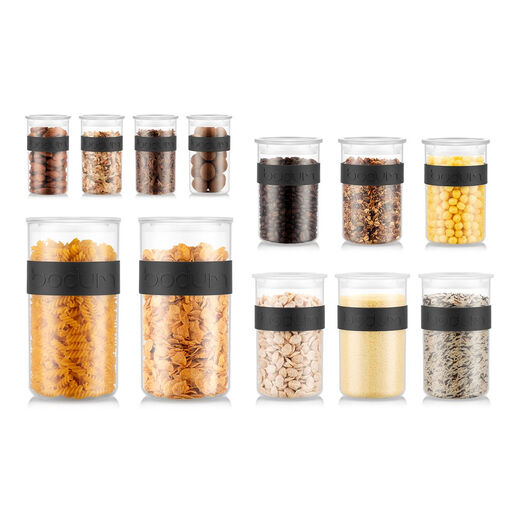
Why this choice suits this profile: Its assortment of 12 containers across four capacities allows you to equip a large kitchen and structure your pantry efficiently.
The variety of volumes prevents you from being stuck with a single size that's poorly suited to dry goods, leftovers or prepared meals.
12 pieces in 0.25l, 0.6l, 1l and 2l sizes, stated BPA-free plastic and airtight lids.
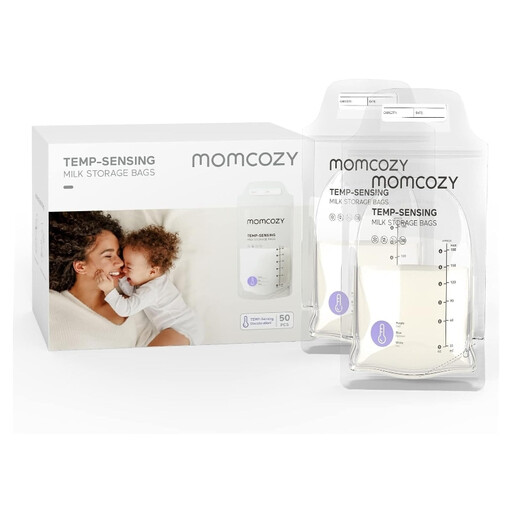
Why this choice suits this profile: These bags are designed for portioning, labelling and storing breast milk in the freezer, following the instructions provided.
The 180ml maximum fill line and freezing instructions reduce the risk of overfilling the bags. Single-use product.
50 bags, stated double seal, temperature-sensitive indicator and writing area.
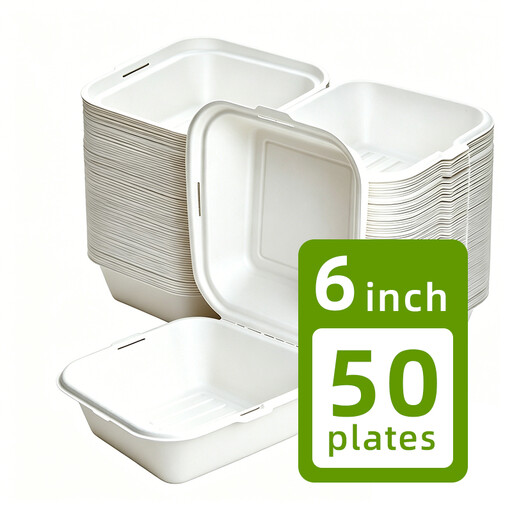
Why this choice suits this profile: These takeaway boxes are intended for sandwiches, burgers, pasta and other dishes to enjoy on the go.
The 15 x 15cm size and pack of 50 allow you to plan ahead without buying a reusable container for every meal.
Stated sugarcane pulp, pack of 50 pieces and design intended for takeaway food.
We've put together a comprehensive, real-time updated selection of products that meet these demanding criteria and European food safety regulations.
A capacity between 500ml and 1 litre is generally suitable for an individual portion. However, the right volume depends on the type of meal and your appetite. For a family, it's better to have several sizes than to half-fill large containers.
An airtight seal limits air exchange, but it doesn't replace food storage guidelines. Maintain the cold chain, note the preparation date and follow the recommendations for each recipe. If you notice an unusual smell, changed texture or a deformed lid, it's best not to eat the contents.
Only if the product page or container marking says so. Lids may have different limits from the container itself. Always remove any parts not designed to withstand heat, and never microwave a product whose usage isn't clearly stated.