
Livraison le jour même ou le lendemain

Qualité garantie

Débloquez vos offres de bienvenue: Livraison GRATUITE | Jusqu'à -80 % | 30 jours d'essai gratuits à JoyPlus
Téléchargez l'application
Preparing several meals, storing leftovers or taking soup to work is much easier with airtight glass food storage containers. The key is choosing a set that really suits your routine. Behind promises of a “perfect” seal and exceptional durability, small details can quickly make a container awkward to use every day.
Here are the main things to check before you buy, along with a selection of options for different needs.
A lid that closes easily doesn’t necessarily keep leaks at bay. If you plan to carry sauces, soups or dishes with gravy, look for a model with a removable silicone seal and several locking clips. Four clips can help distribute pressure across the seal, but the lid also needs to be properly aligned and completely clean.
Many containers described as microwave- or oven-safe are only suitable because of their glass base. Plastic lids and silicone seals generally need to be removed before reheating. So, a product listing that says “oven-safe” doesn’t necessarily mean you can put the whole container in the oven.
A set made up entirely of large containers can take up a lot of space and prove impractical for small portions. Conversely, a set of small containers won’t be suitable for a family-sized bake or meals prepared for several lunches. Stackable food storage containers in a range of sizes make it easier to organise your fridge, freezer and cupboards.
Borosilicate glass is commonly used for food containers designed for reheating and freezing. It copes better with temperature changes than standard glass, but you still need to follow a few simple precautions.
For example, don’t put a container straight from the freezer into a very hot oven, or place a hot container on a cold surface. When freezing liquids, leave some room at the top, as they expand.
When choosing leakproof food storage containers, check for the following:
Glass generally doesn’t absorb odours or become stained in the same way as some plastics. However, seals should be cleaned promptly, especially after storing sauces or greasy foods.
A range of sizes is often more practical for everyday use than a set of identical containers. Small boxes are handy for side dishes, chopped fruit and snacks. Containers of 600 to 1 000 ml are suitable for individual portions and glass lunch boxes. Larger sizes are useful for family leftovers or meals prepared for several days.
Also check whether the bases, lids and seals are dishwasher-safe. Some manufacturers recommend washing the lid by hand to protect its locking mechanism. This is worth bearing in mind if convenience is your main priority.
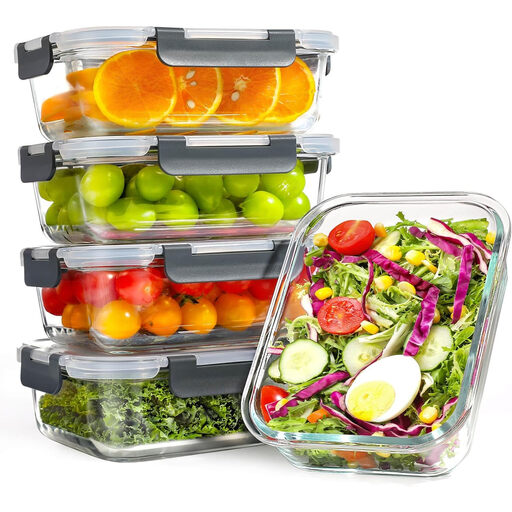
Why it suits this shopper: Five 1 040 ml containers give you a straightforward, versatile set for leftovers, generous portions and lunches prepared in advance.
Having one size keeps choosing and storing them simple. The lids are described as airtight and come with removable seals.
Borosilicate glass, stated compatibility with the microwave, oven and freezer without the lids, dishwasher-safe and stackable design.
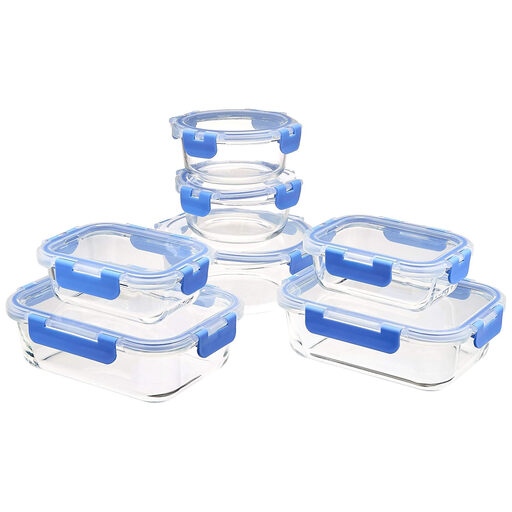
Why it suits this shopper: The range of sizes makes this a good fit for a well-organised kitchen where you switch between meal prep, food storage and taking meals on the go.
The seven containers come in a choice of sizes and shapes, reducing the need to buy other boxes that may not suit your needs.
Seven borosilicate glass bases, locking lids, round and rectangular shapes, and stated dishwasher and freezer compatibility.

Why it suits this shopper: Its 2 litre capacity is ideal for family meals, larger batches and storing several portions.
The capacity is clearly stated, and the four-clip system makes it easy to see whether the lid is securely closed.
2 litre capacity, borosilicate glass base, stated oven compatibility up to 400 °C without the lid, and microwave, freezer and dishwasher compatibility.
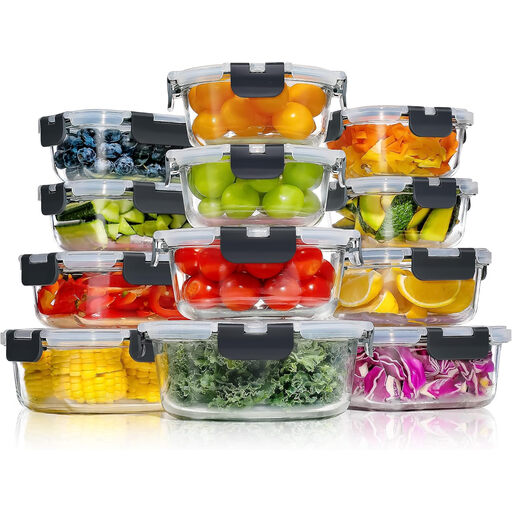
Why it suits this shopper: The rectangular, round and square containers work for individual portions, side dishes and leftovers of different sizes.
The range of capacities means you won’t need to fill a large container for a small portion, and makes it easier to organise containers by use.
Twelve containers, borosilicate glass, four-clip lids, removable seals, stackable design and stated dishwasher compatibility.
We’ve put together a comprehensive list, updated in real time, of products that meet these strict selection criteria and European safety regulations.
Yes, if the product listing says it’s suitable, but you must remove the lid. Check the stated maximum temperature too, and avoid sudden changes in temperature.
Yes. Sizes from 370 to 1 040 ml are especially handy for preparing several portions, taking lunch with you or storing leftovers. For an organised kitchen, use a mix of capacities and choose containers that are suitable for the microwave and freezer to suit your routine.
How long it lasts depends on how you use it, whether it gets knocked and the condition of its lids. Glass can remain usable for many years as long as it isn’t cracked or chipped. Seals and clips are wear-and-tear parts: replace them, or stop using the lid if it no longer closes properly or the seal has become misshapen.