
Livraison le jour même ou le lendemain

Qualité garantie

Débloquez vos offres de bienvenue: Livraison GRATUITE | Jusqu'à -80 % | 30 jours d'essai gratuits à JoyPlus
Téléchargez l'application
A good food storage container is the secret to a tidy kitchen, fresher meals, and reduced food waste. The problem is that the market is saturated with products that often fail to deliver on their promises. A lid that leaks in your bag, plastic that stains after one use with tomato sauce, or a glass dish that cracks straight out of the fridge—these everyday frustrations are entirely avoidable.
To avoid investing in containers that will quickly end up at the back of a cupboard, let's review the most common pitfalls.
To find the perfect, durable container that truly meets your needs, just focus on a few key points.
This is the number-one criterion. It determines your container's versatility, sturdiness, and food safety.
A truly airtight container must prevent air from getting in and, most importantly, liquids from getting out. Its locking system is therefore crucial. The most reliable models combine four-sided locking clips with a removable silicone gasket. This gasket creates a perfect seal and can be removed for deep cleaning, which prevents mould growth.
Whether you're a meal prep enthusiast or simply looking to streamline your routine, versatility is a key advantage. A good container should be able to go from the freezer to the microwave, and ideally, into the oven. This flexibility allows you to cook, store, reheat, and even serve in the same dish, helping to reduce the pile of washing-up and simplify your daily life. An essential for any good kitchen organiser.
Because every use case is unique, here are our recommendations to help you avoid the pitfalls and find the perfect container.

Why we love it: Perfect for preparing family-sized dishes or several meals in advance. Its large 2-litre capacity and full compatibility (oven, freezer, microwave) make it the perfect partner for flawless organisation.
Its borosilicate glass body withstands thermal shock and high temperatures (up to 400°C), eliminating any risk of it breaking during cooking. Its 4-sided clip system with a gasket guarantees a perfect seal.
Its total versatility: one dish to cook, store, transport, and reheat. Its large volume is perfect for family-sized meals.
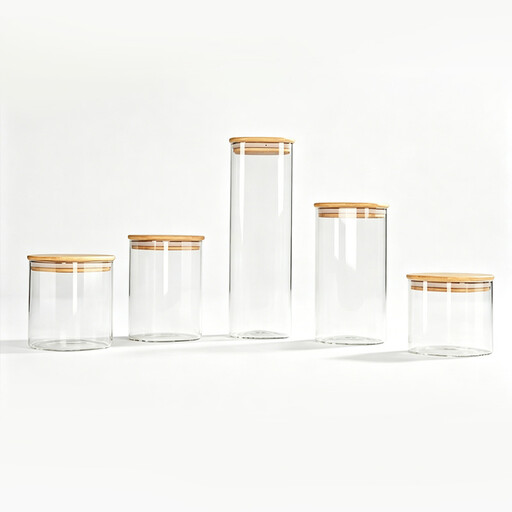
Why we love it: This set is perfect for storing dry goods (pasta, rice, legumes, cereals...). It streamlines and optimises pantry space while protecting your food from moisture.
No more half-open bags of pasta or rice! These glass jars effectively protect your dry goods. Their transparency lets you check your stock levels at a glance.
A set of 5 sizes for impeccable, visual organisation. The wood-style lid adds a welcome decorative touch.

Why we love it: For storing leftovers, packing lunch, or baking a small dish, this Pyrex container is a classic for a reason. Its 0.8L size is perfect for individual portions.
Thanks to its borosilicate glass, you can say goodbye to tomato sauce stains and the stubborn odours that cling to low-quality plastics. Its oven/microwave/freezer compatibility makes it a sustainable choice.
The assurance of an iconic brand, French manufacturing, and proven durability for daily, even heavy-duty, use.
Discover our full selection of products that meet our quality criteria and current safety standards.
Absolutely not! This is strongly discouraged, even with borosilicate glass. A sudden, drastic temperature change can cause thermal shock and shatter the glass. The best practice is to let the dish sit at room temperature for a few minutes before putting it in the oven, and avoid placing it in a preheated oven. When in doubt, always consult the manufacturer's instructions.
For glass, a simple run through the dishwasher or hand washing is sufficient. For plastic lids and silicone gaskets, which can retain odours, remove the gasket and wash it separately. If an odour persists, soak the lid and its gasket in a mixture of warm water and white vinegar for an hour before rinsing.
It's all in the chemistry! Borosilicate glass contains boron trioxide, which significantly reduces its thermal expansion coefficient. In practical terms, it handles temperature changes much better than standard (soda-lime) glass. This is what makes it so resistant to thermal shock and the ideal material for an oven-safe glass dish.