
Livraison le jour même ou le lendemain

Qualité garantie

Débloquez vos offres de bienvenue: Livraison GRATUITE | Jusqu'à -80 % | 30 jours d'essai gratuits à JoyPlus
Téléchargez l'application
Leftovers from dinner, lunch at the office, Sunday batch cooking or homemade desserts – food storage containers come in handy almost every day. But you need to pick the right ones. A poorly chosen container can quickly become bulky, leak at the bottom of your bag, or crack after a few trips between the freezer and the oven.
Here are the criteria to consider before buying, along with a selection suited to different kitchen uses.
A lid that stays in place doesn't necessarily guarantee a good seal. To transport soup, sauce or a vinaigrette-dressed dish, check for a silicone seal, side clips or a closure system explicitly described as leakproof. A removable seal also makes cleaning easier and helps prevent residue build-up.
A container may be suitable for the fridge and dishwasher without being designed for the oven. Similarly, a plastic lid isn't automatically microwave-safe. Check the permitted uses separately: oven, microwave, freezer, fridge and dishwasher.
To avoid accidents, never place a closed lid in a conventional oven. In the microwave, remove it before reheating food, unless the manufacturer states otherwise.
The largest capacity isn't always the most practical. A 4-litre container takes up a lot of space in a standard British fridge and isn't ideal for individual portions. On the other hand, containers that are too small will mean you need to use more of them.
For meal prep, go for several sizes: around 250 to 500 ml for sides, 800 ml to 1 litre for a generous portion, and 2 litres or more for family-sized dishes.
A borosilicate glass food storage container has a non-porous surface that generally absorbs fewer odours, stains and flavours. It also lets you see the contents without opening the lid. On the downside, it's heavier and needs more care to avoid knocks.
Plastic is often lighter and more practical for a leakproof lunch box to take with you. If you're looking for a BPA-free food container, look for an explicit mention on the product page rather than a vague "safe" claim. Plastic can also scratch or become stained by certain foods, especially highly pigmented sauces.
Ceramic ramekins are ideal for individual portions, desserts and baking. Their glazed surface is easy to clean, but ceramic is still sensitive to thermal shock and chipping.
Even when a container is advertised as microwave and freezer safe, it should be used gradually. Avoid going straight from the freezer to a preheated oven, or plunging a hot container into cold water. Glass and ceramic can crack due to thermal shock.
When freezing liquid foods, leave a little space to allow for expansion. Before each use, inspect the container and its lid: a crack, chip or deformed seal means you should replace the affected part.
Stackable food containers help you make the most of space in both cupboards and the fridge. Rectangular shapes are often easier to line up than round ones, while lids of similar sizes simplify storage.
The dishwasher is very convenient, but seals and lids may sometimes need hand washing. Remove any removable seals, clean their grooves thoroughly, and let each part dry completely before closing the container.
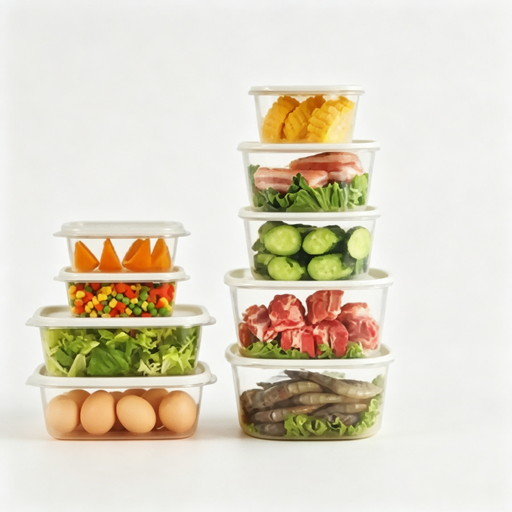
Why this choice suits this profile: This 9-piece set offers multiple capacities for storing leftovers, keeping ingredients and preparing meals to take away.
The set format means you don't have to buy several containers separately, reducing the risk of running out when preparing meals.
9-piece set, advertised as airtight, and compatible with the microwave and freezer.

Why this choice suits this profile: Its 2-litre capacity and borosilicate glass body make it a great choice for family meals and regular leftover storage.
The removable silicone seal makes cleaning easy. However, the lid should be removed before reheating the contents in the microwave.
Borosilicate glass, 2-litre capacity, lid with removable seal, and advertised as compatible with the fridge, freezer, microwave and dishwasher.

Why this choice suits this profile: With its 0.8-litre capacity, this glass dish with lid is ideal for individual portions, sides and small preparations.
The non-porous glass limits odour and stain retention. However, you should follow the usage precautions to avoid thermal shock.
0.8-litre capacity, stackable rectangular shape, heat-resistant borosilicate glass, and advertised as compatible with the oven, microwave, fridge, freezer and dishwasher.
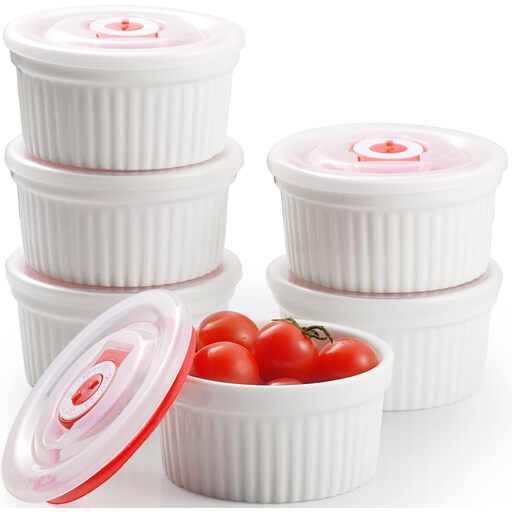
Why this choice suits this profile: These six ramekins, each around 237 ml, are perfect for crème brûlée, soufflés, sauces, dips and individual portions.
The lids with date markers make it easier to keep track of storage times for your preparations. They should be hand washed and their vent opened when used in the microwave.
Advertised as lead-free porcelain, six 8-ounce ramekins, BPA-free plastic lids, and the ramekins are advertised as compatible with the oven, microwave, freezer and dishwasher.
We've put together a comprehensive, real-time updated selection of products that meet these demanding criteria as well as European safety standards.
It's best to let the glass come gradually to room temperature. Even borosilicate glass can suffer thermal shock. Also check that the manufacturer allows oven use, and always remove any plastic lid.
It depends on the food, how it was cooked and the temperature of your fridge. Put leftovers in the fridge promptly, note the date on the lid, and follow official food storage guidelines. An airtight container limits leaks and odours, but doesn't extend the consumption period indefinitely.
Plastic is lightweight and often more practical to carry, while glass resists odours better and can be used for reheating when the manufacturer allows it. The long-term cost mainly depends on the container's lifespan, lid replacements and dishwasher compatibility. To buy wisely, compare the number of pieces, dimensions and the uses you actually need.