
Livraison le jour même ou le lendemain

Qualité garantie

Débloquez vos offres de bienvenue: Livraison GRATUITE | Jusqu'à -80 % | 30 jours d'essai gratuits à JoyPlus
Téléchargez l'application
Whether for packing lunch, storing leftovers, or organising your fridge, the food storage container is a kitchen staple. Yet, choosing the right model can often feel like an uphill battle. Between leak-proof promises that don't hold up and materials that degrade after just a few washes, it's hard to know what to choose.
As a product specialist at Joybuy, I'm here to separate fact from fiction for you. Let's forget the marketing jargon and focus on what matters. Here is a guide to help you avoid the common pitfalls and select containers that will actually live up to their promises day in and day out.
Before we get into the technical details, let's review the most common disappointments that will make you regret your purchase?:
To make an informed choice, three technical points deserve your full attention.
The choice of material directly impacts the container's use, durability, and maintenance.
A hermetic food container worthy of the name relies on two pillars?: a quality silicone gasket that is thick and sits securely in its groove, and a reliable locking system. Four-sided clip systems, like those popularised by brands such as LocknLock, provide uniform pressure that guarantees an excellent seal, protecting everything from soups to salads.
Always check the pictograms indicating compatibility?:
Finally, a stackable container is a major asset for optimising space in your cupboards and refrigerator. Modular designs allow you to create stable and organised stacks.
To illustrate these criteria in practice, here are a few models that meet specific needs.
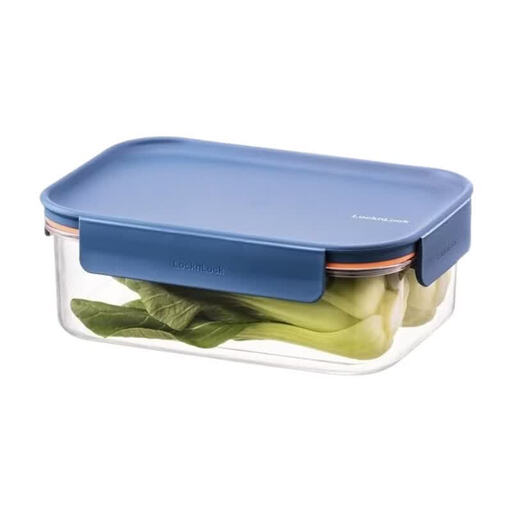
Why it's right for you : Ideal for prepping your meals for the week, this Tritan container is lightweight for transport but also highly durable. Its glass-like clarity allows you to identify the contents at a glance.
The BPA-free Tritan material is an effective solution to the problem of plastics that stain and retain odours. It keeps its new look for longer, even with saucy dishes.
4-clip locking system for a reliable seal. Modular and stackable design for space-saving storage.

Why it's right for you : With its large 2-litre capacity, this glass dish is perfect for casseroles, lasagnas, or storing large portions. It goes from the oven to the table, then to the fridge, without skipping a beat.
The borosilicate glass is resistant to thermal shock (up to 400°C for the dish) and completely non-reactive. It eliminates the risk of warping from heat and substance leaching, while also being easy to clean.
Extreme versatility: baking, storing, freezing, and serving. A healthy and durable material that won't degrade.
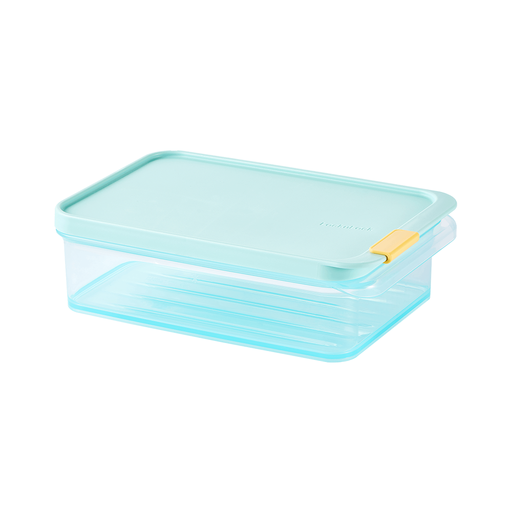
Why it's right for you : Specially designed for freezing, this model optimises space with a recessed lid that ensures stable stacking. No more wobbly stacks of containers threatening to topple over.
It tackles the clutter pitfall by offering a vertical storage solution. The lid's flexible plastic (LLDPE) material is designed to withstand freezing temperatures without becoming brittle.
Modular system for stable and secure stacking. Material is resistant to low temperatures.
We have compiled a complete selection of products that meet our quality criteria and safety standards.
As a general rule, it is not recommended to microwave a sealed plastic lid, as the steam pressure could warp or damage it. Most manufacturers recommend removing the lid or, if the model allows, opening a vent. For optimal safety, cover your dish with a dedicated microwave-safe cover.
For stubborn stains, create a paste with baking soda and a little water. Apply it to the stained area and let it sit for several hours before rinsing. For odours, filling the container with a mixture of water and white vinegar and letting it sit overnight can be effective.
Borosilicate glass contains boron trioxide, which gives it a much higher resistance to thermal shock than standard soda-lime glass. In practical terms, this means a borosilicate glass oven dish can withstand extreme temperature changes (e.g., from the refrigerator to a preheated oven) without the risk of cracking. This is what makes it so well-suited for baking.