
Livraison le jour même ou le lendemain

Qualité garantie

Débloquez vos offres de bienvenue: Livraison GRATUITE | Jusqu'à -80 % | 30 jours d'essai gratuits à JoyPlus
Téléchargez l'application
Investing in the right food storage containers is the key to a more organised kitchen and a simplified daily routine. The benefits: food that stays fresh longer, less waste, and precious time saved on meal prep. However, with an overwhelming number of options, it's easy to be tempted by products that will just end up collecting dust in a cupboard. We'll show you how to avoid the common pitfalls and choose storage containers that you'll actually use.
Marketing promises sound great, but they rarely stand up to the test of daily use. Here are the red flags to watch out for to avoid buyer's remorse.
To choose a reliable and durable storage solution, rely on concrete criteria rather than marketing hype.
Each material has its strengths and weaknesses. The best choice will depend on how you plan to use it.
The effectiveness of an airtight container hinges on two crucial elements:
Beyond the material, the shape and design make all the difference. Stackable containers—whether full in the fridge or empty in the cupboard—are a major asset for optimising space. Also consider ease of cleaning: smooth walls and rounded corners prevent food residue from getting stuck.
To put theory into practice, here are a few models that cater to specific user profiles.
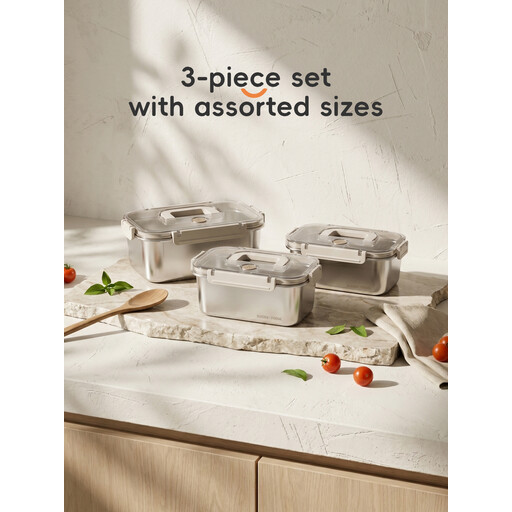
Why we chose it: Ideal for those who prep and transport their meals. Stainless steel is lightweight, durable, and won't hold onto last night's odours. The handle on the lid and the different sizes are perfectly designed for on-the-go use.
This set bypasses the problem of flimsy closures with robust clips on all 4 sides, ensuring a leak-proof seal, even when transporting saucy dishes.
The combination of a food-grade 304 stainless steel body and a BPA-free polypropylene lid with an integrated handle makes it a transport solution that is as healthy as it is practical.
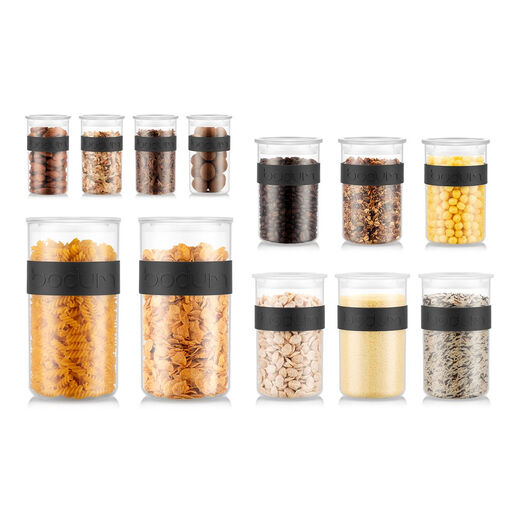
Why we chose it: With 12 pieces in 4 different sizes, this set covers all of a family's needs: storing leftovers, keeping dry goods in the pantry, or packing snacks for the kids.
It solves the puzzle of mismatched sizes by offering an ultra-comprehensive food storage container set. You'll always have the right size on hand, perfectly optimising both space and utility.
Its great versatility (12 pieces!), its durable BPA-free plastic construction, and its stackable design that simplifies storage in cupboards and the fridge.

Why we chose it: For those who prioritise healthy materials and longevity. The combination of stainless steel and borosilicate glass offers a plastic-free alternative that is robust, healthy, and built to last.
It settles the materials debate by offering a no-compromise solution: a stainless steel body and a glass lid. Zero plastic comes into contact with your food.
Premium materials (304 stainless steel, borosilicate glass, EU-standard silicone gasket) and a deep design that offers ample storage capacity for salads, soups, or bulk dishes.
Discover our full selection of products that meet our quality criteria and current safety standards.
1. How can I know if a plastic container is truly BPA-free? The BPA-free label must be clearly indicated on the product, its packaging, or its online product page. This is regulated information that reputable manufacturers always highlight. When in doubt, it's best to avoid it and opt for glass or stainless steel instead.
2. Can all food storage containers go in the microwave? No, absolutely not. Stainless steel should never, ever be put in a microwave. For glass and plastic, check for the microwave-safe pictogram (the one with wavy lines). Also, always remember to remove the lid before reheating to prevent pressure-related accidents.
3. How do I maintain silicone gaskets to keep them airtight? To preserve their flexibility and cleanliness, it's best to remove the gaskets after each use. Wash them by hand with warm, soapy water, rinse well, and—most importantly—dry them completely before putting them back. This is the secret to preventing mould and ensuring a perfect seal over the long term.