
Livraison le jour même ou le lendemain

Qualité garantie

Débloquez vos offres de bienvenue: Livraison GRATUITE | Jusqu'à -80 % | 30 jours d'essai gratuits à JoyPlus
Téléchargez l'application
A well-organised kitchen starts with smart storage solutions. Yet, when faced with a wall of food storage containers in-store, picking the right one can be a real headache. Caught between marketing promises and the reality of daily use, we quickly end up with cupboards full of unsuitable containers. This guide is here to help you see clearly and invest in containers that will truly serve you, year after year.
Before you even start comparing models, let's review the deal-breakers that can turn a good buy into a regret within a few months.
To avoid these disappointments, focus on three essential points that determine the quality and durability of a food storage container.
The choice primarily depends on how you plan to use it.
A container's effectiveness all comes down to its lid. The feature to inspect closely is the locking mechanism. The most reliable systems combine sturdy clips or a robust screw thread with a thick, flexible silicone seal. This seal is the real barrier against air and moisture. Bonus: a removable seal makes cleaning much easier and helps prevent mould growth.
To make the most of every square centimetre in your cupboards or fridge, opt for square or rectangular shapes. They stack and line up much better than round containers. Choosing sets of the same design but in different sizes allows you to create a cohesive and visually harmonious storage system.
Rather than an endless list, here are a few models that excel in their category, based on the quality criteria we've just discussed.
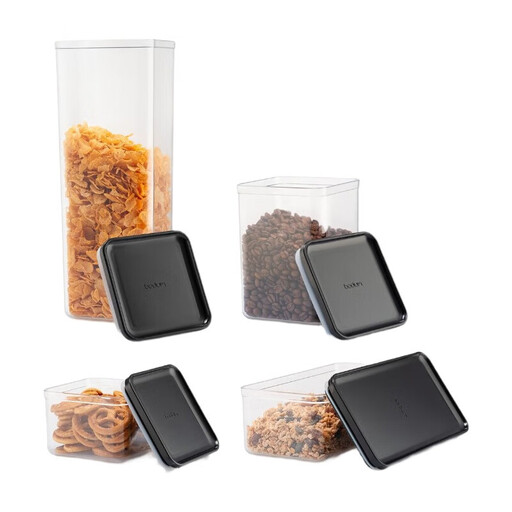
The brief: For those who want to start from scratch and organise their pantry with a cohesive, optimised system. This complete set offers four different sizes to accommodate all dry foods, from powdered sugar to spaghetti.
The stackable design and silicone-sealed lids are built to last and ensure a reliable closure. Say goodbye to lids that warp and no longer seal.
The durable, dishwasher-safe, BPA-free plastic combines everyday practicality with food safety.

The brief: Perfect for those who take their lunch to the office or to class. Its vacuum insulation keeps meals hot or cold for hours, offering a healthy and cost-effective alternative to eating out.
The food-grade 316 stainless steel resists both stains and odours. Its robustness guarantees longevity, a far cry from low-quality plastics.
Its wide mouth is designed for easy filling, cleaning, and even eating directly from the jar. The secure lid ensures spill-free transport.
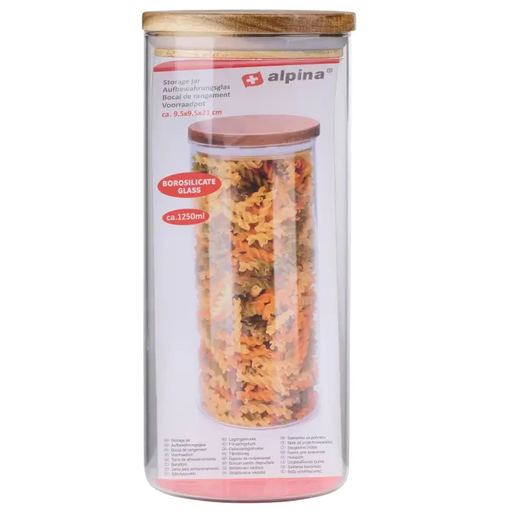
The brief: For those who believe storage should also be a matter of style. The combination of glass and an acacia wood lid brings a natural, chic touch to open shelves or countertops.
The glass body, naturally non-porous, eliminates the risk of stains and odours. The wooden lid incorporates an effective silicone seal, brilliantly combining aesthetics with function.
Its square shape allows for optimised storage and stable stacking, maximising space and creating a visually harmonious display.
Explore our full selection of products that meet our quality criteria and current safety standards.
Glass and high-quality (BPA-free) plastic are both excellent choices. An airtight glass jar is perfectly inert, which prevents any interaction with the food. Plastic, on the other hand, is lighter and shatterproof, which is an advantage for larger containers. In any case, the crucial point remains a perfectly airtight lid to block out moisture.
The clue is in the lid. A visible, thick silicone seal that is well-seated in its groove is an excellent sign. The locking clips should feel sturdy and apply even pressure around the entire rim. For a screw-on lid, check that the thread is deep and solid.
Absolutely not. A utensil holder, like the 5 Five Mayaj model, is designed for open storage and quick access to your spatulas. Lacking an airtight lid, it offers no protection for food against air, moisture, or pests. Every container has its purpose.