
Livraison le jour même ou le lendemain

Qualité garantie

Débloquez vos offres de bienvenue: Livraison GRATUITE | Jusqu'à -80 % | 30 jours d'essai gratuits à JoyPlus
Téléchargez l'application
Leftover dinner, meals prepared in advance, children’s snacks or ingredients bought in bulk : a food storage container should keep up with your daily routine, rather than simply promise an airtight seal on the packaging. Whether you are catering for a family, a student or anyone who enjoys meal prep, a few details can make all the difference between a truly practical container and a purchase that ends up at the back of a cupboard.
Before filling your basket, take the time to identify the most common pitfalls and the criteria that really matter.
A lid that clips on easily is not necessarily airtight. Silicone seals may be removable, difficult to clean or incorrectly positioned. Over time, food residue and moisture can also affect the quality of the seal.
When choosing an airtight food storage container, check that the seal is clearly identifiable, can be removed and has straightforward care instructions. A genuinely leak-proof closure soon becomes indispensable when carrying soup, sauce or a saucy dish in a bag.
The labels “ microwave ”, “ freezer ” and “ dishwasher ” do not always apply to the whole product. For example, the container may be microwave-safe while the lid must be removed. Likewise, a bamboo lid or certain plastic components may need to be washed by hand.
Before buying, check the instructions for the container, lid and seal separately. Even a freezer- and dishwasher-safe container must be used within the limits specified by the manufacturer.
A 2 litre container is perfect for a family-sized dish, but could take up an entire shelf in an already crowded fridge. Conversely, containers that are too small will force you to stack several boxes for a single meal.
To optimise kitchen storage, stackable formats and sets with several sizes are generally the easiest to organise. Remember to measure the height of your shelves and the depth of your drawers before choosing.
Borosilicate glass is popular for its transparency, resistance to the temperature changes specified by the manufacturer and low tendency to retain odours. Its main drawback : it is heavier, particularly when you need to carry it in a bag.
A stainless-steel container is highly resistant to knocks and ideal for meals eaten away from home, but it is not compatible with microwaves. Also examine the lid’s composition : the presence of stainless steel does not mean that every part of the product can withstand heat.
Lightweight and convenient when travelling, food-grade plastic remains an appealing option. Look for precise information about food contact and, where stated, the absence of BPA. Whatever the material, follow the temperatures and uses specified in the product description.
A removable seal makes it easier to clean the areas where residue builds up. After washing, dry the lid and seal thoroughly before closing the container. This helps minimise residual moisture and unpleasant odours.
For everyday use, choose models with simple shapes and no awkward corners that are impossible to reach. Several clips can provide a very secure closure, but every additional component also requires a little more maintenance.
Volume is not everything : dimensions matter just as much. A rectangular format will generally slide more easily into a bag and store more neatly on a shelf than a very tall, narrow container.
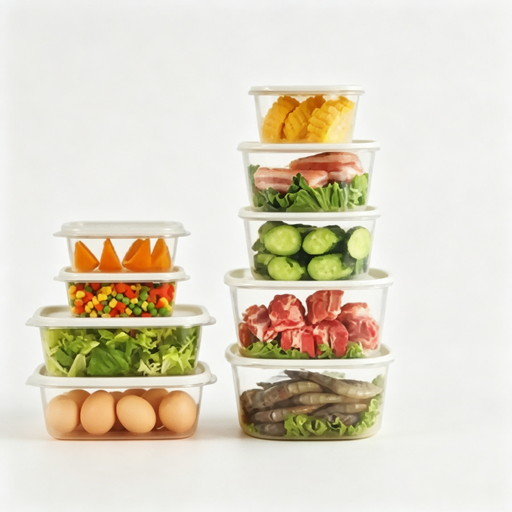
Why this choice suits this profile : This set includes several sizes for leftovers, ingredients and prepared meals, so you do not have to buy each container separately.
The range of sizes means you are not left with just one capacity that is inevitably unsuitable for some everyday uses.
9-piece set with lids described as airtight, designed for use in the fridge, freezer and microwave according to the product description.

Why this choice suits this profile : Its large borosilicate glass format is suitable for family portions and batch cooking. Its transparency lets you see at a glance what is left.
The removable silicone seal can be taken out for thorough cleaning, while the transparent body makes it easier to keep portions under control.
2 litre capacity, stated compatibility with the dishwasher, freezer and microwave ; the lid must be removed before microwaving.

Why this choice suits this profile : Its five compartments are designed for complete meals, families and anyone who wants to keep foods separate in their bag.
Separating foods helps preserve their textures and means you do not have to carry several small boxes in the same bag.
316L stainless steel, five compartments and four clips ; hand washing recommended and not suitable for microwave use.
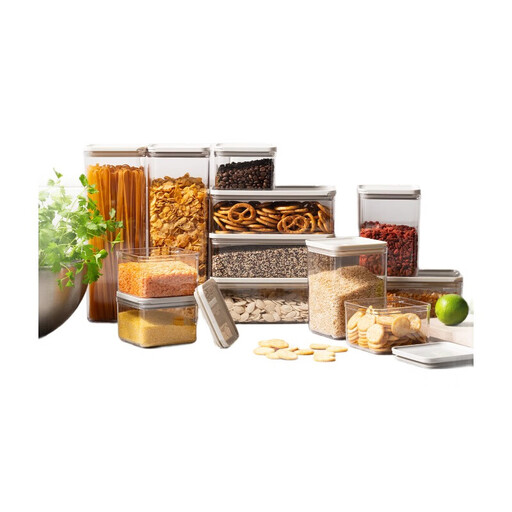
Why this choice suits this profile : With four different capacities, this set lets you organise pasta, cereals, flour, rice, spices and dried fruit in your pantry.
The variety of sizes and stackable design reduce clutter and prevent you from accumulating mismatched containers.
12 pieces from 0.5 to 2.6 litres, lids fitted with silicone seals and a stackable design ; these jars are not suitable for the freezer, oven or microwave.
Browse a complete, real-time selection of products that meet these demanding criteria while complying with European safety regulations.
Yes, provided the manufacturer clearly confirms that it is suitable. However, leave a little space for liquid foods : their volume increases as they freeze. Also avoid thermal shock, such as placing a very cold container directly in a very hot environment.
It depends on the material, how often it is used and how well it is maintained. Replace a cracked or warped container, or one with a damaged seal, straight away. To extend its life, clean every nook and cranny thoroughly, dry the different parts separately and avoid abrasive products.
For lunch at work or school, choose a capacity suited to your portion, a reliable closure and a reasonable weight. A compartmented bento box is ideal for foods that should not mix, while a large glass model is better suited to batch cooking at home. For children, a simple opening mechanism and an attached lid can make everyday use much easier.