
Livraison le jour même ou le lendemain

Qualité garantie

Débloquez vos offres de bienvenue: Livraison GRATUITE | Jusqu'à -80 % | 30 jours d'essai gratuits à JoyPlus
Téléchargez l'application
Food storage containers may seem simple to choose… until problems start: a lid that leaks in your bag, a container that takes up too much space in the fridge, plastic that warps after being heated or a size that does not suit your everyday portions.
Some marketing claims therefore deserve a closer look before you buy. A product described as “ airtight ” will not necessarily be suitable for carrying soup if its seal is poorly fitted. Likewise, “ microwave-safe ” does not always mean that the lid can remain in place while reheating. As for large sets, they may end up taking up more space than they save if the different sizes do not stack neatly.
Here are the key criteria to consider when choosing an airtight food container, a meal prep container or a storage solution suited to a French kitchen.
A glass food storage container is popular thanks to its non-porous surface, which is less likely to retain odours, stains and flavours. Borosilicate glass is also used for containers designed to withstand heat. However, it remains vulnerable to knocks and sudden changes in temperature.
Lighter than glass, BPA-free plastic is often more practical for a lunch box, a carrier bag or cupboard storage. However, you should check the uses authorised by the manufacturer. A plastic container should never be used in the oven and may only be used in the microwave if this is clearly stated.
The BPA-free label simply means that bisphenol A is not included in the declared composition. It does not replace checking the instructions regarding heat, freezer use, the dishwasher and the lids.
When transporting a meal, choose a leakproof container with a clearly explained closing system: clips, a silicone seal or a snap-on lid. An airtight lid is particularly useful for sauces, stews and moist foods.
Before ordering a set, also remember to check the following:
A properly closed lid does not automatically turn a container into a tamper-proof package. To reduce the risk of leaks, allow food to cool before closing the container and avoid filling liquid dishes completely.
The right capacity depends on how you intend to use the container. A 250 to 400 ml box may be suitable for a side dish or a small snack, while a 600 to 1 000 ml container will be better suited to a full portion. For a family or for preparing large quantities of food, a 2-litre food storage container will often be the more practical choice.
A stackable container helps you make better use of the shelves in your fridge and freezer. Rectangular shapes generally make better use of space than very rounded ones, but you should also consider the available height and the thickness of the lids.
In the freezer, always leave a little room for liquids and foods with a high water content, as their volume may increase during freezing.
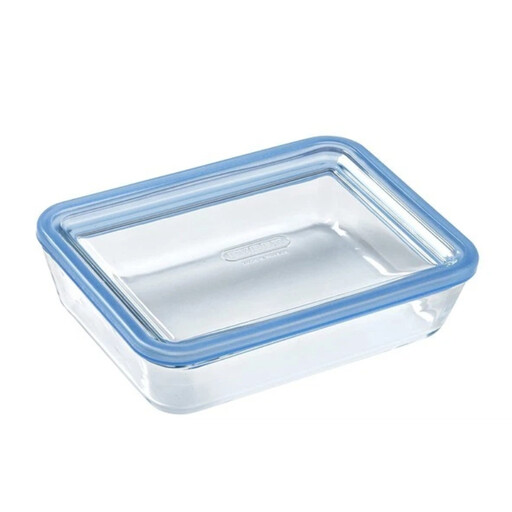
Why this choice suits this profile : Its 0.8-litre capacity is suitable for leftovers, individual portions and your first meal prep attempts, without requiring multiple sizes.
The non-porous borosilicate glass is less likely to retain odours and stains. The product details state that it can be used in the fridge, freezer, microwave, oven and dishwasher, provided the instructions are followed to avoid thermal shock.
Stackable rectangular design, visible contents and a capacity of 0.8 litre.

Why this choice suits this profile : This large container meets the needs of family storage, prepared dishes and storing food in larger quantities.
The removable silicone seal makes the lid easier to clean. The manufacturer states that it is suitable for the dishwasher, microwave, fridge and freezer. The lid must be removed before using it in the microwave.
2-litre capacity, borosilicate glass body and lid with a removable seal.

Why this choice suits this profile : The eight capacities, from 150 ml to 1 040 ml, make it easy to organise sauces, side dishes, individual portions and full meals.
The range of sizes means you do not need to use a large box for a small quantity. The containers are detachable and described as portable, which can make organising everyday meals easier.
Eight stated capacities and borosilicate glass construction.
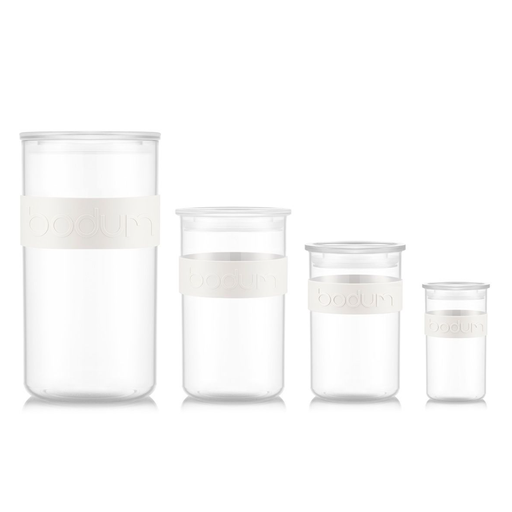
Why this choice suits this profile : This BPA-free plastic set is suitable for storing provisions, snacks and dry ingredients, thanks to its range of sizes.
The 0.25, 0.6, 1 and 2-litre capacities mean you do not need to buy several containers separately. The product details recommend checking the instructions for this model before using it with hot food or in the microwave.
Twelve pieces, several capacities and a stated stackable design.
We have put together a complete, real-time updated list of products that fully meet these strict selection criteria and European safety regulations.
A meal prep container should offer a capacity suited to your portions, a reliable lid and a shape that is easy to stack. Glass is suitable for preparation, storage and reheating when confirmed by the product details. If you are carrying several meals, BPA-free plastic can make your bag lighter.
Yes, some models are designed for freezer use, but you must follow the manufacturer’s instructions. Avoid sudden temperature changes, leave room for liquids to expand and do not place a container taken from the freezer directly into a preheated oven unless this is explicitly permitted.
Its usable lifespan depends on the material, how often it is washed and the condition of the lid. Glass can remain usable as long as it has no cracks or chips. Seals and lids should be replaced when they lose their flexibility, become warped or no longer close properly.