
Livraison le jour même ou le lendemain

Qualité garantie

Débloquez vos offres de bienvenue: Livraison GRATUITE | Jusqu'à -80 % | 30 jours d'essai gratuits à JoyPlus
Téléchargez l'application
A well-organised kitchen starts with the right storage containers. Yet, choosing the right food storage container can be a real headache. Between marketing promises and the reality of daily use, we often find our cupboards cluttered with containers that warp, fail to seal properly, or hold onto stubborn odours. As a product expert at Joybuy, I'm here to bring some clarity. Let's break down the common pitfalls to avoid so you can make a smart, long-lasting choice.
Stocking up on storage containers seems simple, but disappointment is common. By knowing the classic mistakes, you can avoid purchases you'll later regret.
To avoid these traps, a few objective technical criteria make all the difference. These are the true guarantors of a storage container's quality and durability.
The choice of material depends primarily on how you plan to use it.
The effectiveness of an airtight food container relies on a winning combination: a solid locking system and a high-quality gasket.
A good set of storage containers should offer a variety of sizes designed to work together. Favour designs that nest when empty and stack securely when full. Flat bases and lids with small guiding ridges are a sign of smart design, ideal for storing dry foods and maximising space.
To help you see these criteria in action, here are a few options that meet specific needs while avoiding the pitfalls we've mentioned.
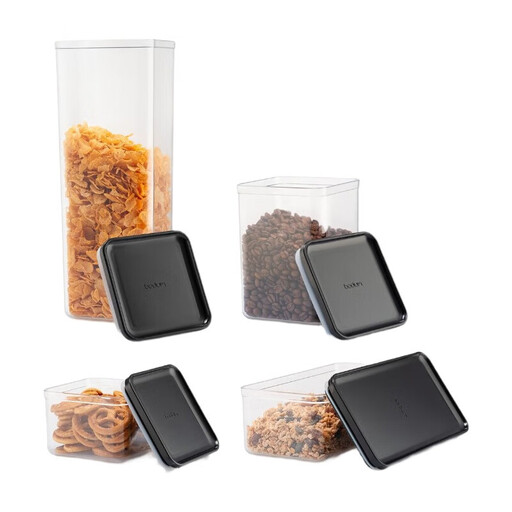
Why we chose it: This comprehensive set is the perfect solution for standardising and optimising your pantry. With four different sizes, it allows you to store pasta, rice, cereals, and other dry goods in a consistent and clearly visible way.
It avoids the wobbly stacking trap with a design that ensures stable stacking, optimising vertical space. Its airtight lids with silicone gaskets effectively preserve the freshness of dry foods.
A 12-piece set for organisation that is both harmonious and functional. The lightweight, BPA-free plastic allows you to identify the contents at a glance.

Why we chose it: Perfect for meal prep enthusiasts who prepare their meals in advance. Its large 2-litre capacity allows you to cook, store, freeze, and reheat a family-sized meal in a single container.
It tackles the wrong-material pitfall with its borosilicate glass, which can withstand oven temperatures up to 400°C and thermal shock. Its 4-clip locking system ensures a perfect, leak-proof seal.
Absolute versatility: it's oven, microwave (without lid), freezer, and dishwasher safe. The removable silicone gasket guarantees a spotless clean.

Why we chose it: For those who believe storage can also be stylish. This glass jar is perfect for elegantly displaying coffee beans, nuts, or biscuits on a countertop or shelf.
It doesn't sacrifice practicality for aesthetics. Its acacia wood lid includes a silicone gasket that provides a truly airtight seal for dry foods, avoiding the "false seal" trap.
Its unique design, with hammered glass and a natural wood lid, is inspired by Roman amphorae. The perfect blend of effective storage and a decorative object.
Discover our full selection of products that meet our quality criteria and the strictest safety standards.
To extend the life of your containers, a few simple steps are all it takes. Remember to wash the silicone gaskets separately for a thorough clean. Make sure everything is completely dry before reassembling the container to prevent mould. Do not use abrasive sponges, especially on plastic. Finally, always follow the temperature guidelines: no plastic lids in the oven, and avoid placing a cold lid on a piping hot glass dish.
No, it is not unbreakable. Its main advantage is its superior resistance to thermal shock, meaning sudden temperature changes (like going from the freezer to a preheated oven). This property prevents it from cracking under normal kitchen use. However, like any glass object, it can break if dropped or subjected to a sharp impact.
Most high-quality glass and plastic containers are freezer-safe. However, it's always best to check the manufacturer's recommendations. When freezing liquids like soups or sauces, always leave 2 to 3 cm of headspace at the top of the container. As the liquid freezes, it expands; this safety margin will prevent the pressure from cracking or warping the container.