
Livraison le jour même ou le lendemain

Qualité garantie

Débloquez vos offres de bienvenue: Livraison GRATUITE | Jusqu'à -80 % | 30 jours d'essai gratuits à JoyPlus
Téléchargez l'application
A well-organised kitchen starts with good storage containers. The problem is, choosing the right model can feel like an uphill battle. Caught between marketing promises and the harsh reality of daily use, we quickly end up with cupboards overflowing with disappointing containers. To avoid throwing your money away, here’s how to sidestep the most common pitfalls and make a truly useful and durable choice.
We all know that cupboard of shame, filled with mismatched and impractical containers. Here are the three design flaws that most often turn a promising purchase into a bitter regret.
To avoid falling into these traps, here are the few criteria that truly make a difference in everyday life.
The material is the heart of the matter. It determines the lifespan, versatility, and food safety of your container.
This is the crucial point for avoiding disasters. Forget simple press-on or flimsy clip-on lids. For a foolproof barrier against air and liquids, the absolute benchmark remains the four-sided locking system with a silicone gasket. This mechanism ensures even pressure around the entire rim, guaranteeing a leak-proof seal that is essential for transporting soup or a saucy dish.
A good food container set should adapt to your needs and your space. Containers of various shapes and sizes, but designed to stack stably, are the key to pantry organisation that is both practical and visually pleasing. Check that the lids and bases nest perfectly to optimise every square centimetre.
Here are a few models that meet specific needs while ticking all the boxes of our quality criteria.

Why we love it: This large 2-litre borosilicate glass dish is the best friend of anyone who preps their meals in advance. Its versatility is unbeatable: it goes from the freezer to the oven, then to the microwave (without the lid), simplifying the entire "cook, store, reheat" process.
Glass, by its nature, doesn't stain or absorb any odours. Its 4-clip locking system with a silicone gasket ensures a perfect seal. Goodbye, leaks!
Its resistance to high temperatures (up to 400°C without the lid) allows it to be used as a real oven dish. A single container from prep to plate.
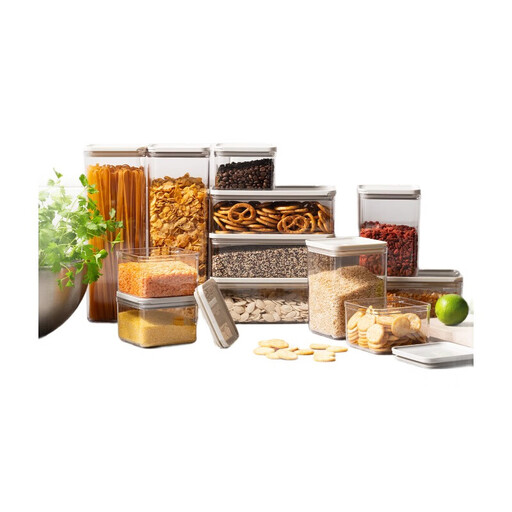
Why we love it: A complete set of 12 BPA-free plastic containers in four different sizes. It's the perfect solution for tidying up the pantry and storing all your dry goods: pasta, rice, cereal, legumes, and more.
No more playing Tetris in your cupboards! The design is engineered for perfectly stable stacking. The airtight lids effectively protect against moisture and pests.
A turnkey solution for harmonising your bulk food storage. The transparent body lets you see what's left and write your shopping list at a glance.
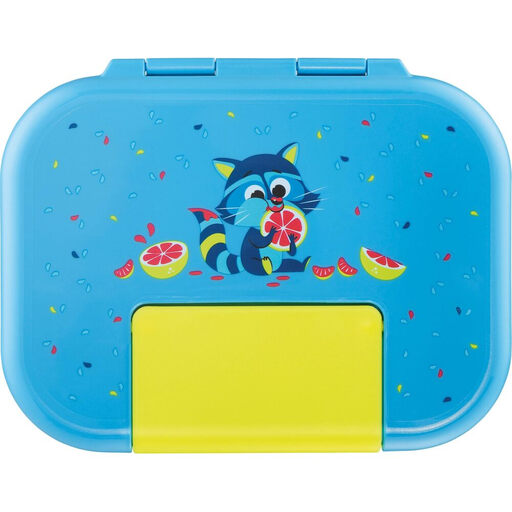
Why we love it: This stainless steel lunch box is built for the daily school adventure. It's tough and can withstand anything. Its large opening clip and attached lid are designed so that young children can manage on their own like big kids.
Stainless steel is virtually indestructible: it's resistant to shocks and warping, and it doesn't retain any odours. Bonus: it's impossible to lose the lid in the cafeteria, as it's attached!
A design that is both durable and smart, promoting a child's independence while ensuring their meal stays fresh and well-protected.
We have selected a full range of products that meet our quality criteria and current safety standards.
For plastic containers, stains (especially from tomato or curry) and odours can be stubborn. A classic tip is to fill the container with a mixture of hot water and baking soda. Let it sit for several hours, then rinse. Exposing the empty, open container to sunlight can also work wonders to neutralise odours and fade stains.
Absolutely not! You must avoid thermal shock at all costs. A sudden temperature change (from -20°C to 200°C, for example) can cause the glass to shatter, even if it's borosilicate. The correct practice is to let the dish return to room temperature before putting it in the oven, or place it in a cold oven so it heats up gradually. And of course, the plastic lid NEVER goes in the oven.
Yes, it's essential. BPA (Bisphenol A) is a chemical compound used in some plastics. It is suspected of being an endocrine disruptor and can migrate into food when it comes into contact with heat or fats. European regulations already prohibit its use in containers for babies. As a precaution, it is therefore essential to choose a plastic food storage container labelled as "BPA-free" for all uses.