
Livraison le jour même ou le lendemain

Qualité garantie

Débloquez vos offres de bienvenue: Livraison GRATUITE | Jusqu'à -80 % | 30 jours d'essai gratuits à JoyPlus
Téléchargez l'application
A well-organised kitchen starts with the right storage accessories. Food storage containers are a cornerstone of this system, whether you're saving leftovers, engaging in meal prep, or simply storing dry goods. However, the market is flooded with models whose promises often fall short. Before you invest, it's crucial to know the pitfalls to avoid so you can purchase a set that is both practical and long-lasting.
Making the right choice isn't just about price or design. Certain common flaws can render a set of containers useless in just a few months. Here's an overview of the main things to watch out for.
To avoid these pitfalls, focus on a few key criteria that make all the difference in daily use.
The choice of material directly impacts the durability, food safety, and versatility of your containers.
A truly airtight food container lives up to its promise thanks to the quality of its lid and seal. Examine the locking mechanism closely. The most effective systems usually combine:
A good food storage set should function as a true kitchen organiser. Favour sets where the containers, even in different sizes, are designed to stack perfectly. Square or rectangular shapes are far more efficient for optimising space in cupboards and the refrigerator than round ones.
For every need, there's an ideal container. Here are a few recommended options tailored to specific user profiles to help you find the food container set that's right for you.
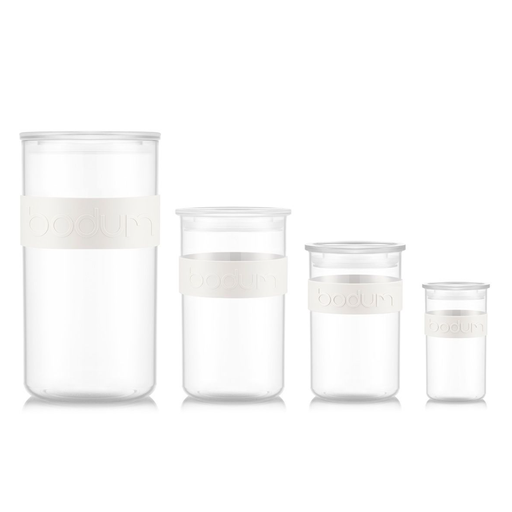
Why we chose it: For those who prep their weekly meals or want a perfectly organised fridge and pantry. This complete set offers a uniform look and maximum versatility.
The stackable design of the Bodum Presso range directly tackles the storage nightmare. The airtight lids guarantee freshness and prevent leaks.
A complete 12-piece set in 4 practical sizes (0.25L, 0.6L, 1L, 2L) for maximum versatility. All made from durable, guaranteed BPA-free plastic.
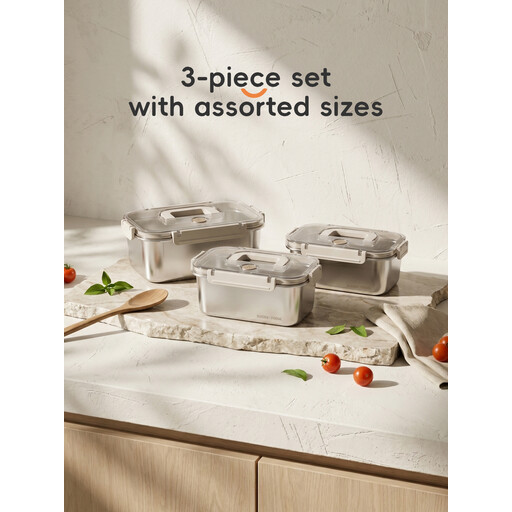
Why we chose it: Ideal for those who prioritise healthy, long-lasting materials and want to eliminate plastic from their food storage. Perfect for packed lunches, picnics, or storing food in the fridge.
This set avoids low-quality materials by using 304 stainless steel, which doesn't stain, retain odours, or warp. An investment built to last.
A healthy material that is corrosion-resistant and ultra-easy to clean. The sturdy locking clips on all 4 sides ensure a perfect seal.
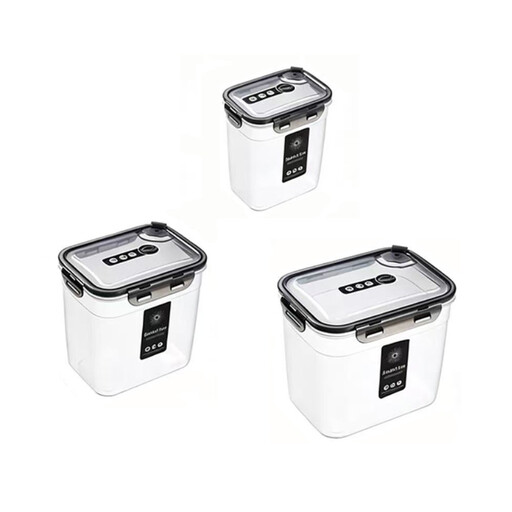
Why we chose it: Perfect for storing dry bulk foods like cereal, pasta, flour, or rice. Their large capacities and transparency are key assets for pantry organisation.
Everything here is designed for dry goods storage, with airtight lids that protect from moisture and pests, putting an end to the chaos of half-open packages.
Large capacities (1.4L, 2.5L, 3.8L) are ideal for bulk items. Their transparent bodies let you see the contents and remaining levels at a glance.
Discover our full selection of products that meet our quality criteria and current safety standards.
1. How do I remove stubborn odours from plastic containers? To neutralise odours, fill the container with a mixture of warm water and baking soda (one tablespoon per litre of water). Let it sit for several hours, or even overnight, before rinsing thoroughly. Pro tip: don't seal your empty containers completely when storing them, as this allows air to circulate.
2. Are BPA-free plastic containers truly safe? The "BPA-free" label indicates that the product does not contain Bisphenol A, a chemical compound whose use in food containers is regulated in France and the EU due to potential health risks. BPA-free plastics are considered a safer alternative for food contact, in line with current European standards.
3. Can you freeze food in all types of storage containers? No, not all materials react to intense cold in the same way. Always refer to the manufacturer's instructions. Good-quality plastics and stainless steel handle freezing very well. For glass, choose borosilicate glass, which is resistant to thermal shock, and never fill the container to the brim: liquids expand as they freeze.