
Same-day & Next-day Delivery

Quality Guaranteed

Unlock Your Welcome Offers: FREE Delivery | Up to 80% OFF | Free 30-day JoyPlus trial
Download the APP
A good set of food storage containers is the cornerstone of a tidy and functional kitchen. Yet, with an overwhelming number of options available, making a purchase can quickly become a headache. Caught between marketing promises and the reality of daily use, it's easy to end up with cupboards full of containers that leak, stain, or stubbornly refuse to stack. To avoid buyer's remorse, here are the most common pitfalls to watch out for.
Here are the three most common mistakes to avoid:
To make an informed purchase, focus on a few key points that make all the difference. These details guarantee the durability, safety, and practicality of your future set of food storage containers.
The choice of material is fundamental and depends on your habits.
The true leak-proof quality of a food container depends on its locking system. The most reliable models combine two elements:
A flat lid is also a real bonus for storage, as it allows you to stack food containers stably.
A good set should adapt to your needs and optimise your space. Before buying, think about the volumes you actually need: small containers for sauces or snacks, medium ones for leftovers or lunches, and large ones for soups or storing dry ingredients. Square or rectangular shapes are generally more space-efficient for cupboards and refrigerators than round formats.
Rather than searching for a one-size-fits-all solution, it's better to find the set that truly matches your lifestyle.

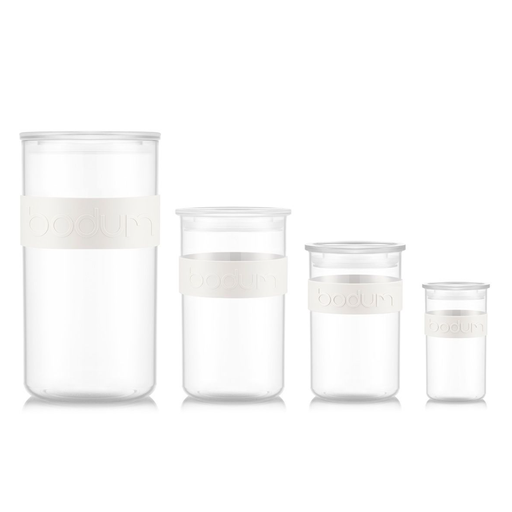
Why we chose it: Perfect for those looking to standardise their pantry or cupboards. This 12-piece set offers four different sizes, allowing you to store dry goods (pasta, rice, flour) in a consistent and harmonious way.
This set sidesteps the "gimmicky set" trap by offering genuinely useful sizes (from 0.25 L to 2 L) and a stackable design that optimises storage space.
The BPA-free plastic and airtight lids preserve the freshness of dry ingredients, while the minimalist, modern design fits into any kitchen organisation scheme.
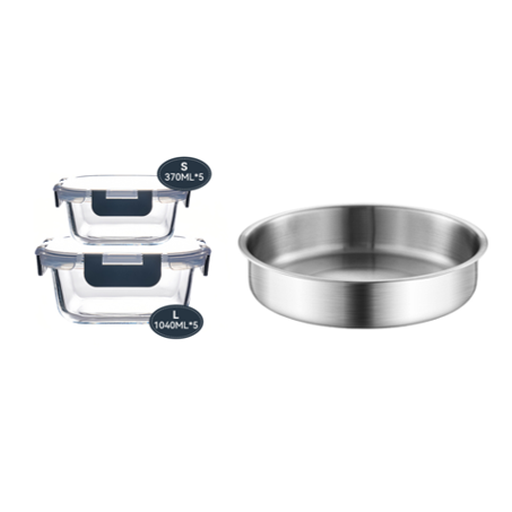
Why we chose it: Ideal for preparing your meals for the week. The borosilicate glass allows you to go from the oven to the fridge, then to the microwave, without changing containers. The two sizes (370 ml and 1040 ml) are well-suited for individual portions and side dishes.
It bypasses the low-quality material trap. The glass won't stain or retain odours, even with saucy dishes. The clip-on lids ensure a perfectly reliable seal for transport.
The versatility of borosilicate glass and the reliability of the seals make this a durable solution for fans of meal prep containers who are looking for efficiency and hygiene.
Why we chose it: For managing dinner leftovers, packing kids' snacks, and storing ingredients, this set offers great versatility. Its light weight makes it easy for all family members to handle.
It avoids the "airtight" myth with well-designed lids that provide an excellent seal for daily use, while still being easy to open and close.
Made from BPA-free plastic, this set is a safe and practical solution. The containers and lids are dishwasher-safe, simplifying daily cleanup.
Explore our full selection of products that meet our quality criteria and safety standards.
No, caution is advised. Glass containers made of borosilicate are generally microwave-safe, but you should always remove the plastic lid, which could warp or release substances under heat. For plastic food containers, always check for a pictogram indicating microwave compatibility. As a precaution, it's best to avoid using them for reheating if there is no clear indication.
Odours (garlic, curry, onion) can be persistent. An effective method is to fill the container with a mixture of hot water and baking soda (one to two tablespoons). Let it sit for several hours, or even overnight, before rinsing. For stains, placing the container in direct sunlight after cleaning can also help to fade them.
Durability depends on use. Glass is more durable in terms of neutrality: it will not degrade chemically, stain, or absorb odours. Its lifespan is almost unlimited, barring breakage. Plastic, even high-quality plastic, will eventually show signs of wear (scratches, cloudiness) after many washes and uses. However, it is much more resistant to shocks and drops, making it a more "durable" choice in a practical sense for transport or for use by children.