
Same-day & Next-day Delivery

Quality Guaranteed

Unlock Your Welcome Offers: FREE Delivery | Up to 80% OFF | Free 30-day JoyPlus trial
Download the APP
A good food storage container can simplify your life in the kitchen, preserve the freshness of your meals, and help you reduce waste. The catch? The market is saturated with products that make tempting promises but don't always deliver. A lid that leaks in your bag, plastic that stains after one use with tomato sauce, or a glass dish that cracks straight out of the freezer... these nightmare scenarios are all too common.
As the Head of Product Selection at Joybuy, my role is to help you sort through the options. Together, let's break down the pitfalls to avoid and the criteria to check to make a smart, durable choice that's perfectly suited to your needs.
Before you make a decision, it's best to know the deal-breakers that can render a product useless after just a few months.
To avoid falling into these traps, here are the technical points to examine closely.
The choice of material depends primarily on how you plan to use it.
A container's seal depends on two things: the locking mechanism and the gasket. for fail-safe protection against leaks, look for models that combine:
A container's compatibility with your various appliances makes all the difference. Read the specifications carefully:
To help you see things more clearly, here is our selection, designed for different uses.

Why we chose it: The perfect *meal prepping* partner. Its 630ml size is ideal for a single serving, and its all-in-one design lets you cook, store, and reheat in the same dish.
Its borosilicate glass body withstands thermal shock, so you can say goodbye to the risk of cracking. The 4-clip lock and silicone seal guarantee a reliable, leak-proof fit.
It goes from the freezer to the oven (without its lid), and then straight into the dishwasher. The very definition of all-in-one for saving time and cutting down on dishwashing chores.
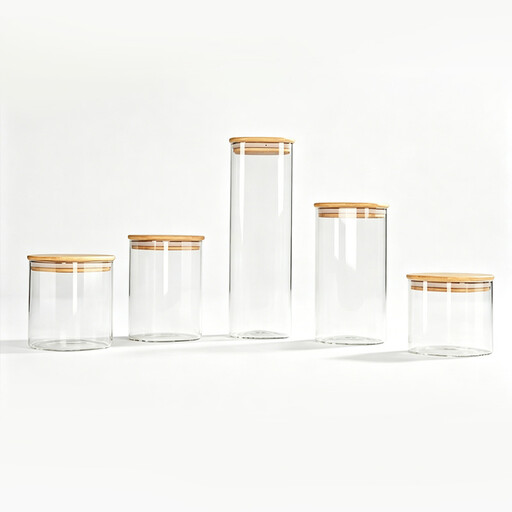
Why we chose it: This set of jars is perfect for **storing dry goods**. The different sizes allow you to store pasta, rice, or cereal, optimising your storage space and adding a decorative touch to your kitchen.
As a perfectly neutral material, glass won't stain or retain odours. The airtight lids create an effective barrier against moisture and pantry moths—a common weakness in entry-level plastic containers.
Their transparent bodies let you identify the contents and check levels at a glance. It's a practical way to manage your stock and ensure nothing is forgotten on the shopping list.
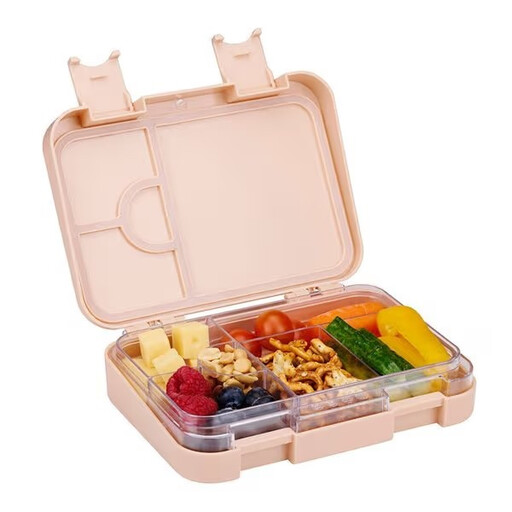
Why we chose it: The solution for those who love a complete lunch but hate when flavours mix. This bento-style lunch box lets you separate your main course, side, dessert, and snacks.
No more mixed-up meals! Its rigid, 6-compartment structure keeps every food item separate. The quality plastic is designed for daily use and easy cleaning.
Ideal for portion control and building a balanced meal. The removable compartments make cleanup in the dishwasher incredibly simple.
Discover our full selection of containers that meet our strict quality criteria and European safety standards.
The key phrase to look for is "borosilicate glass". This type of glass is specifically engineered to withstand thermal shock. A product that simply says "glass" or "tempered glass" offers no equivalent guarantee. The product description must explicitly mention oven compatibility and the maximum allowed temperature.
No, and this is a classic pitfall. The term "airtight" guarantees that air cannot get in, which is essential for preserving food. But to be truly leak-proof against liquids (like soup or sauce), an airtight lunch box must have a high-performance locking system (clips on all four sides) and a silicone seal that provides a perfect barrier. A simple lid that only clips on two sides all but guarantees a leak.
That's a very bad idea. Even if the label says you can, the intense heat of the microwave can warp the lid and ruin its seal. Furthermore, direct contact between very hot or greasy foods and plastic should be avoided. The best practice: always remove the lid and cover the dish with a microwave-safe cover.