
Same-day & Next-day Delivery

Quality Guaranteed

Unlock Your Welcome Offers: FREE Delivery | Up to 80% OFF | Free 30-day JoyPlus trial
Download the APP
A good food storage container can be a real game-changer: less waste, better-organised meals, and a pristine kitchen. The problem? The market is saturated with products that rarely live up to their promises. Between lids that warp after the first wash and plastic that gets permanently stained by tomato sauce, it's easy to make the wrong choice.
As the Head of Product Recommendations at Joybuy, my role is to help you cut through the noise. Let's skip the marketing jargon and focus on what really matters. Here is our guide to avoiding the common pitfalls and choosing containers that will truly last.
For top-notch kitchen organisation and optimal refrigerator food storage, three key points need to be scrutinised.
The choice of material depends primarily on how you'll use it.
The entire effectiveness of an airtight food container depends on its locking system. The most reliable models usually combine:
A good set of storage containers should, above all, optimise space. Look for ranges where the models are designed to be stackable (when full, in the fridge) and nestable (when empty, in the cupboards). A square or rectangular shape is also far more efficient than a round one for maximising every square inch.
Rather than presenting a one-size-fits-all solution, it's better to match a product to a user profile. Here are a few setups that cater to specific needs.
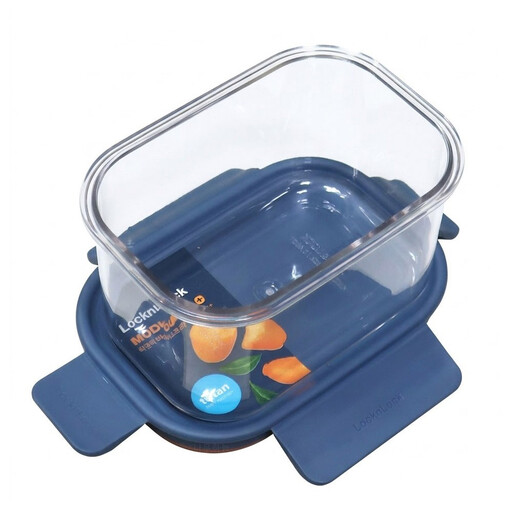
Who is it for? Ideal for safely taking your lunch to the office. Its lightweight, high-quality plastic design and compact size are perfect for slipping into a bag without any risk of leaks.
Its four-clip locking mechanism and hollow silicone seal guarantee a leak-proof closure, avoiding the classic pitfall of leaky lids. The PP plastic is durable and microwave-safe (without the lid).
A 100% airtight and modular design for perfect stacking with other containers from the same range.
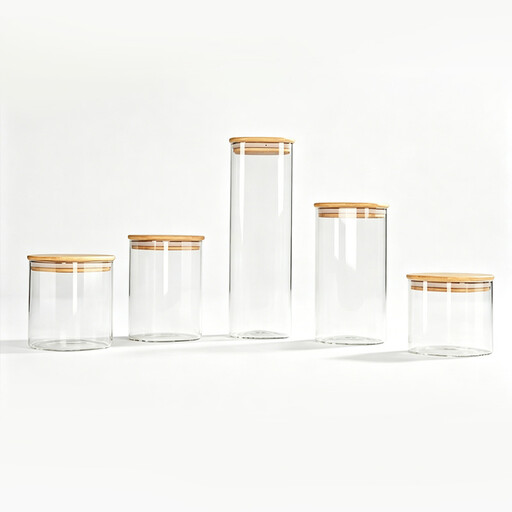
Who is it for? For those who want a pantry that is as stylish as it is organised. This set is perfect for storing dry goods (pasta, rice, legumes, flour) on shelves or a countertop.
Being made of glass, these jars won't stain or absorb odours, protecting them from the flaws of low-end plastics. The set offers a variety of cohesive sizes for harmonious storage.
Inert glass material and a sleek design with a wood-effect lid, combining health and aesthetics for the pantry.
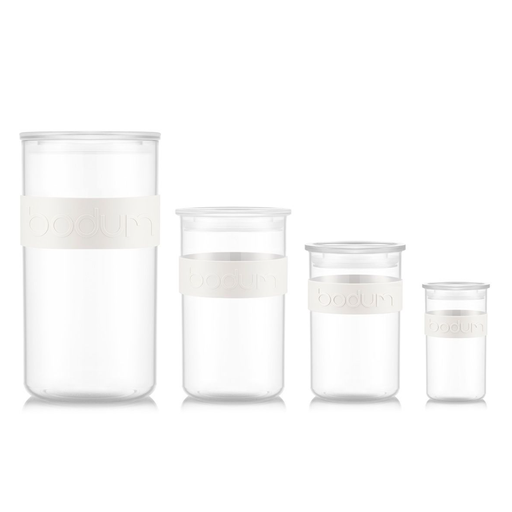
Who is it for? This comprehensive set is perfect for a family's varied needs: storing leftovers, preparing kids' snacks, or stocking ingredients. The four different sizes offer great versatility.
It avoids the "useless set" pitfall by offering genuinely practical sizes (from 0.25L to 2L) and a cohesive, stackable design that optimises storage, unlike mismatched and impractical bundles.
A complete and versatile food storage container set, made from BPA-free plastic, with a stackable design for optimal organisation.
We have selected a full range of products that meet our quality criteria and food safety standards.
No, it is essential to check for the microwave-safe symbol. Even if a container is marked as safe, it is highly recommended to remove the lid before heating to prevent pressure build-up that could warp it. Never use a cracked or damaged container.
For optimal maintenance, remove the silicone seal from the lid after each use. Wash it separately with hot, soapy water, rinse it thoroughly, and ensure that both the seal and the lid's groove are completely dry before putting it back in place.
Glass is an "inert" material, meaning it transfers absolutely no components to food. Food-grade, BPA-free plastics, such as polypropylene (PP), are also considered safe for food contact by European health authorities. Ultimately, the choice depends on your use case: glass reigns supreme for home storage and cooking, while plastic remains unbeatable for its light weight and durability on the go.