
Same-day & Next-day Delivery

Quality Guaranteed

Unlock Your Welcome Offers: FREE Delivery | Up to 80% OFF | Free 30-day JoyPlus trial
Download the APP
A well-organised kitchen starts with common sense and... the right containers. The food storage container is the essential partner for keeping your food fresh longer, reducing waste, and simplifying your life in the kitchen. Yet, faced with an overwhelming number of options, it's easy to end up with disappointing products. As the Head of Product Recommendations at Joybuy, my mission is to help you see things more clearly.
This article gives you all the keys to making the right choice and spotting false promises before you invest in a new set of food storage containers.
Before you even start comparing models, let's review the most common disappointments so you won't regret your purchase.
To avoid these issues, focus on the features that truly make a difference in your daily routine.
The choice of material depends entirely on how you plan to use it.
A reliable seal is the non-negotiable feature. The most effective systems rely on a winning combination:
It's this combination that makes the difference between a simple covered box and a true airtight food container.
For immaculate cupboards, invest in sets of food containers from the same collection. Containers designed to be stacked, whether full or empty (nesting), allow you to maximise vertical space in your cupboards and refrigerator. Square or rectangular shapes are by far the most efficient for not wasting a single square inch, unlike round containers.
To illustrate these tips in practice, here are a few models that check all the right boxes.
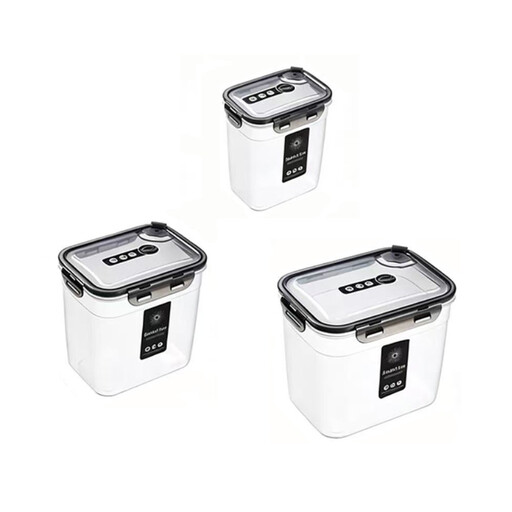
Why we like it: Ideal for bringing order to the pantry (pasta, rice, cereal, legumes). The transparent design lets you identify contents at a glance.
Its modular, stackable design solves the storage puzzle and eliminates wasted space. The airtight lid perfectly seals dry goods from moisture.
The set of three sizes (1.4 L, 2.5 L, 3.8 L) offers a flexible solution to adapt to all your dry food storage needs.
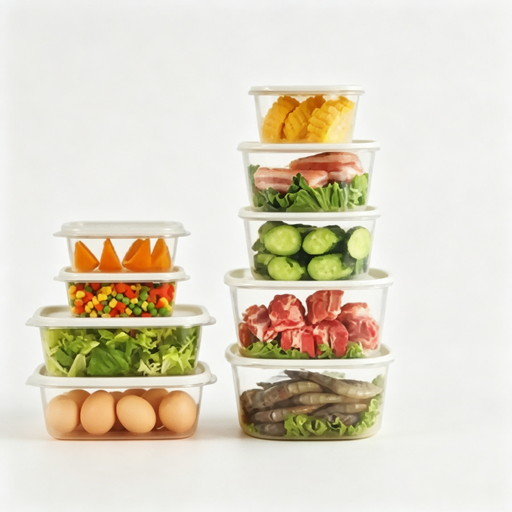
Why we like it: The perfect companion for those who prep their meals for the week. This set is designed to go from the freezer to the microwave, simplifying all the logistics of batch cooking.
The "Leakproof" promise and its resistance to both heat and cold directly tackle the problems of leaks and warping plastic.
An ultra-comprehensive food storage container set that covers the entire lifecycle of a homemade meal: storing, transporting, and reheating.

Why we like it: For those who want to start from scratch with a unified and stylish storage system. This extra-large set covers almost every need.
By offering a coherent and stackable ecosystem, it puts an end to the mismatched containers that create chaos in your cupboards. The airtight lids ensure optimal preservation.
The volume (12 pieces) and variety of sizes (from 0.25 L to 2 L) make this a turnkey and harmonious kitchen storage solution. Guaranteed BPA-free plastic.
We have curated a complete list of products that meet our quality criteria and food safety standards.
How can I tell if a container is truly airtight? The foolproof test: fill the container halfway with water, close it securely, then shake it and turn it upside down. If not a single drop escapes, you can trust it with liquids and to block out air.
Can all plastic containers go in the microwave? No, definitely not! It is imperative to look for the "microwave-safe" icon (often represented by small waves) on the container or its packaging. Using an unsuitable plastic could cause it to melt or release harmful substances into your food. Also, always remember to vent the lid to allow steam to escape.
How do I get rid of stubborn stains (tomato sauce, turmeric) on plastic? A time-tested trick: fill the container with a mixture of hot water and baking soda. Let it sit for several hours (or overnight) before rinsing. Another method: place the empty, clean container in direct sunlight for a few hours. The UV rays are surprisingly effective at fading stains.