
Livraison le jour même ou le lendemain

Qualité garantie

Débloquez vos offres de bienvenue: Livraison GRATUITE | Jusqu'à -80 % | 30 jours d'essai gratuits à JoyPlus
Téléchargez l'application
Managing leftovers, prepping meals in advance, or taking lunch to the office can be a real hassle without the right equipment. Between leaky containers, spoiled food, and a chaotic fridge, it's time to find a solution. This guide is here to help you navigate the jungle of food storage containers and find the perfect model for your daily routine.
Before diving into our top picks, let's review the key criteria for making an informed choice that perfectly suits your needs.
The choice of material is crucial, as it determines the container's use, durability, and maintenance.
An airtight food container is essential for two reasons: preventing disasters in your bag and preserving the freshness of your meals. Check for a silicone seal on the lid and a reliable locking system (usually with clips). Some lids include a steam vent. This clever feature allows pressure to escape in the microwave without removing the lid, thus preventing splatters.
It's time for our selection. We've chosen several models that each meet specific needs: fridge organisation, meal prep, or daily transport.
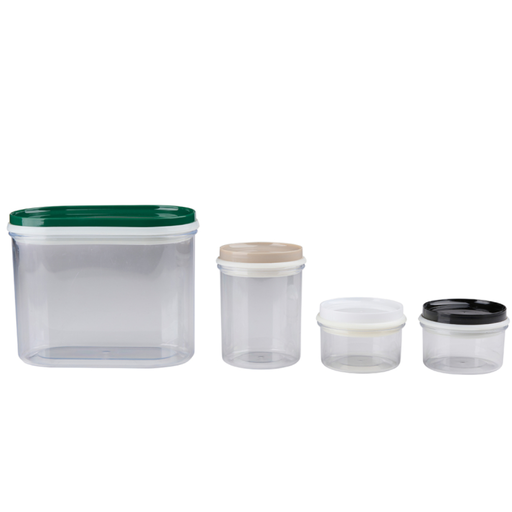
Why It Stands Out This Alpina food storage container set is the ideal solution for getting started and organising your kitchen. With four different sizes, it adapts to every need, from small snacks to dinner leftovers. Its stackable design helps you optimise space in your cupboards or refrigerator.
Pros
Who Is It For? This set is for anyone looking for a simple, budget-friendly first solution to organise dry ingredients (pasta, rice, flour) or store leftovers and snacks in the fridge.
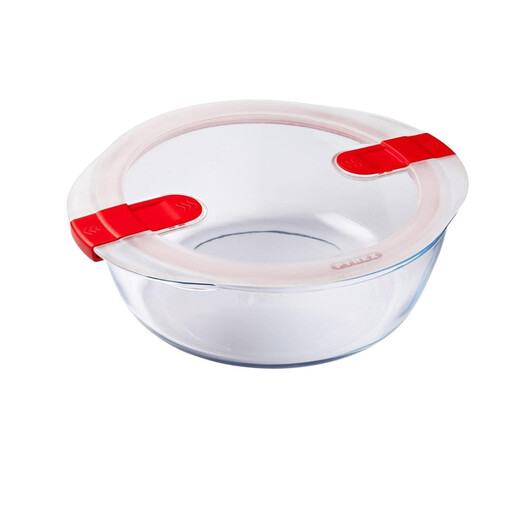
Why It Stands Out The PYREX Cook & Heat dish is the Swiss Army knife of food storage. Its generous 2.3-litre capacity and ultra-durable borosilicate glass body make it the perfect tool for family meals. It goes from the oven to the fridge and then to the microwave with complete safety, thanks to its ingenious lid.
Pros
Who Is It For? The top choice for families and batch cooking enthusiasts. A single dish to cook, store, and reheat: it doesn't get more convenient than this.
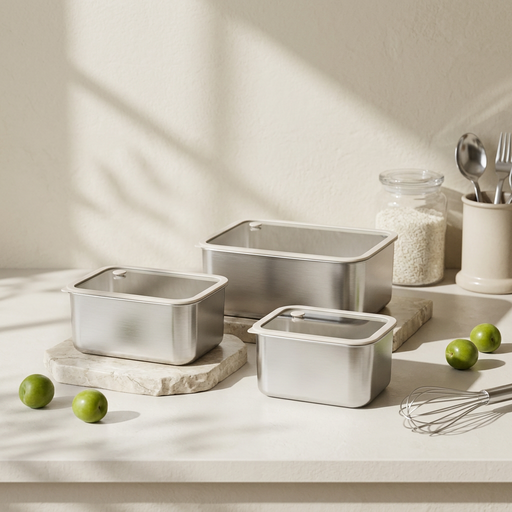
Why It Stands Out This PURE COOK set focuses on the durability and non-reactive properties of food-grade 304 stainless steel. With no coating, these deep containers are a healthy and virtually indestructible alternative. The game-changing detail: the borosilicate glass lid, which lets you see the contents at a glance. A smart touch for organising your fridge!
Pros
Who Is It For? For anyone looking for a durable alternative to plastic and glass, whether for fridge storage or transport. Ideal for picnics, camping, or as an everyday lunch box.
Your needs are unique. If you're looking for specific sizes, freezer-safe containers, or other materials, explore our full range.
Discover Our Freezer-Safe Containers
For fridge storage, glass and stainless steel are the champions. They are inert, meaning they won't alter the taste of your food at all. Glass has the advantage of being transparent and microwave-safe. PP (polypropylene) plastic remains a lightweight and budget-friendly solution, best reserved for dry or low-fat foods.
No, that's a very bad idea. The thermal shock (a sudden temperature difference) can crack the glass, even the most durable kind. On top of that, you'll force your fridge's compressor to work overtime, which will drive up your electricity bill. The best practice is to always let your dish cool to room temperature before putting it in the fridge.
For perfectly neat storage, choose square or rectangular shapes. They fit much better in a fridge or cupboard than round containers, which create wasted space. Opt for a set of food storage containers that are stackable (for the fridge) or nesting (that fit inside one another) to maximise space in your cupboards. Pro tip: put a small label with the preparation date on each container so you never have to throw anything away.