
Livraison le jour même ou le lendemain

Qualité garantie

Débloquez vos offres de bienvenue: Livraison GRATUITE | Jusqu'à -80 % | 30 jours d'essai gratuits à JoyPlus
Téléchargez l'application
Whether you're taking lunch to the office, organising food storage in the fridge, or doing your weekly meal prep, finding the right food storage container can quickly become a headache. The market is flooded with promises, but the reality is often disappointing: a lid that leaks in your bag, plastic that stains after one use with tomato sauce, or a set of containers in sizes that are never actually useful.
As a product expert for Joybuy, my mission is to help you see things more clearly. Let's cut through the marketing jargon and focus on the criteria that truly matter for making an informed and lasting choice.
Before we dive into our top picks, let's review the common mistakes that lead to buyer's remorse.
To make the right choice, there are three technical points to examine closely.
The choice of material directly impacts the use, durability, and maintenance of your container.
A reliable seal depends on a winning combination: a quality silicone gasket to ensure it's airtight, and a robust locking mechanism. Four-sided clip systems are often the safest option, as they distribute pressure evenly across the seal, minimising the risk of leaks.
To simplify your daily routine, always check the icons indicating the container's compatibility. A good food storage container should be able to go from the freezer to the microwave (the base, rarely the lid) and be easy to clean in the dishwasher. This versatility is the key to successful meal prep and hassle-free leftover management.
Instead of an endless list, here are our top picks tailored to specific needs.

Why we love it: This set is the perfect organisational ally. With two practical sizes (370 ml and 1040 ml), it allows you to prepare and store a week's worth of meals. The borosilicate glass goes straight from the fridge to the microwave to reheat your food healthily, without fear of stains or odours.
It sidesteps the "useless set" trap! It offers truly functional sizes for individual portions and main dishes. The high-quality glass eliminates the problem of material degradation.
Hygienic and heat-resistant borosilicate glass material. Lids with a snap-lock system for a foolproof seal.
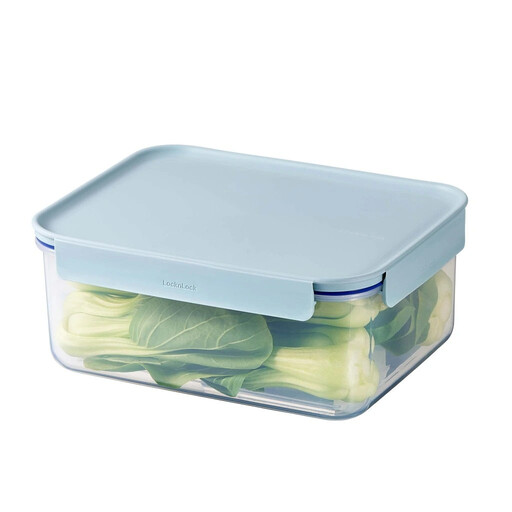
Why we love it: When carrying your lunch, reliability is non-negotiable. Lock&Lock's four-clip locking system is the gold standard for leak-proof performance. Its large capacity and light weight make it an ideal **lunch box** for full meals, without the worry of leaks in your bag.
It tackles the "fake leak-proof" pitfall head-on. The patented locking system and hollow-centre silicone seal ensure a secure closure, tested and approved for its reliability.
Renowned airtight and liquid-tight seal. BPA-free polypropylene plastic, freezer and microwave safe.

Why we love it: For those looking to move away from plastic, stainless steel is the healthy and virtually indestructible solution. This set of three different sizes is perfect for storing leftovers, packing snacks, or a small bento box. The 316 stainless steel is a superior, corrosion-resistant food-grade material.
It eliminates all concerns associated with plastic (BPA, stains, odours, warping). This is a long-term investment that won't degrade over time.
Durable and hygienic 316 stainless steel material. Lightweight, stackable, and compatible with the freezer and dishwasher.
Discover our full selection of food containers that meet our quality criteria and safety standards.
The "BPA-free" label must be clearly written on the packaging or the product itself. You can also look for the recycling symbol: plastics to favour are those marked with the number 5 (PP, polypropylene). Conversely, avoid number 7 (PC, polycarbonate), which may contain BPA.
The short answer is no. Even if the container's base is microwave-safe, most lids are not. The heat can warp the lid's plastic and damage the seal. The best practice is to remove the lid or simply rest it on top of the container without locking it, allowing steam to escape.
For plastic containers, a foolproof trick is to fill them with a mixture of warm water and baking soda (one tablespoon) and let it sit for several hours, or even overnight, before rinsing. For very persistent odours, cleaning with white vinegar can also be effective. This is a problem you'll never encounter with glass or stainless steel.