
Livraison le jour même ou le lendemain

Qualité garantie

Débloquez vos offres de bienvenue: Livraison GRATUITE | Jusqu'à -80 % | 30 jours d'essai gratuits à JoyPlus
Téléchargez l'application
Whether for taking lunch to the office, organising your meal prep, or simply storing leftovers, food storage containers have become kitchen essentials. However, faced with an overwhelming number of options, it's easy to fall into common traps and end up with products that are impractical or need to be thrown out after just a few months. Our guide is here to help you see things more clearly and make a truly informed decision, far from sometimes-misleading marketing claims.
Before diving into materials and sizes, let's review the three deal-breakers that too often turn a promising purchase into a disappointment.
To make the right choice, a few objective technical criteria make all the difference. These are the true guarantors of a quality, practical food storage container.
The choice of material directly impacts the use, durability, and maintenance of your containers.
A leak-proof seal relies on two elements: a removable silicone gasket and a robust locking system. Removable gaskets allow for deep cleaning, preventing bacterial growth. Four-sided locking clip systems often provide good pressure, but screw-on lids are generally more reliable for transporting liquids.
Think about your primary use. For preparing meals in advance (meal prep), a food container set with various stackable sizes is particularly smart. For varied lunches, a compartmentalised bento box helps separate foods. If you're packing hot dishes, a double-walled insulated lunch box is essential for proper meal preservation.
To illustrate these criteria in action, here are a few products that meet specific needs.

Why we chose it: This insulated lunch box is designed for those who want to pack soups, stews, or saucy dishes and enjoy them hot hours later, without access to a microwave. Its wide mouth makes it easy to fill and eat from directly.
The screw-on lid with a thick gasket ensures a reliable seal for liquids, sidestepping the trap of clips that loosen over time. The 316 stainless steel offers superior durability and corrosion resistance.
Vacuum insulation maintains temperature (hot or cold) for 4-6 hours. Premium material (316 stainless steel) for perfect hygiene and rock-solid durability.
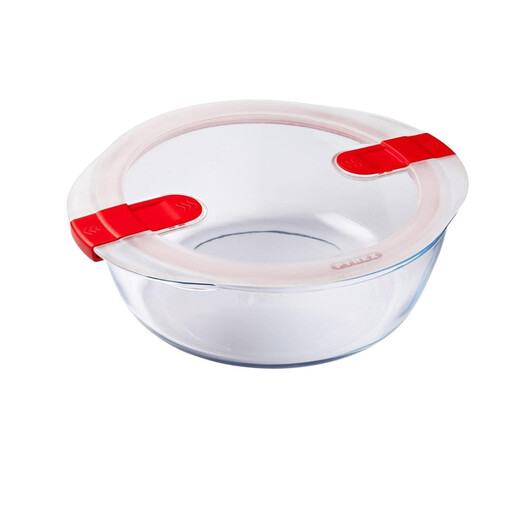
Why we chose it: Ideal for storing family-sized portions, baking casseroles, or preparing large dishes. Its versatility (oven, microwave, freezer) makes it an ally for managing leftovers and optimising time in the kitchen.
It overcomes the "selective compatibility" pitfall. The borosilicate glass dish withstands oven temperatures, while the lid features a special steam valve for safe reheating in the microwave.
Large 2.3L capacity and extreme versatility: cook, store, freeze, and reheat all in one dish. The glass is hygienic and won't stain.
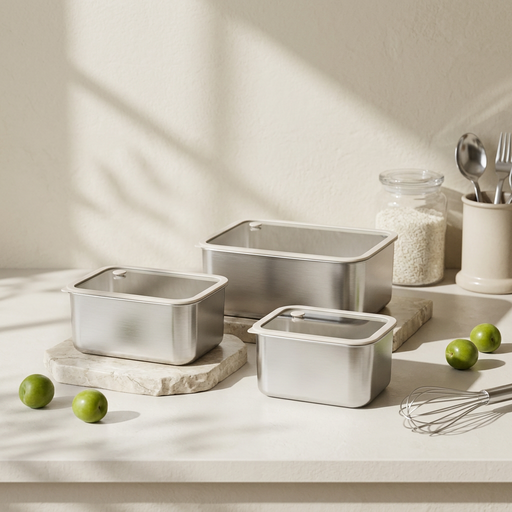
Why we chose it: This set of three different-sized containers is perfect for organising your meals for the week. Stainless steel is lightweight for transport, highly durable, and easy to clean, making it an excellent choice for heavy daily use.
It tackles the trap of questionable durability. Unlike plastic which degrades, 304 stainless steel doesn't stain, retain odours, or wear out from repeated washing. The glass lids let you see the contents without opening them.
A complete set (1L, 1.8L, 3L) for optimal organisation. The containers are stackable to save space, and the material is lightweight, hygienic, and highly durable.
Explore our full selection of products that meet our quality criteria and current safety standards.
No, and this is a crucial point: only borosilicate glass is designed to withstand high temperatures. Standard soda-lime glass (used for drinking glasses) cannot handle oven heat. You should also avoid significant thermal shock, such as placing a container directly from the freezer into a preheated oven. The lid, whether plastic or bamboo, should never be put in the oven.
The best practice is to remove it from the lid after each use and wash it separately by hand with warm water and a little soap. Let it air-dry completely before putting it back in place. Avoid repeatedly putting it through the dishwasher on a high-heat setting, as this could cause it to warp.
Both are excellent quality and perfectly safe for food contact. 304 stainless steel (sometimes called 18/8 or 18/10) is the most common standard, offering very good resistance to corrosion and oxidation. 316 stainless steel, on the other hand, contains molybdenum, which makes it even more resistant to corrosion, especially from salts and acids. For everyday use, 304 is more than sufficient. For regularly storing very salty or acidic foods, 316 offers an extra guarantee of durability.