
Livraison le jour même ou le lendemain

Qualité garantie

Débloquez vos offres de bienvenue: Livraison GRATUITE | Jusqu'à -80 % | 30 jours d'essai gratuits à JoyPlus
Téléchargez l'application
A good food storage container is the promise of a better-organised kitchen, food that stays fresh longer, and ultimately, healthier daily meals. But here's the catch: the market is flooded with products making tempting promises that often disappoint in practice. To avoid unpleasant surprises and make a truly worthwhile purchase, it's crucial to know the most common pitfalls.
As the Head of Product Curation at Joybuy, I analyse hundreds of items for you. My mission: to help you see things more clearly. Let's forget the marketing jargon and focus on what's essential. Here are the 3 pitfalls to avoid before you check out.
The 3 Pitfalls to Avoid When Buying a Food Storage Container:
Fortunately, avoiding these traps is simply a matter of knowing what to look for and checking a few key points. These details, which may seem technical, are what make the difference between a purchase you'll regret and a smart investment for your kitchen and your meal prep routine.
The choice of material determines your container's use, durability, and hygiene.
The effectiveness of an airtight container all comes down to its lid.
Always check the pictograms or manufacturer's instructions regarding compatibility:
Rather than an endless list, we've selected products that meet specific needs, based on the quality criteria we've just discussed.

Why we chose it: Perfect for fans of *batch cooking*. Its large 2-litre capacity allows you to cook a family-sized dish (casserole, lasagne...), store it in the fridge, and then reheat it directly in the oven or microwave.
Its borosilicate glass dish withstands oven heat (up to 400°C without the lid) and is completely stain-resistant. It thus avoids the trap of false versatility and materials that don't age well.
Maximum versatility: cook, store, serve, and reheat in a single dish. The 4-clip locking system ensures a good seal.

Why we chose it: The solution for those who pack their lunch every day and are tired of leaks in their bag. Stainless steel is perfect for preventing accidents. This set of storage containers offers various sizes for a complete meal.
Food-grade 316 stainless steel is virtually unbreakable, won't warp, and retains no odours, unlike cheap plastics. It solves the problem of materials that degrade over time.
Durability and lightness. The set of three sizes (600ml, 1100ml, 2200ml) offers great flexibility for carrying meals and snacks.
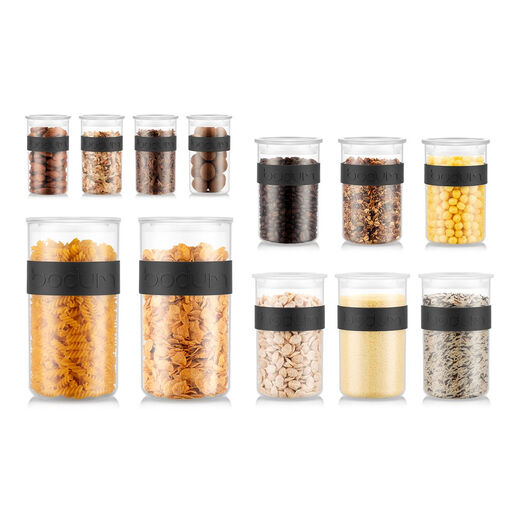
Why we chose it: Ideal for finally bringing order to your cupboards and storing dry goods (pasta, rice, flour, cereal, biscuits...). This complete set allows you to harmonise your storage and optimise space thanks to its stackable design.
Specifically designed for dry foods, its sealing system protects them from moisture and air without aiming for a perfect (and often illusory) liquid-tight seal. The BPA-free plastic is perfectly suited for this purpose.
A complete 12-piece set with 4 different sizes for flawless organisation. The stackable design is a significant space-saver in cupboards.
We have compiled a complete and up-to-date selection of products that meet our strict selection criteria and current regulations.
Absolutely not! This is the surest way to cause thermal shock and shatter your dish, even if it's made of borosilicate glass. The golden rule: let the dish thaw for a few minutes at room temperature or move it to the refrigerator first. In any case, always read the manufacturer's instructions carefully.
To extend its life and ensure a perfect seal, remove it from the lid before each cleaning. Wash it by hand with warm, soapy water. Make sure the seal and its groove are completely dry before putting it back in place. This is the secret to preventing warping and mould growth.
Never! It's a basic rule: no metal objects, including stainless steel, should ever be placed in a microwave oven. The microwaves cannot pass through the metal and can cause sparks (arcing), which could permanently damage your appliance. To reheat the contents of your stainless steel container, simply transfer them to a suitable dish (glass, ceramic...).