
Livraison le jour même ou le lendemain

Qualité garantie

Débloquez vos offres de bienvenue: Livraison GRATUITE | Jusqu'à -80 % | 30 jours d'essai gratuits à JoyPlus
Téléchargez l'application
A good food storage container promises a better-organised kitchen, less waste, and perfect on-the-go lunches. However, the market is saturated with promises that aren't always kept. A lid that warps in the wash, a material that cracks in the microwave, or a questionable seal can quickly turn a practical purchase into a real disappointment.
To avoid falling into these traps, let's break down the pitfalls to avoid and the criteria that truly matter, far beyond the marketing claims.
To choose wisely, focus on a few objective technical features. These are what will guarantee the performance and longevity of your food storage container.
Each use has its ideal material.
This is the crucial point. The effectiveness of an airtight container depends on its locking system. The most reliable models combine two elements:
Before buying, make it a habit to check the product's compatibility with your appliances. A container that isn't dishwasher-safe quickly becomes a daily chore. Likewise, if you're a fan of "meal prep" (preparing meals in advance), freezer compatibility is essential. For optimised kitchen storage, opt for square or rectangular shapes and stackable models.
To help you see more clearly, here is a selection of products that meet specific needs, taking into account the criteria we've just discussed.
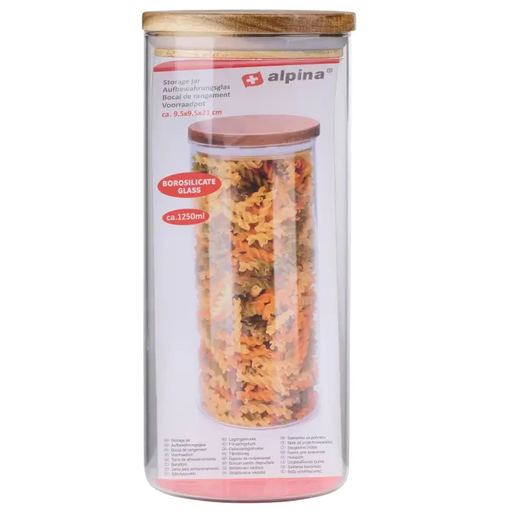
Perfect for those looking to combine aesthetics and functionality. This glass jar lets you see the contents (pasta, rice, coffee) while adding a natural touch with its wooden lid. Its square shape makes storage easy and optimises shelf space.
The acacia wood lid with an integrated gasket is designed for the airtight storage of dry foods, avoiding the trap of a faulty seal for this specific use. It is not intended for liquids or transport.
Elegant and natural design. Stackable square shape for space-saving. Large 1250 ml capacity.
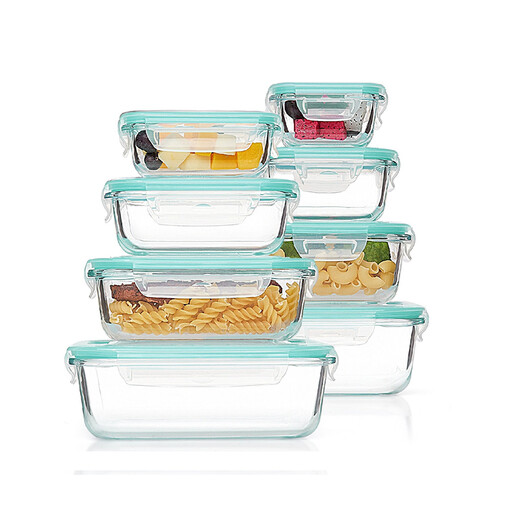
This set of storage containers is the perfect partner for those who prep their meals for the week. The different sizes (from 150 ml to 1040 ml) suit all needs, from sauces to full meals. The glass allows you to go directly from the freezer to the microwave, and then to the dishwasher.
It addresses the pitfall of an unsuitable material. The borosilicate glass is designed to withstand thermal shock, preventing cracks when going from cold to hot. The clip-on lids ensure a reliable seal for transport.
Highly versatile (freezer, microwave, dishwasher). Complete set with 8 different sizes. Hygienic material that doesn't retain odours.

Designed for those who want to bring a hot meal (soup, stew) without access to a microwave. This food thermos uses vacuum insulation to maintain the temperature for several hours. It comes with an insulated carrying bag.
This specialised product avoids the trap of using a non-insulated container for a hot meal. Its 316 stainless steel construction is durable and food-safe, and its lid is designed for a leak-proof seal, even with liquids.
Maintains temperature (hot or cold) for 4 to 6 hours. High-quality 316 stainless steel material. Wide opening for easy filling and cleaning.
Explore our full selection of products that meet our quality standards and current regulations.
A truly airtight container has a lid with clips on all four sides and a thick silicone gasket. The trick to test it? Fill it with water, close it properly, and turn it upside down. Not a single drop should escape.
Glass is an inert material, which means there's no risk of chemicals leaching into your food, even when heated. Plastics, on the other hand, must be chosen carefully. Always opt for models labelled "BPA-free" and follow the manufacturer's instructions for microwave use.
No, you must check for compatibility. Borosilicate glass and stainless steel handle freezing very well. For plastic, a snowflake pictogram indicates if it's suitable. One last tip: when freezing liquids, never fill the container to the brim to leave room for the ice to expand.