
Livraison le jour même ou le lendemain

Qualité garantie

Débloquez vos offres de bienvenue: Livraison GRATUITE | Jusqu'à -80 % | 30 jours d'essai gratuits à JoyPlus
Téléchargez l'application
A well-organized kitchen starts with reliable containers. Choosing the right food storage container seems simple, yet... who hasn't cursed at cupboards full of warped boxes, stubborn lids, or permanently stained plastic? To help you invest wisely, we're breaking down the most common pitfalls and the criteria that truly matter before you head to the checkout.
As the Head of Product Selection at Joybuy, my role is to guide you through the jungle of options, without the marketing jargon. Let's explore how to make the right choice to preserve the freshness of your food, optimize your kitchen, and simplify your life.
Before you fall for a promotional set, it's best to know the flaws that can render a product useless after just a few months.
To make the right choice, focus on these three key points that will truly make a difference in your daily routine.
The choice of material determines the durability, safety, and versatility of your containers.
The effectiveness of an airtight food container depends primarily on its lid. Systems with 4 side clips, combined with a removable silicone gasket, are the guarantee of a foolproof seal against leaks and air. The fact that the gasket is removable is a real bonus: it allows for deep cleaning to dislodge bacteria and prevent bad odours.
Always check the temperatures the container can withstand. A truly versatile product should be able to:
This versatility allows you to cook, store, transport, and reheat in a single dish. A significant time-saver, from preparation to clean-up.
Rather than an endless list, we've selected products for every profile, so you can find the solution that truly fits your daily life.

Why we chose it: Its 630 ml size is perfect for a single serving. The borosilicate glass allows you to reheat your meal at the office without altering the taste, and the 4-clip closure guarantees zero-leak transport in your bag.
The 4-clip locking system with a silicone gasket puts an end to the false promise of an airtight seal. The borosilicate glass solves the problem of stubborn stains and odours from plastic.
Absolute versatility: compatible with the oven (without lid), microwave, freezer, and dishwasher. One container to do it all: prepare, store, and reheat.

Why we chose it: Its large 2-litre capacity is ideal for storing dinner leftovers, soup, or a casserole. It's the perfect oven-safe glass dish that goes straight from the oven to the table, and then to the fridge.
By focusing on a single large size, you avoid the "mismatched set" trap filled with useless sizes. Its robust design is built for heavy use.
Generous size and a perfect seal for liquids. Ideal for storing saucy dishes or soups without risking a disaster in the refrigerator.
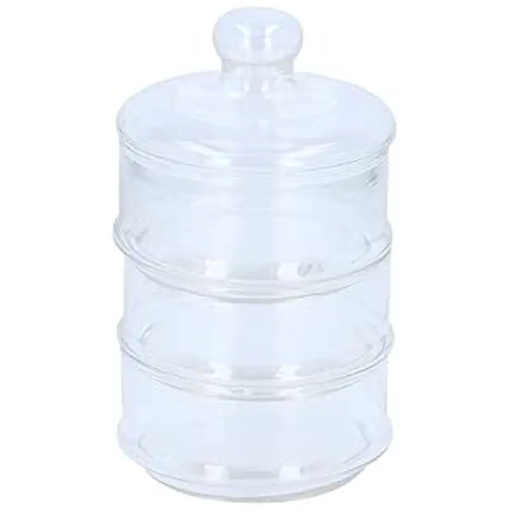
Why we chose it: This kitchen storage jar is designed to optimize vertical cupboard space. Its three glass compartments allow you to store and identify different dry foods (pasta, rice, lentils, biscuits) at a glance.
It meets a specific need (bulk storage) without any false promises of versatility. Its vertical design is a clever solution for tidying up cupboards.
Space-saving and instant organization. It allows you to store three different foods in the footprint of a single jar, while adding a decorative touch to the kitchen.
We have selected a full range of products that meet our quality criteria and current safety standards.
To clear up any remaining doubts, here are our answers to the most common questions.
For impeccable maintenance, remove the silicone gasket from the lid after each use. Wash it by hand with warm, soapy water. For stubborn odours (curry, garlic, etc.), let it soak for an hour in a mixture of warm water and white vinegar (or baking soda), then rinse thoroughly. Make sure it is completely dry before putting it back in place.
Absolutely not! Placing a hot oven-safe glass dish directly into the refrigerator or freezer creates thermal shock, which could cause it to crack or even shatter. Always let the dish cool to room temperature on a neutral surface (a wooden board, a trivet) before refrigerating it.
Both materials are suitable, provided you take a few precautions. Borosilicate glass is an excellent option because it doesn't warp or retain odours. A plastic food container (PP) is lighter and less prone to impact damage in the freezer. In either case, if you are freezing a liquid (soup, sauce, etc.), only fill the container three-quarters full to leave enough room for it to expand as it freezes.