
Livraison le jour même ou le lendemain

Qualité garantie

Débloquez vos offres de bienvenue: Livraison GRATUITE | Jusqu'à -80 % | 30 jours d'essai gratuits à JoyPlus
Téléchargez l'application
Managing your weekly meals can quickly become a challenge. Between packing lunches for the office, preparing meals in advance (the famous meal prep), and storing leftovers, a good set of food storage containers is an essential ally. The wrong set can lead to guaranteed leaks in your bag, degraded flavours, or chaos in your fridge.
This guide is here to help you choose a set of food containers that ticks all the boxes: durability, material safety, and versatility. We've scrutinised several options to help you find the solution that will genuinely simplify your life.
Before we unveil our top picks, let's review the key points to consider to make the right choice.
The choice of material is crucial for the use and durability of your containers.
Glass: A glass container set, often made of borosilicate glass, is valued for its sturdiness and non-reactive nature. It doesn't retain odours or stains (even from tomato sauce) and is considered a healthy option. A glass food container is typically oven-safe (without the lid), microwave-safe, freezer-safe, and dishwasher-safe. Its main drawback is its weight, which can be a deterrent if you carry your lunch every day.
Plastic: Lighter and less fragile, plastic is practical for a portable airtight lunch box. The crucial factor is to ensure it's a BPA-free food container (Bisphenol A). Polypropylene (PP), identified by the number 5 inside a triangle, is a common choice and considered safe for food contact.
To prevent accidents, a perfect seal is non-negotiable, especially for saucy dishes or soups. Check the locking system. Lids with four-sided locking clips and a silicone gasket are the gold standard. Some models also offer screw-on or twist-lock systems that prove just as reliable. A good airtight food container also better preserves food freshness by protecting it from air.
A good set should adapt to your lifestyle. Being microwave and freezer safe has become the standard. Most users also appreciate the convenience of being dishwasher-safe. Also consider storage: nesting (which fit inside one another) or stackable containers save considerable space in your cupboards. For fans of batch cooking, ease of storage is also a key criterion.
Here is our selection of sets that stand out for their effectiveness and suitability for various uses.
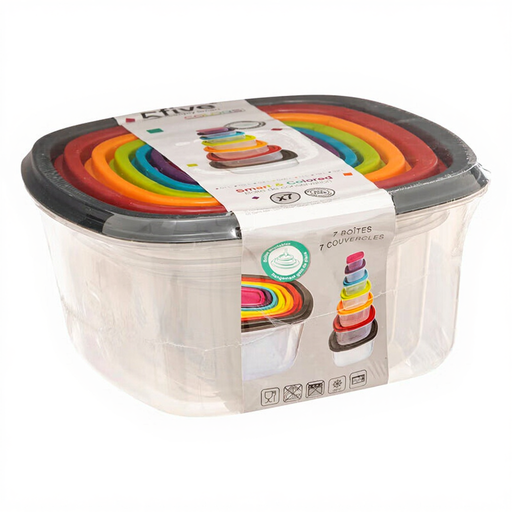
What sets it apart: This set stands out for its practicality and excellent value. With seven different sizes, it covers a wide range of needs, from a small sauce pot to a large salad container. Its nesting design is a major asset for kitchens where space is at a premium.
Key features:
Who is it for? Ideal for those looking for an affordable and comprehensive solution to organise their fridge and cupboards. It's an excellent starter set for storing dry ingredients or leftovers. A word of caution: while the lids are airtight, they are not 100% guaranteed leak-proof for transporting liquids.
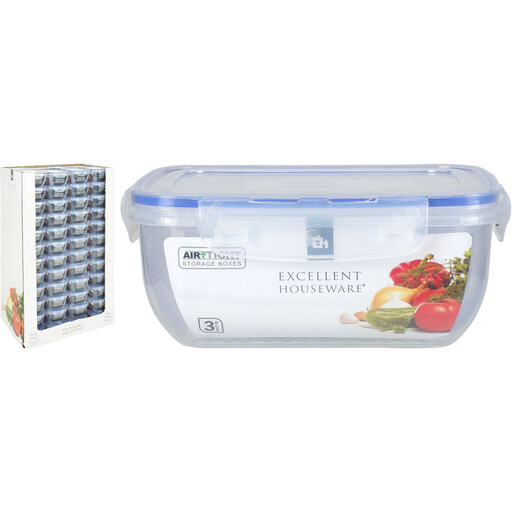
What sets it apart: This set of three rectangular boxes focuses on a secure closure. Its twist-lock system, combined with a silicone gasket, creates an enhanced seal, making it a reliable airtight lunch box for daily transport.
Key features:
Who is it for? Perfect for office workers and students who carry their lunch every day. If your top priority is to avoid leaks in your bag at all costs, this locking system is a compelling feature.
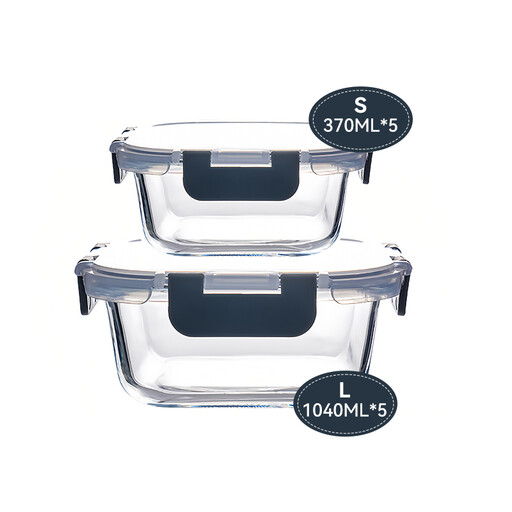
What sets it apart: This set is a complete and durable solution for fans of advance meal preparation (meal prep). Comprising ten pieces of high-quality borosilicate glass, it offers remarkable thermal resistance and hygiene. The set includes two very practical sizes (1040 ml and 370 ml), ideal for preparing main dishes and sides for the entire week.
Key features:
Who is it for? Designed for health-conscious individuals who prefer glass, as well as culinary organisation enthusiasts who need a large number of reliable and uniform containers. It's an investment in durability and peace of mind.
Didn't find exactly what you were looking for in our selection? Perhaps you're looking for storage containers for your dry goods (flour, sugar, cereal)?
? Discover our full range of plastic storage containers for kitchen cupboards
1. How can I tell if a plastic container is BPA-free? The "BPA-Free" label is usually indicated on the packaging or the product itself. You can also check the type of plastic: polypropylene (PP), often identified by the number 5, is a widely used choice considered safe for food contact.
2. Can all food storage containers be used in the microwave? No, it is essential to check for the pictogram indicating microwave compatibility. For plastic containers, it is always recommended to remove or vent the lid to allow steam to escape. Borosilicate glass containers are generally safe, but their plastic lids may not always be.
3. Glass or plastic: which material should I choose for a lunch box? It all depends on your priorities. Plastic is lightweight, which is a clear advantage for daily transport. Glass is heavier, but it is very durable, doesn't retain stains or odours, and can often go in the oven. For mixed use (home and on-the-go), many people opt for a glass set for home use and a few lightweight plastic containers for travel.