
Livraison le jour même ou le lendemain

Qualité garantie

Débloquez vos offres de bienvenue: Livraison GRATUITE | Jusqu'à -80 % | 30 jours d'essai gratuits à JoyPlus
Téléchargez l'application
Juggling daily meals can be a real challenge. Between lunches at the office, weekly meal prepping (the famous meal prep), and the desire to waste nothing, having the right equipment is key. A good food storage container set isn't a gadget; it's your best ally for eating better, saving time, and finally getting your kitchen organised.
However, with so many options available, it's easy to get lost. Glass or plastic? What size should you choose? Is the lid truly airtight?
As the Head of Product Recommendations at Joybuy, my mission is to help you sort through the choices. This guide is designed to give you practical advice and introduce a selection of products that will genuinely fit your lifestyle.
Before you make a purchase, let's review a few essential criteria that will make all the difference in your daily routine.
This is arguably the most important decision. Each material has its pros and cons.
For an airtight lunch box or leak-proof food containers, the locking system is crucial. Lids with locking clips and a silicone seal are the gold standard. They guarantee a secure closure that prevents disasters (like sauces and soups) in your bag. A good seal also preserves food freshness by limiting air exposure.
A good set should simplify your life. Consider the variety of sizes: large models for weekend meal prep containers, and smaller ones for sauces, snacks, or leftovers. The ability to stack the containers—whether full in the fridge or empty in the cupboard—is a significant space-saver. Finally, check that the containers are easy to clean, either by hand or in the dishwasher.
To move from theory to practice, here are three options that meet distinct needs, whether for taking your lunch boxes on the go or for organising your kitchen.
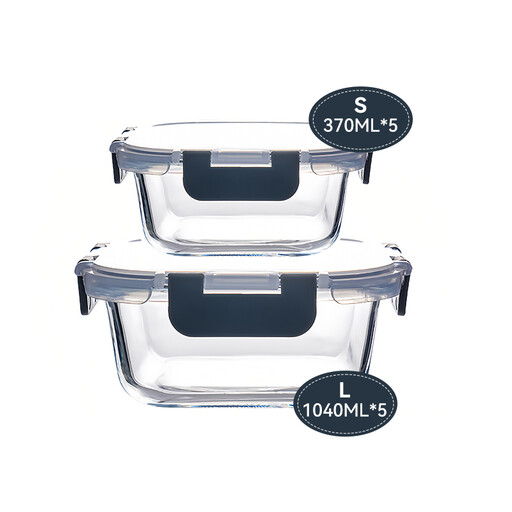
Why it stands out: This comprehensive set focuses on the durability and versatility of borosilicate glass. With ten pieces in two very practical sizes (1040 ml and 370 ml), it's perfect for weekly meal prep.
Pros:
Who is it for?: Ideal for meal prep enthusiasts who prepare several meals in advance and for those who prioritise the durability and hygiene of glass for reheating their food.
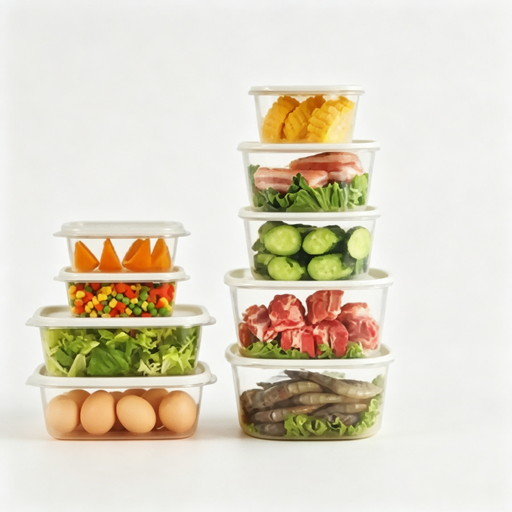
Why it stands out: This nine-piece plastic set offers a wide variety of sizes for optimal kitchen organisation. Its light weight makes it an excellent choice for those who carry their meals daily.
Pros:
Who is it for?: Perfect for families or individuals looking for an all-in-one solution to organise their kitchen, store leftovers, and pack lightweight lunch boxes.
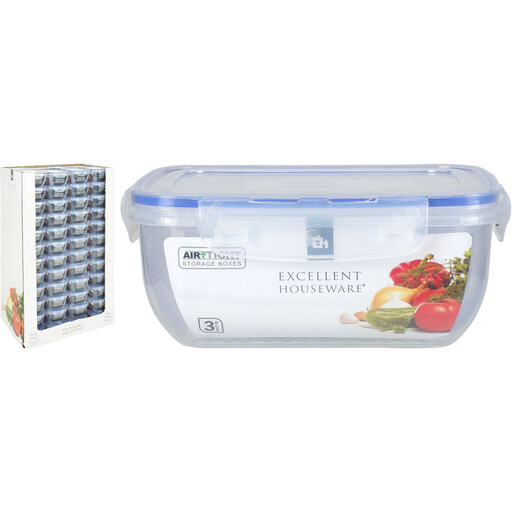
Why it stands out: This three-piece set gets straight to the point with an original locking system. Made from BPA-free polypropylene, it's a simple and effective solution for everyday needs.
Pros:
Who is it for?: A recommended option for students or professionals who need a few reliable containers for their lunch, or for anyone looking to get equipped without the clutter.
If these models don't exactly meet your needs, or if you'd prefer to explore other systems and materials, rest assured: the selection is vast.
For those who appreciate the convenience of plastic and the reliability of clip-on lids, our Plastic Clip Lid Container category is filled with various models, sizes, and brands.
1. Glass or plastic: which is better for a lunch box?
It all depends on your priorities. If you reheat your meal in the microwave at the office and weight isn't a concern, glass is an excellent option for its durability and because it doesn't stain. If you prioritise a lightweight container for transport, a quality BPA-free plastic will be more practical.
2. How do I properly maintain my storage containers to make them last?
For plastic containers, rinse them immediately after use to prevent sauces from setting in. Wash them by hand with hot, soapy water, or check if they are dishwasher-safe. For silicone seals, remember to remove them occasionally for a deep clean to prevent mould growth. Always let the containers air dry completely before storing them.
3. Can all containers be frozen and then microwaved?
Absolutely not! Always refer to the pictograms on the product. Most quality containers are microwave and freezer-safe, but a few precautions are necessary. When reheating a dish in the microwave, always remove the lid or open the vent cap to let steam escape and prevent pressure build-up. For glass, even though borosilicate handles thermal shock well, it's best to avoid sudden, extreme temperature changes.