
Livraison le jour même ou le lendemain

Qualité garantie

Débloquez vos offres de bienvenue: Livraison GRATUITE | Jusqu'à -80 % | 30 jours d'essai gratuits à JoyPlus
Téléchargez l'application
A food storage container can be just as useful for keeping leftovers in the fridge as it is for meal prepping for the week, carrying lunch to work or organising your cupboards. Yet some purchases quickly disappoint: a lid that's hard to close, a poorly thought-out size, fiddly cleaning or a material that isn't microwave-safe.
To avoid unpleasant surprises, it's best not to judge by appearance alone and to check the features that really matter in daily use.
A lid that simply sits on the base may be fine for dry foods. For a sauce, soup or a dish you're transporting, however, it offers less security. If you're looking for an airtight food container, check the type of closure, whether there's a seal and the manufacturer's instructions.
Even when a container is described as leak-proof, always transport liquid dishes upright and make sure the lid is properly locked in place.
Stainless steel generally resists odours and stains well, but it cannot go in the microwave. Polypropylene lids may also have temperature restrictions.
Decorative metal containers, on the other hand, are not designed to hold liquids. Painted steel models or those with a decorative finish often need to be washed by hand to preserve their coating.
A large capacity isn't always practical. A 1.5-litre container might be fine for a family portion, but it can be too bulky for a bag or a shallow fridge. Conversely, a small container quickly reaches its limits for meal prep.
Before ordering, measure your shelves, your lunch bag and the available height in your fridge.
The mention "food contact safe" does not automatically mean the container can go in the oven, freezer or microwave. Each use must be confirmed on the product page.
In a compartmentalised bento box, the dividers stop foods from mixing together. They are practical for children's meals, salads and pre-prepared portions. However, bear in mind that an individual compartment is not necessarily leak-proof.
Clips, attached lids and removable seals make daily use much easier. Also check whether the different parts can be cleaned separately – residue tends to build up in corners and around seals.
Here are some useful guidelines:
For dry foods, choose a well-fitting lid and make sure the inside is completely dry. A pasta container, sugar canister or biscuit tin should be chosen based on what you're storing and the space available, not just for its looks.
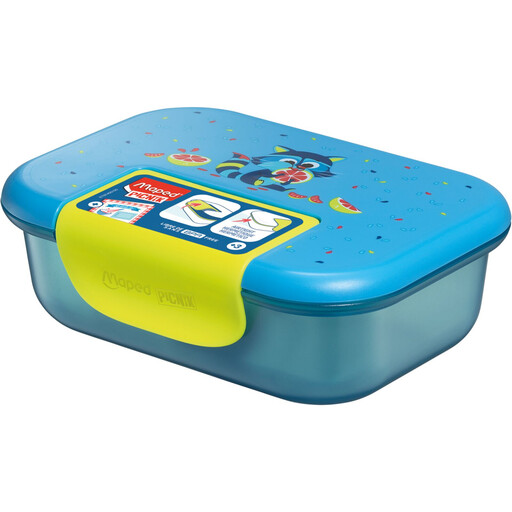
Why this choice suits this profile: Its 900 ml size is ideal for school lunches, snacks and days out. The fluorescent clip and attached lid have been designed for easy handling by a child.
Its rectangular shape minimises wasted space in a bag, while the attached lid reduces the risk of losing a part.
Stainless steel, 900 ml capacity, attached lid and dishwasher-safe according to the product page. Not suitable for the microwave.

Why this choice suits this profile: This matching set is ideal for households that regularly prepare their meals and want to organise their fridge or freezer more efficiently.
The four containers all have the same capacity, so you avoid a mismatched collection and stacking is much easier.
Four 1,600 ml containers in 316L stainless steel, with snug-fitting lids. The manufacturer states they are freezer-safe and dishwasher-safe.

Why this choice suits this profile: This insulated food jar is perfect for soups, saucy dishes and hot meals to take to the office, on a hike or for a picnic.
Its wide opening makes filling and cleaning easy, while the vacuum insulation meets a different need from that of a standard container.
Keeps food hot or cold for 4 to 6 hours as stated, 1.5 litre capacity, 316 stainless steel and wide opening. The manufacturer recommends hand washing.
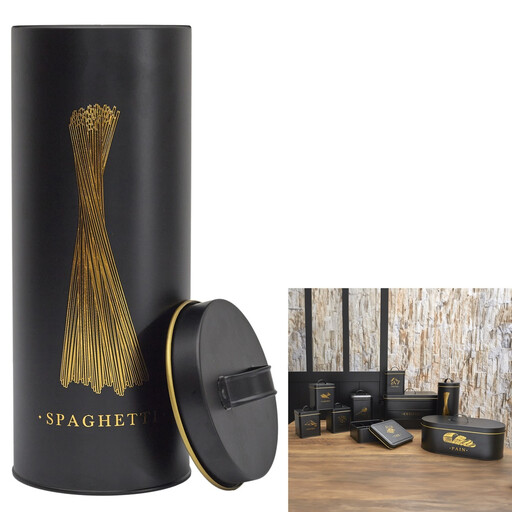
Why this choice suits this profile: Its 31.5 cm height allows you to store spaghetti, linguine or fettuccine without breaking them.
Its vertical shape avoids choosing a container that is too short, while the opaque structure limits exposure to light.
Dimensions of 11.2 × 31.5 × 11.2 cm, reinforced steel, snug closure and for dry foods only. Hand washing recommended.
We have put together a comprehensive, real-time updated selection of products that meet these demanding criteria as well as European safety regulations.
To keep your food container in good condition:
A well-maintained kitchen storage container can last for years. Its lifespan, however, depends on how often it is washed, any knocks it takes and whether you follow the usage limits stated by the manufacturer.
For a cold meal, a stainless steel lunch box or a compartmentalised bento box is usually suitable. For soup or a hot dish, go for a food thermos or an insulated food jar with a wide opening. Remember to check the capacity, weight and how it will sit in your bag.
That depends on the model. The product page for the Maxcook MCFT9526 set states it can be used in the freezer. For other containers, don't assume compatibility based on the material alone. Check the manufacturer's instructions and leave enough space if the contents are likely to expand.
Wash the container promptly after use, rinse it thoroughly and leave each part to air dry. For dry foods, never fill a container that is still damp. A biscuit tin, sugar canister or spaghetti container should be kept clean and dry, and regularly emptied before being refilled.