
Livraison le jour même ou le lendemain

Qualité garantie

Débloquez vos offres de bienvenue: Livraison GRATUITE | Jusqu'à -80 % | 30 jours d'essai gratuits à JoyPlus
Téléchargez l'application
A good food storage container can revolutionise your daily kitchen routine. It promises fresher food for longer, less waste, and a finally organised fridge or pantry. But let's be honest, there's often a world of difference between marketing promises and reality. Leaky lids, plastic that warps in the heat, glass that cracks… disappointments are common and frustrating.
As the Head of Product Recommendations at Joybuy, my mission is to help you see things more clearly. This guide focuses on 100% objective criteria to enable you to make an informed choice and avoid disappointment.
Before you make a purchase, let's review the hidden flaws that can turn a good idea into a real daily headache.
To invest in a product that will last, focus on these three technical criteria.
Here, it all comes down to your intended use.
For liquids, or simply to preserve freshness, a leak-proof seal is non-negotiable. A reliable system is built on two pillars:
A good storage container is one that seamlessly fits into your daily life. For a meal prep container, being able to go from the freezer to the microwave is an absolute prerequisite. Look for the pictograms that confirm compatibility: freezer, microwave (usually without the lid), dishwasher, and oven (exclusively for borosilicate glass). Finally, to optimise space, opt for square or rectangular shapes with flat lids, which guarantee stable, space-saving stacking.
Let's get practical. Here are a few products that meet specific needs, all validated against the criteria we've just defined.

Why we chose it: This set is the perfect partner for preparing meals in advance. Its secret? Borosilicate glass, which allows you to cook, freeze, store, and reheat in the very same dish. It greatly simplifies your weekly logistics. The two sizes (1040 ml and 370 ml) are perfect for main courses and their side dishes.
It avoids the pitfall of the wrong material. The borosilicate glass ensures total versatility (oven, microwave, freezer), while the clip-lock system guarantees a foolproof seal.
A complete set of food storage containers that handles the entire meal prep cycle, from cooking to serving, all in a healthy material built to last.
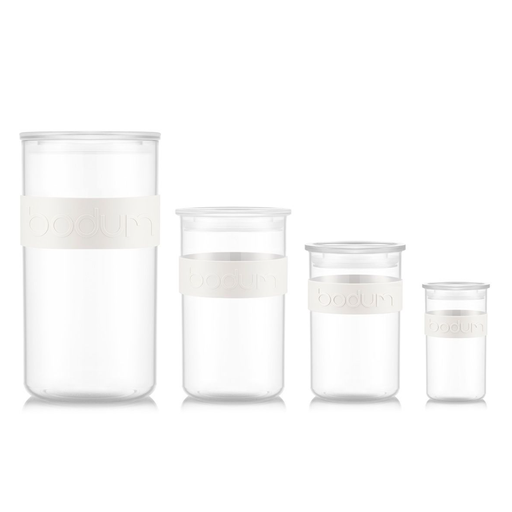
Why we chose it: For those who dream of perfectly optimised pantry organisation, this 12-piece set of BPA-free plastic containers is the turnkey solution. Its four different sizes can hold pasta, rice, cereals, or snacks, while its stackable design makes the most of vertical space.
It avoids the pitfall of impractical design. Its stackable construction and various sizes allow for customised organisation, transforming a chaotic cupboard into an optimised and harmonious space.
A complete and modular organisation system, featuring airtight lids to preserve the crunch and freshness of dry foods.

Why we chose it: With its 630 ml capacity, this is the ideal portion size for lunch. Designed as a true airtight lunch box, its 4-clip locking system eliminates any risk of leaks in your bag. Its borosilicate glass body is microwave-safe (without the lid) for a warm, comforting meal.
It tackles the false-airtightness pitfall head-on. Its 4-clip locking system, coupled with the removable silicone seal, ensures an infallible leak-proof barrier, even with the most formidable saucy dishes.
A completely leak-proof seal for peace-of-mind transport, and a healthy glass material that retains neither stains nor odours.
We have put together a complete selection of products that meet our demanding selection criteria and current safety standards.
Yes, but on one essential condition: it must be made of borosilicate glass. This material is specifically designed to withstand thermal shock. Standard glass (soda-lime glass) would crack instantly when faced with such a drastic temperature change. Always look for the words "borosilicate glass" or "oven-safe" on the product description. And of course, the plastic lid never goes in the oven.
The "BPA-Free" label must be clearly stated in black and white on the packaging or product description. In Europe, regulations on food contact materials are very strict. Rely on recognised brands and manufacturer information—it's the safest approach.
With proper care, a silicone seal can last for several years. The best practice? Remove it from the lid before each cleaning (by hand or in the dishwasher) to thoroughly dislodge any food residue. Let it dry completely before putting it back to prevent any mould growth. If it becomes stiff, cracked, or warped, it's time to replace it, as its seal will no longer be guaranteed.