
Livraison le jour même ou le lendemain

Qualité garantie

Débloquez vos offres de bienvenue: Livraison GRATUITE | Jusqu'à -80 % | 30 jours d'essai gratuits à JoyPlus
Téléchargez l'application
A well-organised kitchen, food that stays fresh longer... The promise of a good food storage container is certainly appealing. Yet, with a bewildering array of options, it's easy to make the wrong choice. A lid that warps in the wash, soup that leaks into your bag, containers that are impossible to stack in your cupboards: these daily frustrations are all too familiar.
As a product expert at Joybuy, my mission is to help you see things more clearly. Let's cut through the marketing jargon and focus on what really matters. This guide is here to help you avoid the common pitfalls and lead you to the model that truly fits your lifestyle.
Before you take the plunge, watch out for these three common issues that too often turn a good purchase into a regret.
To avoid these disappointments, keep an eye on three essential criteria.
The choice of material is crucial and depends on your primary use.
The effectiveness of an airtight container depends on two key elements:
Whether for a fridge organiser or your cupboards, the ability of your containers to stack is crucial. Look for ranges where the lids and bases are designed to nest securely. A food storage container set from the same range is often the easiest solution to ensure perfect compatibility and optimise every square inch.
To help you see how these criteria apply in practice, here are a few options tailored to specific needs.

Why we chose it: This comprehensive set is designed for those who prep their meals for the week or want to fully organise their pantry and fridge. The four different sizes cover every need, from small snacks to family-sized leftovers.
It directly addresses the "storage chaos" problem. As a single set, all the containers form a cohesive collection, although they are not designed to nest. The airtight lids ensure reliable preservation.
Ultimate versatility: a 12-piece set in 4 sizes to store everything from snacks to dinner leftovers. Healthy material: guaranteed BPA-free plastic for risk-free food contact.
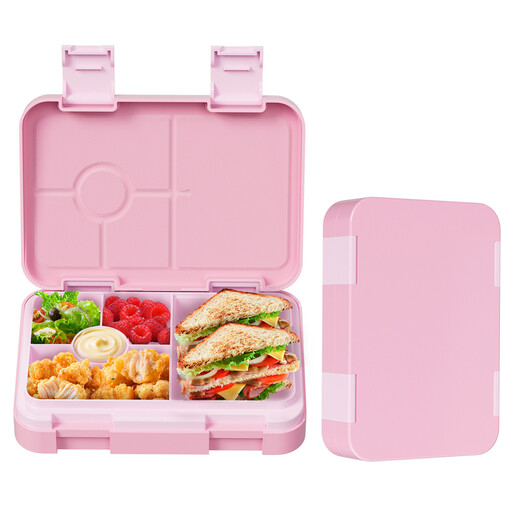
Why we chose it: Perfect for those who like to bring a varied meal to the office or on the go. The compartments allow you to separate the main course, side dish, and dessert, without the flavours mixing. It's the epitome of the modern **bento box**.
It counters the "false airtightness" trap with a lid that seals each compartment individually, preventing unwanted mixing of sauces. The double latches ensure a secure closure for transport.
Compartmentalised meals: 5 well-defined spaces so your dessert doesn't mix with your salad dressing. Designed for life on the go: compact size and double-locking system for worry-free transport.
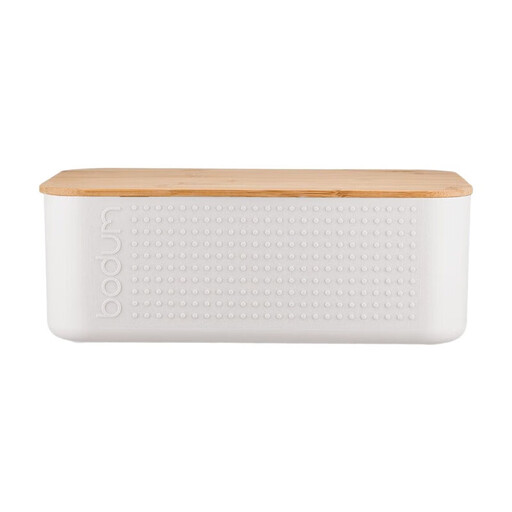
Why we chose it: For those seeking a dedicated solution for storing bread and pastries. This **bread box** combines functionality and design, with a bamboo lid that doubles as a cutting board.
It avoids using a generic, unsuitable container. The plastic body and bamboo lid create an environment that regulates humidity, keeping bread fresh longer without making it soggy, unlike a fully airtight container.
Clever dual-purpose design: the lid transforms into a cutting board. Stylish and practical: a beautiful object that looks great on the countertop. Generous size: large enough for a rustic loaf and croissants.
We've compiled a complete, up-to-date list of products that meet our strict selection criteria and safety standards.
Yes, but not just any container. It is imperative to check for the pictogram indicating microwave compatibility. Generally, these are PP (polypropylene) type plastics. It is almost always recommended to reheat without the lid, or with the lid simply placed on top (not clipped on), to allow steam to escape and prevent any warping due to pressure.
This is a known drawback of plastic. To remedy this, several household tricks exist. You can fill the container with a mixture of hot water and baking soda and let it sit for several hours. Another method is to wash and dry it, then crumple up some newspaper inside and close the lid overnight. The paper will absorb a large portion of the residual odours.
In terms of airtightness, a good glass container and a quality plastic container with a high-performance locking system are on par. However, glass has the advantage of being completely inert and non-porous: there is no exchange with the outside, and it retains no odours, which more faithfully preserves the taste of the food. High-quality plastic with an effective seal remains an excellent option, especially for its light weight and durability.