
Livraison le jour même ou le lendemain

Qualité garantie

Débloquez vos offres de bienvenue: Livraison GRATUITE | Jusqu'à -80 % | 30 jours d'essai gratuits à JoyPlus
Téléchargez l'application
A well-organised kitchen starts with the right containers. The problem? Choosing the right food storage container often turns into a headache. Caught between marketing promises and harsh reality, we quickly end up with cupboards full of containers that no longer seal, absorb the smell of yesterday's curry, or warp after the first run in the dishwasher.
As the Head of Product Recommendations at Joybuy, my mission is to help you see things more clearly. Let's forget the technical jargon and focus on what's essential: preserving the freshness of your food and optimising every square inch of your cupboards. Here are the pitfalls to avoid and the criteria that truly matter for making the right choice.
Before you pull out your credit card, let's review the most common disappointments so you don't fall into the same traps.
To never regret a purchase again, focus on these three key points. They are what will distinguish a gimmicky container from an everyday ally.
Each material has its strengths and weaknesses. Which one should you choose for which purpose?
The seal of a container depends entirely on its lid and the quality of its gasket.
For an impeccably organised pantry or fridge, opt for square or rectangular shapes. They line up perfectly without wasting space, unlike round containers. The ability to stack containers stably is also a decisive advantage. Investing in a set of food storage containers from the same range guarantees perfect modularity and visual harmony.
To move from theory to practice, here are a few models that perfectly illustrate these criteria, each meeting a specific need.
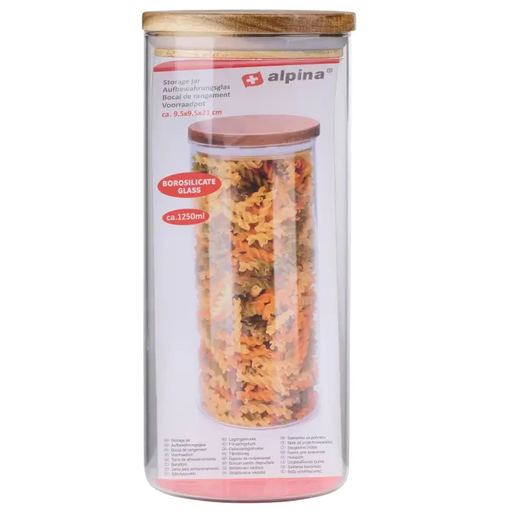
Why we chose it: Perfect for bulk-food enthusiasts who love to display their ingredients. The combination of glass and an acacia wood lid adds a natural touch to the kitchen, while allowing you to keep an eye on your stock.
Its wooden lid includes a silicone gasket that ensures an airtight seal, avoiding the trap of purely decorative lids. Its square shape allows for perfect alignment and puts an end to the headache of inefficient storage.
The glass body absorbs neither stains nor odours. Its square shape is designed for optimised stacking and storage, maximising space in cupboards or on the worktop.

Why we chose it: The perfect ally for hot lunches at the office or on the go. Its 316 stainless steel construction and vacuum insulation are designed to maintain temperature for hours.
It directly tackles the problem of containers that don't retain heat. The premium 316 stainless steel material doesn't retain odours and won't warp, unlike low-quality plastics.
Its vacuum insulation technology ensures heat retention for 4 to 6 hours. The wide mouth makes filling, eating, and cleaning easy.
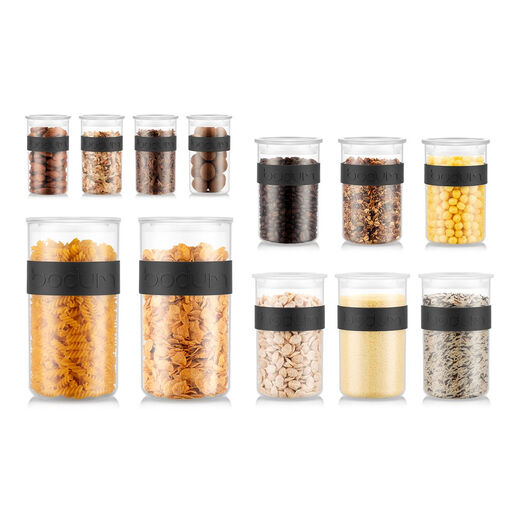
Why we chose it: For those who want a complete and coherent system. This 12-piece set in four sizes allows you to standardise storage from the pantry to the fridge, for both small and large volumes.
This set solves the storage puzzle by offering a unified and stackable system. The quality BPA-free plastic prevents warping and doesn't trap odours. The airtight lids ensure optimal preservation.
The set includes 12 containers in 4 sizes (0.25L, 0.6L, 1L, 2L) for maximum versatility. All components are dishwasher-safe, which greatly simplifies cleaning.
We have compiled a complete and up-to-date list of products that meet our strict selection criteria and current regulations.
How can I be sure a container is truly airtight? The foolproof test: fill the container with water, close it, then shake it and turn it upside down. If not a single drop escapes, the seal is leak-proof. For airtightness, a lid that closes with slight resistance and a firm "click" is often a good sign.
Can all food storage containers go in the microwave? No. Only containers with a specific pictogram indicating microwave compatibility should be used. Generally, borosilicate glass and certain high-quality plastics (PP) are suitable. Stainless steel and lids made of wood or metal must NEVER go in the microwave. Always remember to remove the lid or leave it ajar to allow steam to escape.
How do I care for a wooden lid to make it last? Wood is a natural material that is sensitive to moisture. The golden rule: never put it in the dishwasher or let it soak. Clean it with a damp cloth and a little soap if necessary, then dry it thoroughly immediately. To nourish it and preserve its beauty, you can occasionally apply a thin layer of food-grade mineral oil.