
Livraison le jour même ou le lendemain

Qualité garantie

Débloquez vos offres de bienvenue: Livraison GRATUITE | Jusqu'à -80 % | 30 jours d'essai gratuits à JoyPlus
Téléchargez l'application
Choosing a food storage container? It seems simple enough. But who hasn't cursed at a leaky lid, a container permanently stained by the first bolognese sauce, or a box that cracks in the freezer? Faced with the jungle of available models, it's easy to be fooled by marketing. As the Head of Product Recommendations at Joybuy, my mission is to guide you toward making the right choice—one that will truly fit your daily life.
Before we even start comparing models, let's review the common disappointments that turn a good purchase into a regret.
To avoid making a mistake, focus on three technical parameters that determine the quality and durability of your food storage container.
The choice of material directly impacts use, durability, and maintenance.
The seal's effectiveness depends on two elements: the gasket and the locking mechanism. The most reliable systems combine a silicone gasket (often removable for deep cleaning) with a lid featuring four locking clips. This design ensures uniform pressure around the entire rim, significantly reducing the risk of leaks, even with liquids.
A well-organised kitchen is one where space is optimised. A stackable container is a major asset for efficiently organising your cupboards and refrigerator. Check that containers from the same range nest or stack stably. Finally, always check the compatibility icons: freezer, microwave (often without the lid), and dishwasher.
Rather than an impersonal list, here are options that meet specific needs while avoiding the pitfalls mentioned above.

Why it's a great choice: Ideal for those who love to bake a dish in the oven (casserole, lasagne) and store the leftovers directly in the same container. The borosilicate glass allows you to go from storage to cooking, then straight to the table.
This heat-resistant borosilicate glass container avoids the "illusion of versatility" pitfall. It doesn't warp, stain, or retain odours, ensuring a long lifespan.
Healthy, non-reactive material that preserves the true taste of food. Oven, microwave, freezer, and dishwasher safe for simplified use.
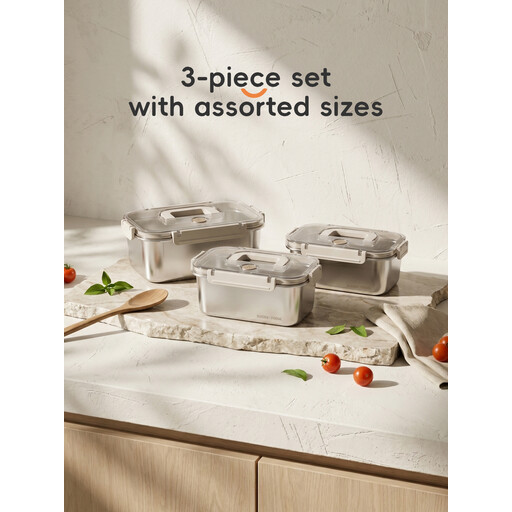
Why it's a great choice: For those who prep their meals for the week, this stainless steel set of food containers offers durability and various sizes for optimal organisation. Stainless steel is perfect for preserving food without altering its taste.
Food-grade 304 stainless steel doesn't stain or retain odours, unlike low-quality plastics. The four-clip locking system is designed to be robust and durable.
Highly durable, lightweight, and easy-to-clean material. The set of three different sizes provides great flexibility for storing meals, sides, or fruits.
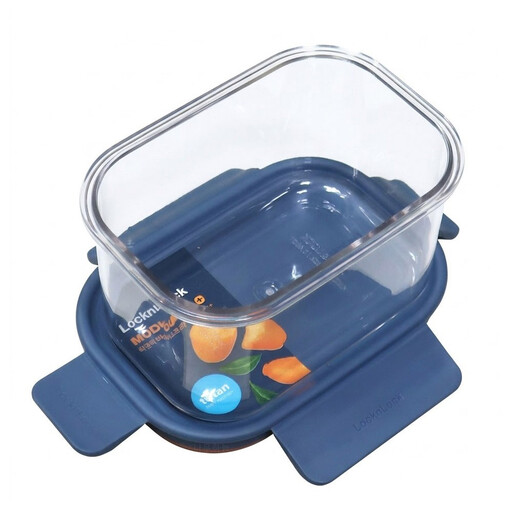
Why it's a great choice: Perfect for taking a single serving to the office or university. Its compact size, light weight, and leak-proof seal make it an ideal **lunch box** for daily transport.
Its four-clip locking mechanism and hollow silicone seal guarantee a 100% airtight closure, avoiding the dreaded leaky-bag pitfall. The durable plastic is BPA-free.
Modular design allows you to stack and nest containers from the same range to save space. Lightweight and impact-resistant for everyday use.
We have selected a full range of products for you that meet our quality criteria and current safety standards.
The choice depends on your primary use. For versatility (cooking, serving, storing) and if weight isn't an issue, a glass container is an excellent option. For taking meals on the go, for kids, or if you prioritise light weight and impact resistance, a high-quality, BPA-free plastic container (PP, Tritan) will be more suitable.
This is a common problem. To minimise it, rinse the container with cold water immediately after use, before washing it with hot water. Cold water helps prevent pigments from setting. For stubborn stains, a paste of baking soda and water, or a few hours of exposure to direct sunlight, can help fade them.
Airtightness depends on the quality of the design. A truly airtight food container must have a silicone gasket in perfect condition and a locking system that applies even pressure around the entire lid, such as a 4-clip mechanism. Remember to regularly check the condition of the gasket and ensure all clips are securely fastened to guarantee a proper seal.