
Livraison le jour même ou le lendemain

Qualité garantie

Débloquez vos offres de bienvenue: Livraison GRATUITE | Jusqu'à -80 % | 30 jours d'essai gratuits à JoyPlus
Téléchargez l'application
A well-organised kitchen and a successful war on waste often start with one simple step: choosing the right food storage container. The problem? The gap between marketing promises and reality can be huge. You quickly end up with cupboards full of leaky containers, lids that warp in the wash, or boxes that forever hold the memory of last week's curry.
To avoid falling into this trap, let's break down the pitfalls to avoid before you check out.
Choosing the right solution for food storage isn't a lottery. You just need to know the few criteria that truly make a difference.
To turn your kitchen into a model of efficiency, forget the marketing spiel and focus on the features that really matter.
The choice of material has a direct impact on your container's use, durability, and maintenance.
A container's seal depends almost entirely on the quality of its lid and gasket.
To avoid chaos in your cupboards, opt for stackable containers. Square or rectangular shapes reign supreme for optimising space, far more than round or oval models. Investing in a set of food storage containers from the same range is the best way to ensure perfect modularity and maximum space-saving, both in the fridge and in the pantry.
Rather than an endless list, we've selected a few models that meet specific needs, always keeping our criteria of durability and practicality in mind.

Why it's the right choice: Perfect for meal prep enthusiasts who prepare their week's meals in advance. This container goes from the freezer to the microwave (or oven, without the lid), and then straight into the dishwasher. The cold, hot, and clean chain, completely hassle-free.
Its borosilicate glass body is impervious to stains and odours, whereas low-end plastics end up betraying the previous dish. Its clip-lock system is built to last, wash after wash.
Its versatility (oven, microwave, freezer) and impeccable hygiene. The glass is non-porous, a guarantee of cleanliness and neutrality.
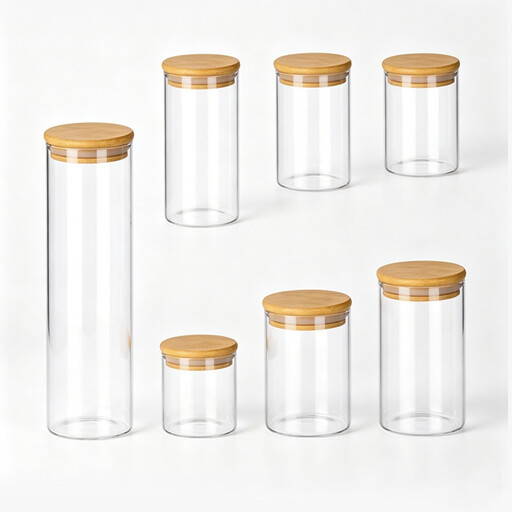
Why it's the right choice: This set is the ideal solution for bringing order to your dry goods (pasta, rice, legumes, flour...). The transparency of the glass allows you to see the contents at a glance and manage your stock without having to open everything.
Unlike plastic containers that eventually become stained, these glass jars keep their transparency intact. Their uniform, vertical design is made to optimise shelf space, avoiding the headache of mismatched formats.
A sleek aesthetic that allows you to keep your kitchen organisation on display. The set, with its different sizes, adapts to all storage needs.
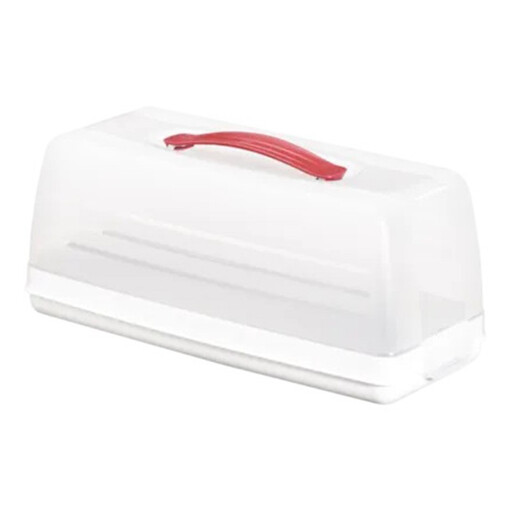
Why it's the right choice: For all amateur bakers who love to bring dessert, this cake box is the ultimate dedicated solution. It is specifically designed to transport cakes, tarts, and other sweets without risking a disaster upon arrival.
It meets a very specific need that classic containers ignore. No more cling film sticking to the icing or a lid that's too low and crushes the decoration. Its sturdy clips and carrying handle are real assets.
Its transport-focused design: an ergonomic handle and secure locking clips for travelling with peace of mind.
Explore our full selection of products that meet our quality criteria and current safety standards.
No, and this is a critical point to watch for. It is imperative to check for the "microwave-safe" logo (often symbolised by wavy lines). Only containers made of polypropylene (PP) are generally suitable. In any case, remember to remove the lid or open its vent before reheating to let the steam escape and prevent pressure from deforming the container.
For the most stubborn odours (curry, tomato sauce...), an old-fashioned trick remains unbeatable: make a paste with baking soda and a little water, coat the inside of the container with it, and let it sit overnight before rinsing. However, the best advice is preventative: a good rinse right after use avoids a lot of trouble.
Not necessarily. Glass is unbeatable in terms of hygiene, heat resistance, and neutrality (no transfer of odour or taste). On the other hand, it is heavier and, by definition, breakable. For a portable lunch box, a good quality plastic model (BPA-free, made of PP) will often be more practical and better withstand the rigours of transport. Ultimately, it all comes down to your primary use: storage at home or a lunch box for on the go.