
Livraison le jour même ou le lendemain

Qualité garantie

Débloquez vos offres de bienvenue: Livraison GRATUITE | Jusqu'à -80 % | 30 jours d'essai gratuits à JoyPlus
Téléchargez l'application
Better kitchen organisation and less waste is a goal many of us share. Yet, choosing a simple food storage container can quickly become a headache. Between marketing promises and the reality of daily use, it's easy to end up with cupboards full of containers that are as useless as they are bulky. This guide is here to help you see things more clearly and make a truly informed choice.
As a Product Expert at Joybuy, my mission is to guide you through the jungle of available options. Let's break down the most common pitfalls and the criteria that really make a difference.
To avoid falling into the trap, let's review the most frequent disappointments.
To stop making mistakes, focus on the few technical details that make all the difference in your daily routine.
The choice of material is crucial for use, durability, and maintenance.
A truly airtightfood container relies on a winning combination: a removable silicone seal (essential for perfect cleaning) and a four-sided clip-locking system. This design is the only one that ensures uniform pressure on the seal, guaranteeing a foolproof seal against air and liquids.
For optimised kitchen storage, modularity is key. Favour ranges with square or rectangular shapes, with lids designed to stack and nest stably. A good set of food storage containers in different sizes but the same format allows you to create a coherent system and make use of every square inch of your cupboards.
Rather than searching for the non-existent perfect container, it's better to find the one that truly matches your habits.
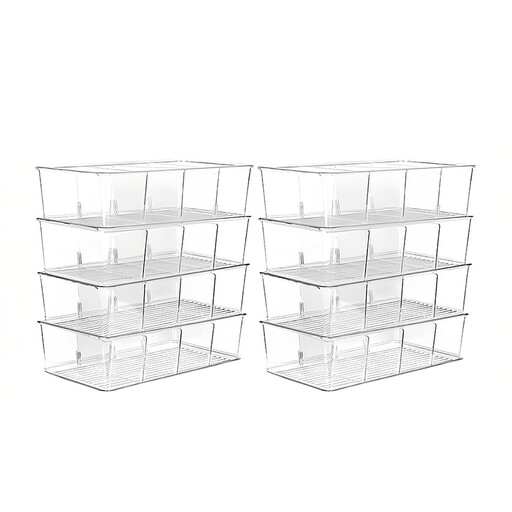
Why we chose it: Ideal for those who dream of an immaculately organised pantry. This set of uniform, transparent containers allows you to organise everything perfectly: dry foods, snacks, coffee, tea bags... Everything is visible and tidy. Their format is specially designed to optimise shelf space.
No false promises here: everything is designed for organisation. The PET material resists odours better than standard plastics, and the rectangular shape maximises storage space without any loss.
Perfect visibility of contents thanks to its transparency. Modular and stackable design for a pantry that's optimised down to the last millimetre.

Why we chose it: For those who prep their meals for the week and demand a healthy, durable solution. Stainless steel is indestructible, hygienic, and won't retain stains or odours from curry or sauces. This set of three sizes is perfect for freezing homemade dishes.
316 stainless steel is a solution built to last. Unlike many plastics, it won't warp, stain, or retain any odours. A true long-term investment.
Premium material (316 stainless steel) is ultra-resistant to corrosion. Freezer and dishwasher safe for hassle-free maintenance. Three versatile sizes (600 ml, 1100 ml, 2200 ml).
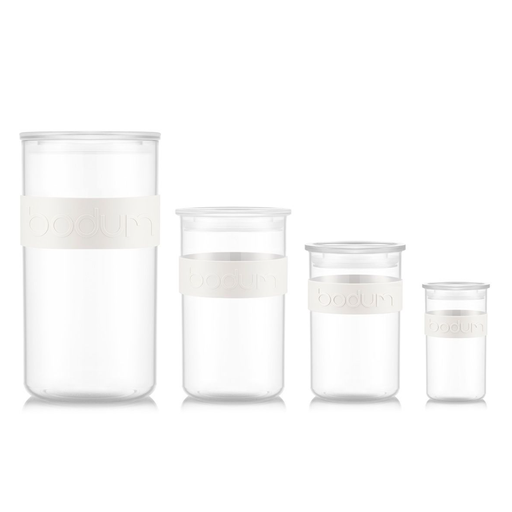
Why we chose it: This ultra-comprehensive set is the perfect all-in-one solution for families. With 12 containers in 4 sizes (0.25 L, 0.6 L, 1 L, 2 L), it meets every need: from kids' snacks to dinner leftovers and storing dry ingredients.
Its locking system is truly airtight, which protects freshness and prevents leaks—the weak point of many entry-level sets. The BPA-free plastic is robust, and the stackable design is well-thought-out.
An ultra-comprehensive 12-piece set for maximum versatility. Four practical sizes to adapt to all uses. Stackable design for real space savings.
Discover our full selection of products that meet our quality criteria and current standards.
How do you remove stubborn odours from a plastic container? To neutralise odours, fill the container with a mixture of warm water and baking soda (one tablespoon per litre). Let it sit for several hours, or even overnight, before rinsing thoroughly. Pro tip: never fully close your empty containers for storage, to allow air to circulate.
Can you freeze food in any storage container? No, not all materials can withstand the deep freeze. Stainless steel and most quality plastics (look for the snowflake symbol) are perfectly suitable. Glass is also an option, provided you never fill the container to the brim: you need to leave space for the food to expand as it freezes, otherwise the glass may crack.
Are "BPA-free" plastic containers truly safe? The "BPA-free" label guarantees the absence of Bisphenol A, a controversial chemical compound. Manufacturers replace it with alternative plastics like polypropylene (PP) or Tritan. These materials, which comply with European regulations, are considered a safer option for food contact, especially with fatty, acidic, or hot foods.