
Livraison le jour même ou le lendemain

Qualité garantie

Débloquez vos offres de bienvenue: Livraison GRATUITE | Jusqu'à -80 % | 30 jours d'essai gratuits à JoyPlus
Téléchargez l'application
Finding the right food storage container can revolutionize your kitchen and simplify your daily life. The problem? The market is saturated with promises that don't always deliver. A container that leaks in your bag, food that loses its freshness in 48 hours, plastic stained for life by the first bolognese sauce: we've all been there. The good news: it's all avoidable.
At Joybuy, I'm in charge of product recommendations. My goal? To help you cut through the noise. Let's forget the marketing jargon and focus on what's essential for making a smart, sustainable, and truly practical choice for your everyday life.
Before you pull out your credit card, watch out for these three classic traps that can quickly turn a good deal into a disappointment.
Making the right choice comes down to three criteria. These will make all the difference in the performance and lifespan of your containers.
Each material has its strengths and weaknesses. It all depends on how you'll use it.
A container's effectiveness hinges entirely on its lid. Check for a removable silicone gasket: it's the key to easy and thorough cleaning. Systems with four-sided locking clips are incredibly effective at creating a perfect seal against air and liquids. This is essential for transporting your beef stew without redecorating the inside of your bag.
Think about your primary use. To organize your cupboards, a stackable set of storage containers in various sizes will be your best friend. For meal prep or for taking your lunch to go, opt for individual-sized containers that are easy to carry and, if needed, insulated.
To put theory into practice, here are a few products that check all the right boxes for different needs.
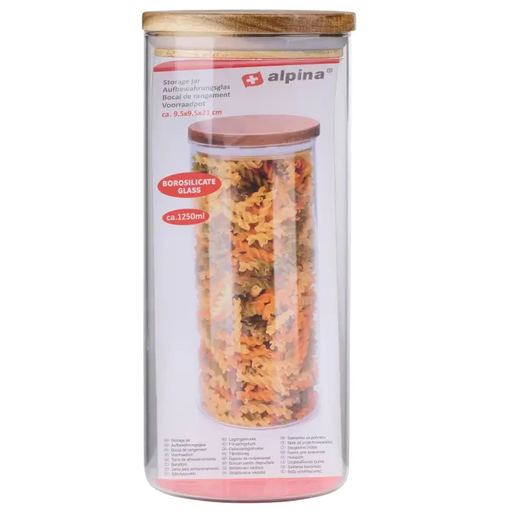
The lowdown? To combine practicality and aesthetics in the pantry. This jar is perfect for storing dry goods (pasta, rice, legumes) while adding a decorative, natural, and organized touch to your kitchen.
Its acacia wood lid includes a gasket that ensures excellent preservation of dry foods. Its square shape optimizes space and makes alignment easy, unlike round jars, which are much less practical for storage.
The transparent glass body lets you identify the contents and remaining stock at a glance. The combination of glass and wood brings a touch that is both modern and warm.

The lowdown? To prep meals in advance with reliable, durable, and ultra-hygienic containers, perfect for both the fridge and for transport.
Made from 316 stainless steel, a high-quality alloy that won't retain odours or stains (goodbye, curry-stained plastic!). It's robust and built to last.
The set includes three sizes (600 ml, 1100 ml, 2200 ml), offering ideal versatility for salads, full meals, or snacks. They are stackable, optimizing space in the fridge or cupboards.

The lowdown? To enjoy a proper hot meal (soup, stew, pasta) anywhere: at the office, on a hike, or even on a construction site.
Its vacuum insulation technology and screw-on lid with a gasket ensure impeccable heat retention and a foolproof seal. No more lukewarm meals or surprise leaks.
Its wide mouth is a real plus for filling, serving, and cleaning. Its generous 1.4 L capacity and 304 stainless steel construction are guarantees of durability and food safety.
If the elegance and transparency of glass appeal to you for organizing your kitchen, you'll love our dedicated selection.
Discover our full selection of products that meet our demanding selection criteria and current safety standards.
The foolproof test: fill it with water, close it, then shake it and turn it upside down. If not a single drop escapes, you've got a winner. For long-term storage, the absence of condensation inside after a few days in the fridge is also an excellent sign.
No, be careful! Borosilicate glass containers are generally microwave-safe, but always without their lids. For plastic, look for the microwave-safe symbol. As for stainless steel, it's a hard no: never put it in the microwave.
It depends on your priorities. Glass is unbeatable if you plan to reheat your meal in the microwave directly in the container. Stainless steel is lighter and much more impact-resistant. It's the safe choice for daily transport, especially if you're often on the move. And if keeping your food hot (or cold) is the priority, then an insulated stainless steel lunch box is the only real option.