
Livraison le jour même ou le lendemain

Qualité garantie

Débloquez vos offres de bienvenue: Livraison GRATUITE | Jusqu'à -80 % | 30 jours d'essai gratuits à JoyPlus
Téléchargez l'application
A food storage container that leaks in your bag, leftovers that lose their freshness overnight, a chaotic kitchen organiser… We're all familiar with these daily frustrations. The food container aisle is full of promises, but be warned: not all are created equal. To ensure you don't regret your purchase, here are the pitfalls to avoid.
As the head of product selection at Joybuy, my mission is to help you see things more clearly. Here are the key points to keep in mind:
meal box permanently stained by tomato sauce or one that retains the smell of yesterday's fish is a classic problem. The quality of the plastic or glass is absolutely crucial.fridge storage solution in the long run.To avoid these disappointments, it's best to rely on objective criteria. They are the true guarantors of your food container's quality and longevity.
The choice of material is decisive: it determines the hygiene, lifespan, and practicality of your container.
compartmentalised lunch box to take to the office every day.The seal of an airtight food container depends on one thing: its locking system. The game-changing detail is a removable silicone seal. This is what guarantees an effective barrier against air and liquids. Four-clip closures are often a sign of reliability, as they distribute pressure evenly. Provided, of course, that the clips are sturdy!
Different shapes for different uses. For optimised fridge storage or pantry organisation, opt for stackable square or rectangular containers. For fans of meal prep, the compartmentalised lunch box reigns supreme: it allows you to neatly separate the different components of your meal. Finally, for dry goods (flour, pasta, coffee…), vertical and transparent storage jars are perfect for seeing the contents at a glance and optimising vertical space.
Every user has specific expectations. Here are a few options that meet distinct needs, taking into account the selection criteria we've just discussed.
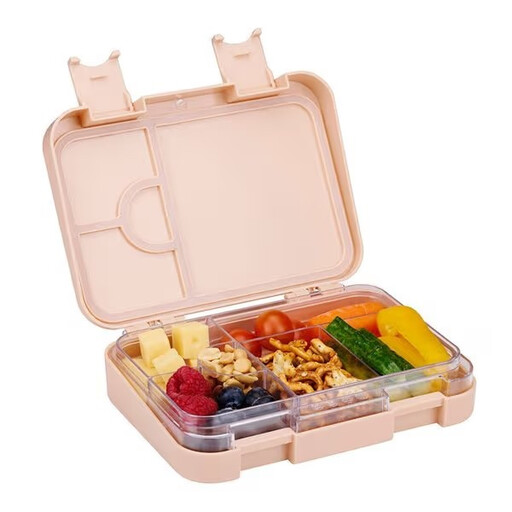
Why it's a great choice: Perfect for meal prep pros. Its six compartments allow you to separate your main dish, sides, and snacks for a perfectly organised and balanced on-the-go lunch.
Its multi-compartment design solves the problem of hard-to-clean corners. The dividers are removable, which greatly simplifies maintenance and prevents residue build-up.
6 compartments for superior organisation; dishwasher-safe for effortless cleaning.
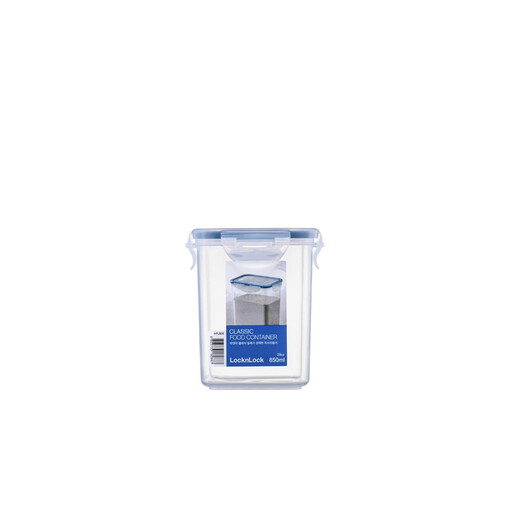
Why it's a great choice: Whether you're storing dinner leftovers or packing a simple lunch, this is the perfect all-rounder. Its 850 ml size is a practical standard, and its sturdiness makes it a reliable partner for heavy use.
This model tackles the number one problem: leaks. Its patented clip-locking system, combined with a quality silicone seal, ensures a foolproof seal. No more nasty surprises in your bag.
Ultra-reliable and 100% leak-proof clip closure; durable and easy-to-clean polypropylene.
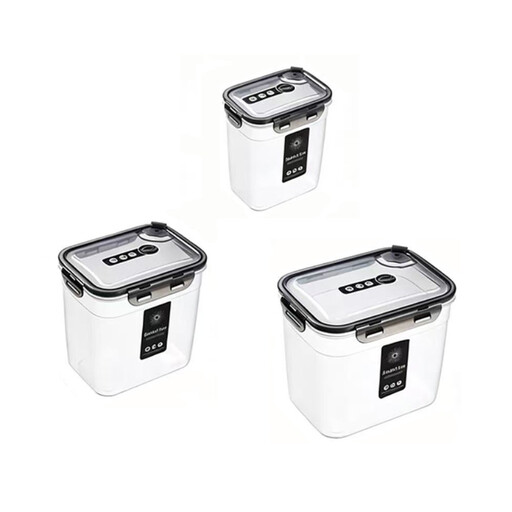
Why it's a great choice: Perfect for bringing order to your cupboards. This set of three sizes (1.4 L, 2.5 L, and 3.8 L) is ideal for storing dry goods (cereal, pasta, flour, etc.) while optimising space with their stackable design.
Its quality transparent plastic allows you to identify the contents at a glance. Most importantly, its airtight design protects food from moisture and pests, thereby reducing waste.
Set of 3 sizes for greater versatility; stackable design for maximum space-saving.
We have selected a full range of products that meet our quality criteria and food safety standards.
For persistent odours, the simplest trick is to fill the container with a mixture of warm water and baking soda (one to two tablespoons). Let it sit for a few hours (or overnight for stubborn cases), then rinse thoroughly. Diluted white vinegar can also be very effective.
Absolutely not. It is imperative to look for the specific microwave-safe logo (usually a symbol with wavy lines) on the container or its packaging. Some plastics can warp or release unwanted substances when heated. When in doubt, it's better to transfer the food to a plate before reheating. And never forget to open the lid or vent to let the steam escape!
It all depends on the quality of the material and how often you use it. A good quality container can last for several years. The warning signs to watch out for: cracks, ingrained stains, a warped lid, or a silicone seal that has become dry and brittle. As soon as the seal is no longer perfect, it's time to replace it to ensure food safety.