
Livraison le jour même ou le lendemain

Qualité garantie

Débloquez vos offres de bienvenue: Livraison GRATUITE | Jusqu'à -80 % | 30 jours d'essai gratuits à JoyPlus
Téléchargez l'application
A good food storage container can simplify your life in the kitchen, reduce waste, and preserve the freshness of your meals. The problem? The market is saturated with promises that are rarely kept. Between lids that warp after two runs through the dishwasher and plastic that forever holds onto the smell of last week's curry, it's easy to make the wrong choice. To stop throwing your money away, here are the pitfalls to avoid and the criteria that truly matter.
Investing in food storage containers should save you time and money, not be a source of frustration. Watch out for these three common pitfalls:
For a truly smart purchase, three points need close inspection. These will determine whether your investment is a lasting one and if your containers will actually be useful day-to-day.
This is the heart of the matter, and it all comes down to your priorities.
The effectiveness of an airtight food container relies on a winning combination:
Optimised kitchen storage starts with smart containers. Check if the containers are stackable (when full) and, even better, nestable (when empty). Square or rectangular shapes are the kings of optimisation: they make far better use of space in your cupboards and fridge than round or oval formats.
Instead of an endless list, here are our top picks that meet specific needs, all tested against the quality and practicality criteria we've just covered.
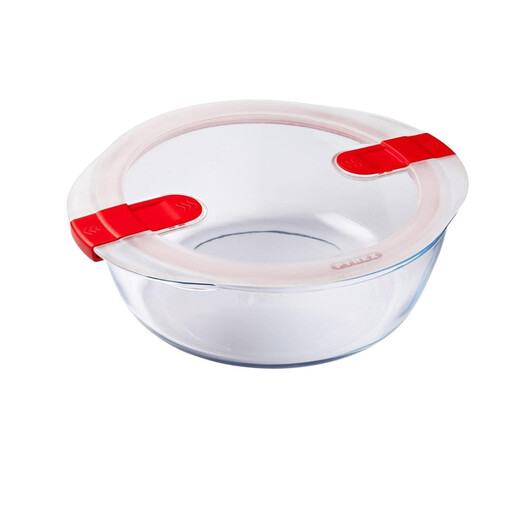
Ideal for preparing family-sized meals in advance. Its large capacity lets you cook once for several meals, and its glass body goes directly from the oven to the table, then to the refrigerator.
This is the answer to the "wrong material" pitfall. The borosilicate glass can handle oven baking (without the lid), and the lid with a steam vent is designed for hassle-free reheating in the microwave.
Large 2.3 L capacity. Versatile for cooking, storing, and reheating. Airtight lid with an integrated steam vent.
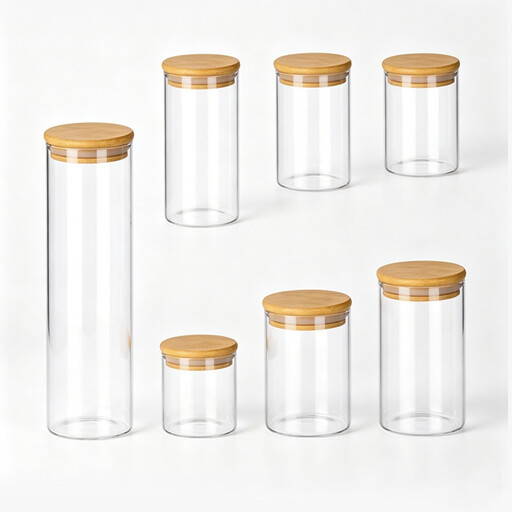
Perfect for those who want to bring order and harmony to their pantry. This set of glass jars allows you to store dry goods (pasta, rice, lentils, flour) with style and visibility.
It avoids the trap of poorly designed sets. Here, the 7 sizes are genuinely functional for bulk storage, from the smallest (431 ml) to the largest (over 2 L). No useless containers.
A cohesive and aesthetic set. Glass body to see everything at a glance and stylishly designed airtight lids.
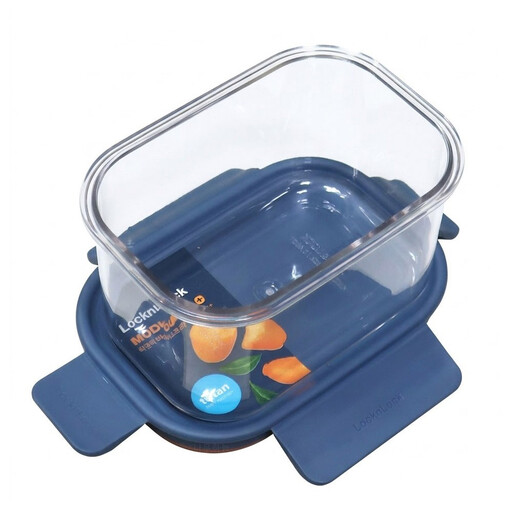
Designed for daily use, this container is lightweight, durable, and perfectly sized for an individual lunch. Its modular design allows it to be stacked easily with other containers from the same range.
No more fear of leaks! This container beats the "false airtightness" trap. Its four-clip locking system and hollow silicone gasket ensure a foolproof seal, even for saucy dishes.
BPA-free plastic that's both lightweight and sturdy. Ultra-reliable locking system. Modular design for perfectly organised storage.
Explore our full selection of products that meet our demanding selection criteria and current safety standards.
Can all glass containers go in the oven? No, and this is a crucial point. Only borosilicate glass is designed to withstand high temperatures. Furthermore, the golden rule is to avoid thermal shock: never move a dish directly from the freezer to a preheated oven. Let it come to room temperature first. And of course, plastic lids have no place in an oven.
How do I maintain a container's gasket to keep it airtight? To ensure its longevity and seal, the secret is to remove the silicone gasket from the lid before each wash. Clean it separately (by hand or in the top rack of the dishwasher). Make sure both it and the lid's groove are completely dry before putting it back. This is the best way to prevent mould and preserve its effectiveness.
Are multi-pack sets really a good deal? Not always. Before you buy, look closely at what's included in the set. A good deal is a set with a majority of containers in sizes you will actually use (typically between 0.5 L and 2 L). If the set is filled with mini-pots, its usefulness will be close to zero, and the savings will be an illusion.