
Livraison le jour même ou le lendemain

Qualité garantie

Débloquez vos offres de bienvenue: Livraison GRATUITE | Jusqu'à -80 % | 30 jours d'essai gratuits à JoyPlus
Téléchargez l'application
A good food storage container is the cornerstone of a well-managed kitchen: it preserves the freshness of your food, simplifies daily life, and reduces waste. The problem? The market is saturated with products whose marketing claims are often misleading. A lid that leaks in your bag, a plastic container stained for life by the first bolognese sauce, a box that cracks in the freezer… these everyday frustrations are, however, avoidable.
As the Head of Product Selection at Joybuy, my mission is to test and sort through the options to help you see clearly. Let's forget the marketing jargon and get straight to the point: the criteria that truly make a difference for a smart, long-lasting purchase. This guide is here to help you avoid the pitfalls and choose the reusable food container that truly fits your needs.
Before you pull out your credit card, watch out for these three deal-breakers that can render a storage container useless after just a few months.
To avoid these disappointments, focus on three key points. These are what will guarantee the longevity and practicality of your future food storage container.
The choice of material is crucial and will depend on your use case.
A good lid makes all the difference. The most reliable systems are:
A good container should be a true Swiss Army knife. Always check the compatibility icons:
Rather than a simple product list, we've matched our top picks with user profiles to help you find the container that's right for you.

Why we love it: Perfect for batch cooking enthusiasts. The borosilicate glass goes from the fridge to the microwave without a problem, and the 10-piece set (5 large, 5 small) offers perfect modularity for main dishes and their sides.
Unlike low-grade plastic, borosilicate glass is impervious to stains and odours. Its clip-locking system guarantees a flawless seal for transport.
Total versatility: Freezer, microwave, and dishwasher safe. Impeccable hygiene: Glass is a non-porous material that's easy to clean.
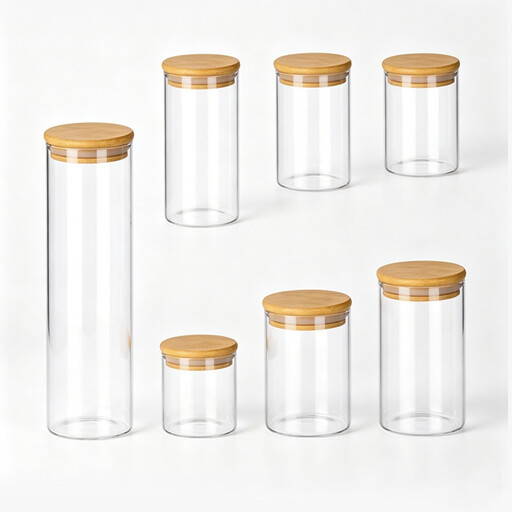
Why we love it: The perfect solution for bringing order to your cupboards. This set of jars in various sizes is ideal for storing dry ingredients (pasta, rice, lentils, flour) away from moisture and air, while letting you keep an eye on your stock levels.
Its vertical, stackable design optimises space and puts an end to the chaos of mismatched containers. The airtight lid effectively protects dry foods from humidity.
Visual organisation: The transparent glass lets you identify the contents and remaining quantity at a glance. Complete set: The 7 different sizes cover most everyday storage needs.
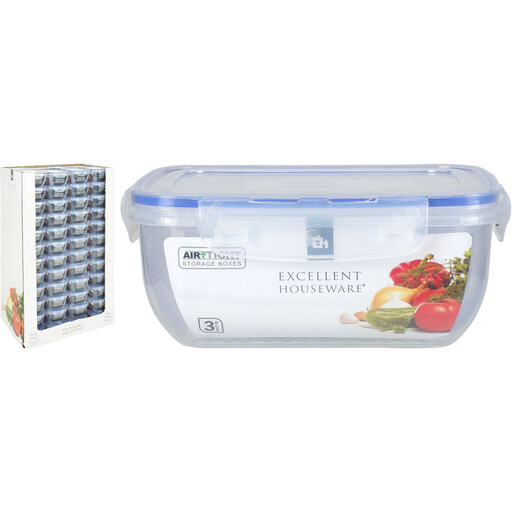
Why we love it: A simple, smart solution for storing leftovers, ingredients, or packing a snack. This set of 3 BPA-free plastic containers is lightweight, practical, and versatile for everyday use without breaking the bank.
Made from BPA-free polypropylene, it avoids the risks associated with questionable plastics. The lid with a silicone seal and rotating clasp ensures a good seal for common use.
Unbeatable value: A functional and safe set at a very affordable price. Versatility: Refrigerator, freezer, and microwave safe (with lid ajar).
Discover our full selection of products that meet our quality criteria and food safety standards.
Absolutely not! This is strongly discouraged. Even highly resistant borosilicate glass can shatter from such a severe thermal shock. To eliminate any risk, let the glass food container thaw for a few hours in the refrigerator or at room temperature before putting it in a preheated oven. And of course, never put the plastic lid in the oven.
If an odour lingers despite washing, fill the container with a mixture of warm water and baking soda (about one tablespoon per litre of water). Let it sit for several hours, or overnight, before rinsing thoroughly. Another classic trick: fill it with crumpled newspaper, which is an excellent odour absorber.
It all depends on its quality and how you maintain it. To make it last, it's best to wash it by hand with soapy water. The dishwasher, with its high temperatures and harsh detergents, tends to dry it out and warp it. Remember to dry it well before putting it back in place to prevent mould growth. A high-quality, well-maintained seal can last for several years.