
Livraison le jour même ou le lendemain

Qualité garantie

Débloquez vos offres de bienvenue: Livraison GRATUITE | Jusqu'à -80 % | 30 jours d'essai gratuits à JoyPlus
Téléchargez l'application
As the Head of Product Selection at Joybuy, I see dozens of food storage containers every week. My mission: to help you separate the wheat from the chaff, beyond the sometimes misleading marketing promises. A good food storage container is an everyday ally. It saves you time, reduces waste, and preserves the flavour of your meals. But conversely, the wrong choice can quickly turn into a nightmare: salad dressing leaking all over your bag, a container that still smells like last week's curry, or a lid that warps after its first trip to the microwave.
Before you pull out your credit card, here are the pitfalls to avoid at all costs:
To avoid making a mistake, forget the marketing fluff and focus on these few technical points.
This is the number one criterion. The material dictates everything: the container's use, lifespan, and ease of cleaning.
A foolproof seal comes down to two things: a four-latch locking system and a removable silicone gasket. This combination ensures uniform pressure around the entire rim of the lid, creating an infallible barrier against leaks. The removable gasket is a significant bonus: it can be taken out for deep cleaning, which prevents mould from growing.
A good food storage container set should simplify your life, not complicate it. Opt for stackable kitchen containers to optimise every square inch of your cupboards and fridge. The holy grail? Containers that nest inside each other when empty. A huge space-saver. Always check for dishwasher compatibility for hassle-free maintenance.

Our take: This set is perfectly suited for batch cooking. The different sizes (5 large, 5 small) allow you to portion out main dishes and sides. The borosilicate glass lets you reheat your meal directly at the office, without any risk to your health or the container itself.
Its borosilicate glass body is completely non-porous. Say goodbye to tomato sauce stains and lingering fish smells—the nightmare of low-quality plastic containers.
An ultra-versatile food storage container set that goes from the freezer to the microwave, then into the dishwasher. It simplifies the entire **meal prep** process.

Our take: For those who carry their lunch every day, durability and light weight are key. Stainless steel is nearly indestructible and isn't afraid of being knocked around in a bag. It's the perfect **reusable food container** for salads and cold dishes.
Unlike glass, there's no risk of breakage. Unlike cheap plastic, it's scratch-resistant and won't degrade, ensuring perfect hygiene over the long term.
Made from 316 stainless steel, an alloy superior to the standard 304, offering better resistance to corrosion (especially from salt and acidic dressings).
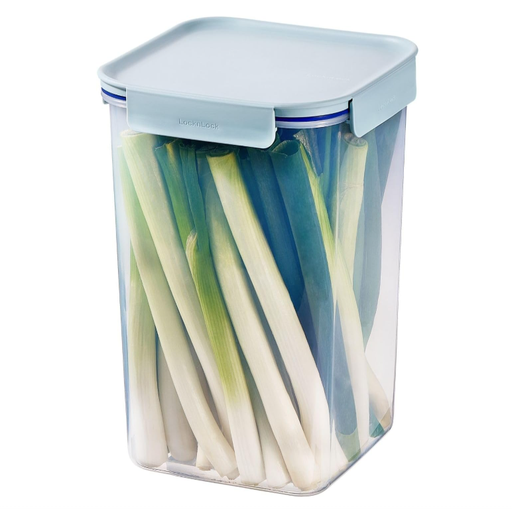
Our take: For storing dry goods (pasta, flour, cereal) and optimising pantry space, volume and modularity are king. This large format is designed to stack perfectly with other containers from the same range.
Its square shape and stackable design put an end to cupboard chaos. No more round containers that waste precious space. The LocknLock closure system effectively protects against moisture and pests.
A large 4-litre capacity and a square design that maximises storage volume. The transparent plastic lets you identify the contents and remaining quantity at a glance.
Discover our complete selection of products that meet our quality criteria and the strictest safety standards.
No, absolutely never. Metal reflects microwaves and can cause electrical arcs, damage your appliance, or even start a fire. However, most stainless steel containers (without their lids) can safely go in a conventional oven to reheat a dish.
Even on high-quality plastic, an odour can linger. An old-school trick: make a paste with baking soda and a little water, coat the inside of the container, and let it sit for several hours before rinsing. A white vinegar soak can also work wonders. But for total peace of mind, nothing beats glass or stainless steel.
Borosilicate glass handles thermal shock much better than ordinary (soda-lime) glass. In practical terms, it can go from the fridge to the microwave without the risk of cracking from the sudden temperature change. It's a true guarantee of safety and longevity.