
Livraison le jour même ou le lendemain

Qualité garantie

Débloquez vos offres de bienvenue: Livraison GRATUITE | Jusqu'à -80 % | 30 jours d'essai gratuits à JoyPlus
Téléchargez l'application
A tidy kitchen and meals that stay fresh on the go—it all starts with one simple yet crucial choice: the right food storage container. But with the vast array of models available, it's easy to get lost and regret your purchase. A lid that leaks in your bag, plastic stained by the first bolognese sauce, containers that stack precariously in your cupboards… Does any of this sound familiar?
To avoid these disappointments, let's review the most common pitfalls.
Fortunately, you only need to focus on a few key criteria to make the right choice and avoid these issues.
Choosing the right food storage container goes far beyond size or colour. Three technical points are decisive in guaranteeing its durability and everyday practicality.
The choice of material directly impacts the use, maintenance, and lifespan of your containers.
Airtightness is the crucial element, especially for a lunch box or a compartmentalised bento box that you carry daily. The most reliable systems combine two elements:
This combination guarantees a truly airtight seal, which prevents leaks and insulates food from the air to extend its freshness.
A good storage container set should, above all, save you space. Check two aspects:
To help you decide, here are a few concrete examples tailored to specific uses.

Best for: Perfect for meal prep enthusiasts who take their lunch to the office. The borosilicate glass allows you to reheat your meal in the microwave without transferring it to another dish. The 10-piece set offers various sizes for the main course, sides, and snacks.
The glass won't stain or retain any odours, even from a stubborn sauce. The clip-on lids with silicone gaskets ensure a reliable seal for transport.
Its versatility (freezer, microwave, dishwasher) and the impeccable hygiene of borosilicate glass.
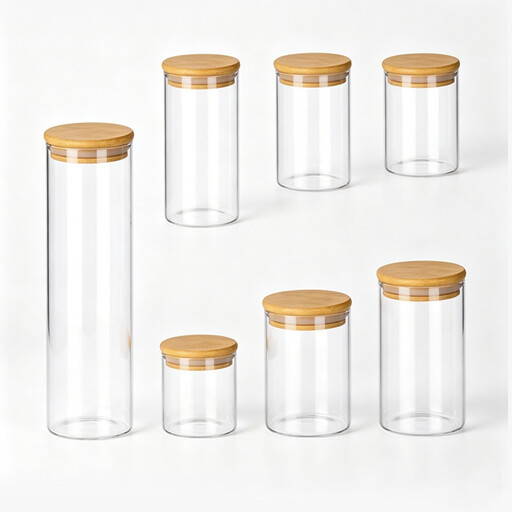
Best for: Essential for anyone looking to organise their dry goods (pasta, rice, cereal, legumes). The transparent glass lets you identify contents at a glance and monitor stock levels.
These storage jars are designed for optimised vertical storage. Their airtight lids protect food from moisture and pantry moths, far better than the original cardboard or soft plastic packaging.
A sleek design with wood-effect lids, a stackable format to optimise space, and a perfect airtight seal for dry goods.
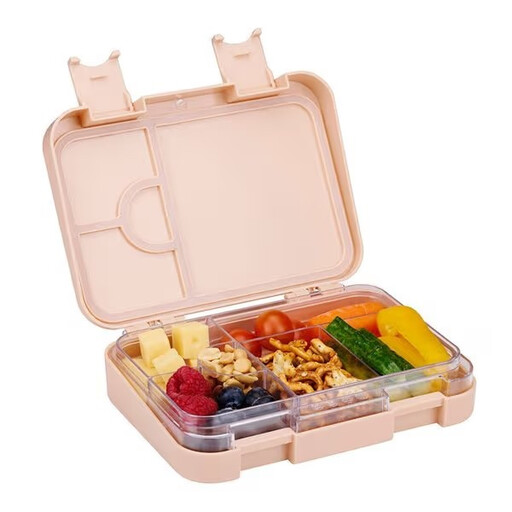
Best for: This compartmentalised bento box is the dream solution for those who like to keep every part of their meal separate: salad, dressing, raw vegetables, fruit, and more. It also helps with portion control for balanced meals.
No more lunches where everything mixes together into a soggy mess! The fixed compartments preserve the textures and flavours of each food until you're ready to eat.
Its six compartments allow for meticulous meal organisation. The internal tray is removable for easy cleaning.
Explore our complete, up-to-date selection of products that meet our selection criteria and current safety standards.
It all depends on the plastic. Always check for the "microwave-safe" symbol (often wavy lines) on the container or its packaging. Only use plastics designed for this purpose and guaranteed to be BPA-free. Also, remember not to seal the lid tightly during reheating to allow steam to escape.
For stains (like tomato sauce), exposure to sunlight can work wonders. For odours, an old-fashioned trick is unbeatable: fill the container with a mixture of warm water and baking soda, let it sit for several hours, then rinse. But the best advice is to clean the container right after use.
Borosilicate glass contains boron trioxide, which makes it much more resistant to thermal shock (sudden temperature changes) than standard glass. In practical terms, a borosilicate glass container can go from the freezer to the microwave or oven without the risk of shattering, unlike ordinary glass. It's a true guarantee of safety and durability.