
Livraison le jour même ou le lendemain

Qualité garantie

Débloquez vos offres de bienvenue: Livraison GRATUITE | Jusqu'à -80 % | 30 jours d'essai gratuits à JoyPlus
Téléchargez l'application
A good food storage container is the cornerstone of a well-organised kitchen. It preserves food freshness, simplifies advance meal preparation (the famous meal prep), and helps reduce food waste. However, the market is saturated with promises... and disappointments. Between lids that warp after the first trip to the microwave and plastics that stain from the first tomato sauce, choosing the right model can quickly become a headache. Our mission is to help you see things more clearly to make an informed and, above all, sustainable choice.
Before we break down the spec sheets, let's review the most frequent letdowns so you don't fall into the trap.
To invest in containers that will serve you for years, focus on three non-negotiable criteria.
Each material has its strengths and weaknesses. The choice will primarily depend on your intended use.
The entire effectiveness of an airtight food container relies on its locking system. Two points to inspect closely?:
Always check the pictograms and the manufacturer's instructions.
Here are a few models that meet specific needs, all selected according to our criteria for durability and practicality.

Why we chose it ? Perfect for fans of *batch cooking* who prepare their meals for the week. Its borosilicate glass allows it to go from the oven to the fridge, then to the microwave, without ever changing containers. The 0.8 L capacity is ideal for an individual portion.
The glass, being non-porous by nature, will never stain with sauces or absorb any odours, unlike entry-level plastics. It's a sustainable investment for a perfectly healthy meal prep container.
Absolute versatility : oven, microwave, freezer, and dishwasher safe. Its stackable design optimises cupboard storage.
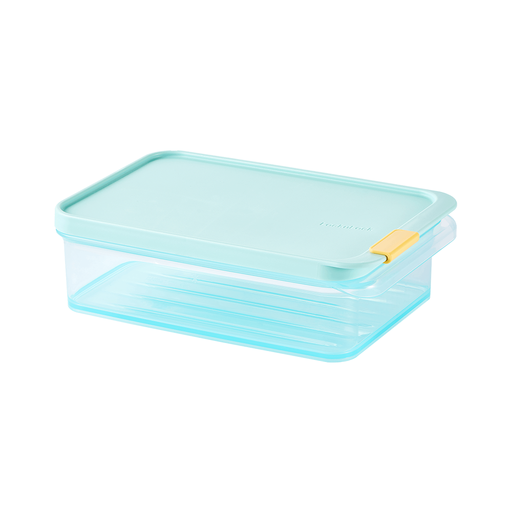
Why we chose it ? For those who store in large quantities, especially in a chest freezer. This model is specifically designed to withstand freezing temperatures, and its modular design allows for stable stacking to optimise every square inch.
Its polypropylene is specially formulated to not become brittle in the freezer, thus avoiding the risk of cracks—a common problem when using standard plastic containers for freezing.
Modular design with a recessed lid that ensures perfectly stable stacking. Organising the freezer becomes child's play. The transparent body allows you to identify the contents at a glance.
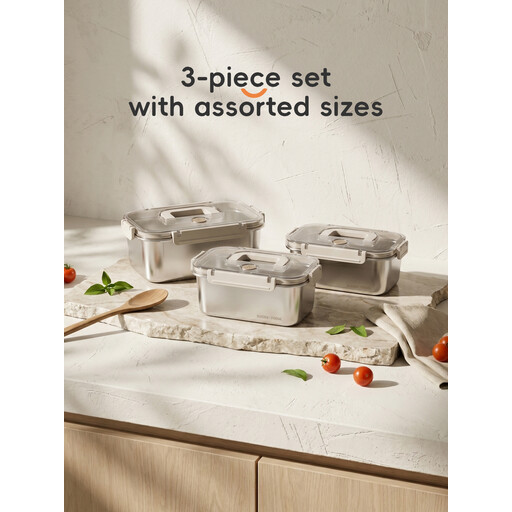
Why we chose it ? This set of three stainless steel containers is the perfect ally for office lunches and picnics. Stainless steel is lightweight, nearly indestructible, and poses no risk of substances leaching into food. The different sizes allow you to pack a complete, well-portioned meal.
It bypasses all the problems associated with plastic (stains, odours, BPA). Food-grade 304 stainless steel is an inert, hygienic material that is resistant to corrosion and incredibly easy to clean.
Durability and lightness. Its four-clip closures ensure an excellent seal for transport, and the material is not afraid of bumps at the bottom of a backpack.
Discover our complete and updated selection of products that meet our strict selection criteria and current safety standards.
Absolutely not. Standard plastic is likely to become rigid and brittle at very low temperatures. For freezing, it is imperative to choose containers that explicitly feature the snowflake pictogram (?) or come from dedicated ranges, like the LocknLock Freezer Fit series. Their plastics are formulated to remain flexible and withstand freezing.
For plastic containers, a quick wash after use is the best prevention. If an odour lingers, fill the container with a mixture of warm water and baking soda, let it sit for several hours, then rinse. Don't forget the silicone seals?: remove them regularly and clean them separately with a small brush to dislodge any residue. Finally, always let the containers air dry completely before closing them for storage.
Glass is a completely inert material, which means there is no risk of chemical components leaching into your food. From this perspective, it is the safest option available. That said, modern food-grade plastics, such as BPA-free certified polypropylene (PP) or Tritan, are also considered perfectly safe for food contact by European health authorities. The choice therefore depends mainly on use?: glass is the champion of versatility at home (including for cooking)?; high-quality plastic is unbeatable for its lightness and durability on the go.