
Livraison le jour même ou le lendemain

Qualité garantie

Débloquez vos offres de bienvenue: Livraison GRATUITE | Jusqu'à -80 % | 30 jours d'essai gratuits à JoyPlus
Téléchargez l'application
A well-organised kitchen starts with the right containers. Yet, choosing the right food storage container can often be a real challenge. Caught between brand promises and the test of daily use, we quickly end up with containers that leak, stain, or fail to keep food fresh. To put an end to buyer's remorse, you just need to know the common pitfalls to avoid.
Here are the three most frequent mistakes:
This guide breaks down the essential criteria for you to make an informed choice that's perfectly suited to your needs: whether it's optimising your kitchen organisation, prepping your meals in advance, or carrying your lunch box with complete peace of mind.
To avoid making the wrong choice again, focus on these few technical points. They are decisive in judging the quality and durability of your future food container.
The choice of material determines the use, maintenance, and lifespan of your containers.
A truly effective airtight container relies on two pillars: a quality gasket and a reliable locking system.
The rule of thumb: always check the manufacturer's pictograms for each component (dish and lid). A dish may be oven-safe, but its plastic lid never is. Likewise, some plastics do not handle freezing or high-temperature washing well. The ideal solution? A versatile container that allows you to cook, store, freeze, reheat, and serve with minimal washing up.
Instead of an endless list, here are our targeted recommendations for different uses, all approved based on our quality and practicality criteria.

Why we chose it: This food storage set is the perfect partner for meal prep enthusiasts. With 10 pieces in two sizes, it allows you to store the week's meals and go directly from the fridge to the microwave (without the lid).
The borosilicate glass body eliminates the risk of cracking when reheating after being in the fridge. The clip system ensures an excellent seal for transporting your lunch box.
A complete and uniform set that simplifies organisation. Glass is a healthy material that does not degrade and perfectly preserves the taste of food.

Why we chose it: For those who want a true Swiss Army knife in the kitchen. This large 2-litre glass oven dish lets you bake a casserole, store leftovers in the fridge, and then reheat them. Its large capacity is perfect for family meals.
Made from borosilicate glass, it is designed to withstand temperatures up to 400°C (dish only). The 4-clip locking system guarantees a perfectly airtight seal.
Maximum versatility: oven, microwave, freezer, and dishwasher safe. One dish to do it all means less washing up and a simplified kitchen.
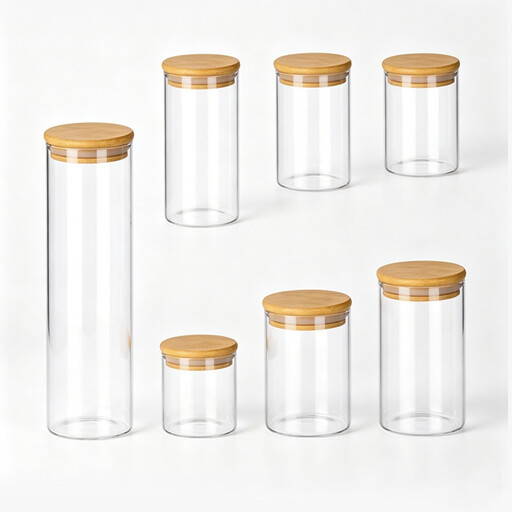
Why we chose it: This set is designed for kitchen organisation of dry foods (pasta, rice, flour, cereals). The seven sizes help create a harmonious and functional pantry where everything is visible and within reach.
No more torn flour bags and pantry moths! These airtight jars protect your dry goods from moisture and pests. The glass doesn't absorb any odours, a crucial point for coffee or spices.
The stylish aesthetic with its faux-wood lids fits beautifully into an open-plan kitchen. The variety of sizes offers a turnkey solution for organising all your dry goods.
Explore our full collection of products, rigorously selected for their quality, durability, and safety compliance.
Tempered glass is standard glass that has been treated to better resist impact. However, it is sensitive to rapid temperature changes (thermal shock). Borosilicate glass, on the other hand, contains boron trioxide, which gives it very low thermal expansion. It can therefore go from cold to hot without issue, making it the ideal material for a glass oven dish.
To guarantee a rock-solid seal, make it a habit to remove the silicone gasket from the lid before each wash. Clean it by hand with soapy water and let it air dry completely before putting it back. This prevents residue buildup and the formation of mould, which can compromise the seal and hygiene.
The BPA-free food container label guarantees that the product does not contain Bisphenol A, an essential safety assurance. However, it is recommended to follow the manufacturer's instructions carefully, especially for microwave use. Avoid heating very fatty or sugary foods at full power in plastic, as this can accelerate its aging. For absolute peace of mind, glass and stainless steel remain the champions of food safety.