
Livraison le jour même ou le lendemain

Qualité garantie

Débloquez vos offres de bienvenue: Livraison GRATUITE | Jusqu'à -80 % | 30 jours d'essai gratuits à JoyPlus
Téléchargez l'application
A pristine kitchen and food that lasts longer—that's the dream. But when it comes to choosing a food storage container, the sheer number of options can be a real headache. Caught between marketing promises and daily reality, you can easily end up with unsuitable containers gathering dust in the back of a cupboard.
As a product expert at Joybuy, I'm here to separate fact from fiction. Let's break down the common pitfalls to avoid and the criteria that truly matter for making a smart purchase that's perfectly suited to your kitchen and pantry organization needs.
Before you even start comparing models, let's identify the classic mistakes that turn a good deal into a purchase you'll regret.
To avoid these traps, focus on the technical criteria—the only factors that don't lie.
The choice of material is crucial: it will depend entirely on your habits.
A truly airtight food container relies on a winning combination: a high-quality silicone seal (removable for impeccable cleaning) and a locking system that inspires confidence. Lids with four-sided clips are often the best guarantee: they ensure uniform pressure and a foolproof seal, even for grandma's soup.
To make the most of every square inch, modularity is king. Check if the containers in a storage container set are nestable (they fit inside each other when empty) and if they stack securely when full. Pro tip: square or rectangular shapes are far better at optimising space in a fridge or cupboard than round ones.
To guide you, here is a selection of products tailored to specific needs, taking into account the criteria we've just discussed.

Why it's a great match: This set is the best ally for those who prepare their meals in advance. The borosilicate glass goes from the oven to the table, then to the fridge and microwave. One dish does it all! The two sizes (1040 ml and 370 ml) are perfect for a main course and a side.
No more containers stained yellow by bolognese sauce! The glass remains pristine and taste-neutral. The clip-on lids guarantee a truly airtight seal, with no risk of leaks in your bag.
Absolute versatility: freezer, oven (without lid), microwave, and dishwasher. The usage cycle is incredibly simple.
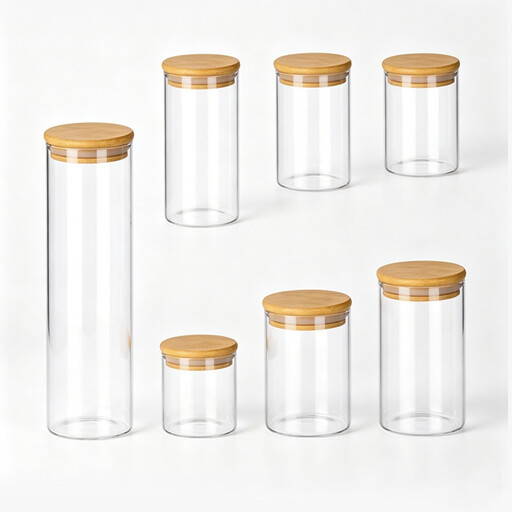
Why it's a great match: Essential for organising your dry goods (pasta, rice, legumes, cereals). The transparent glass lets you see stock levels at a glance and plan your shopping list. The clean, uniform design adds a touch of elegance to your shelves.
The airtight lids create a barrier against moisture and pantry moths. The flat base and lid ensure perfectly stable stacking to make full use of your cupboard height.
A set of 7 sizes (from 431 ml to 2178 ml) to store everything from spices to spaghetti packs.

Why it's a great match: For those who eat on the go, at the office, or on the road, lightness and durability are key. Stainless steel is virtually unbreakable and easily withstands the rough handling of daily transport in a backpack.
316 stainless steel is a durable material that won't warp or retain odours. Your meal will taste exactly as it should, period. The lids provide a secure closure for stress-free transport.
The trio of sizes (600 ml, 1100 ml, 2200 ml) adapts to every appetite: from a simple snack to a large salad or a full meal.
Explore our full selection of products that meet our demanding selection criteria and current safety standards.
Borosilicate glass incorporates boron oxide, which gives it a very low coefficient of thermal expansion. In simple terms? It can withstand extreme temperature shocks without cracking. This is what allows it to go from the fridge to the oven, a trial that would be fatal for ordinary glass.
Regardless of the material, a few good habits can make all the difference. Always wash your containers immediately after use to prevent residue from setting in. For lids with seals, remember to remove the seal from time to time for a separate cleaning. Let it air dry completely before putting it back: this is the best way to prevent mould and bad odours. Finally, avoid abrasive sponges that can scratch plastic and stainless steel.
Yes, glass, stainless steel, and high-quality food-grade plastics can all handle freezing. The golden rule: never fill them to the brim! Always leave 2 to 3 cm of space at the top of the container. As water-rich foods freeze, they expand. This safety gap will prevent your container from cracking or warping under pressure.