
Livraison le jour même ou le lendemain

Qualité garantie

Débloquez vos offres de bienvenue: Livraison GRATUITE | Jusqu'à -80 % | 30 jours d'essai gratuits à JoyPlus
Téléchargez l'application
A well-organised kitchen and better-preserved food offer the dual promise of saving time and reducing waste. Yet, choosing a food storage container can quickly become a headache. Caught between marketing hype and daily reality, we often end up with cupboards cluttered with containers that don't live up to their promises.
To make the right choice, let's review the most common pitfalls.
Keeping these points in mind is the best way to choose containers that will truly serve you well for a long time.
For top-notch kitchen organisation and flawless food preservation, three technical criteria should be scrutinised.
It's the classic dilemma. The choice will largely depend on your habits.
A truly airtight seal isn't magic. It's the combination of two crucial elements:
A well-thought-out design isn't just about looks. To optimise every square inch, opt for square or rectangular shapes. They fit perfectly in cupboards and the fridge, with no wasted space. Transparency is also a real plus for seeing what's inside at a glance. Finally, investing in a set of food storage containers from the same collection guarantees stable stacking and a harmonious storage setup.
Forget the universal, do-it-all container—it doesn't exist. It's better to choose containers designed for specific needs. Here is our selection for three typical profiles.

Why we chose it: This set is perfect for weekly meal prepping. Its borosilicate glass handles thermal shock, allowing it to go directly from the fridge to the microwave. The two sizes are well-designed for separating a main course and a side dish.
Its clip-lock system and thick gasket guarantee a foolproof seal, a far cry from leaky lids. The glass itself remains pristine: no stains or lingering odours.
Its versatility (freezer, microwave, dishwasher) and the durability of the glass, built for heavy use.
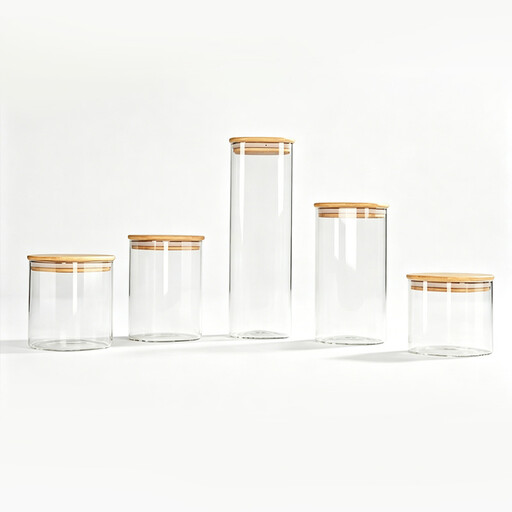
Why we chose it: Perfect for tidying up and standardising your dry food storage. The transparent glass lets you see levels at a glance, while the airtight lids protect pasta, rice, and cereals from moisture. The wood-finish lid adds a nice decorative touch.
Glass is a healthy, inert material that doesn't degrade over time. The gasket ensures excellent preservation of dry foods, so they won't go soft and will retain all their flavour.
A set of 5 different sizes for complete organisation and a very clean, organised look in the pantry.
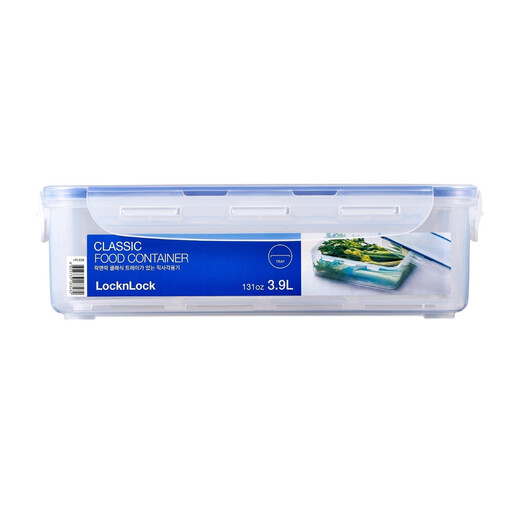
Why we chose it: With its generous 3.9-litre capacity, this container is perfect for storing dinner leftovers, a large salad for several people, or bulk-bought goods. Its rectangular shape is a real plus for saving space in the fridge.
Made from quality polypropylene (PP), it is guaranteed BPA-free and built to last. Its 4-clip locking system is a safe bet against leaks and lids that warp in the wash.
Excellent volume-to-price ratio. It is also stackable and freezer/microwave safe (without the lid).
Discover our full selection of products that meet our quality criteria and current safety standards.
To preserve its effectiveness, it's best to gently remove it from its groove before each cleaning. Washing by hand with warm, soapy water is sufficient. Rinse it well and, most importantly, make sure it is completely dry before putting it back to prevent mould growth.
Absolutely not. It is imperative to check for the pictogram that authorises it (often engraved on the bottom of the container). Only use containers designed for this purpose and always remember to remove the lid before reheating anything, so that steam can escape. And of course, always prioritise plastics certified as BPA-free.
There's no absolute winner; it all depends on the use case. Glass is the champion of hygiene, durability, and neutrality (it doesn't alter the taste of food). Its weaknesses are its weight and fragility. Plastic, on the other hand, is lighter, more impact-resistant, and often cheaper. It's the king of on-the-go convenience. In short: glass is ideal at home (for cooking, fridge storage), while plastic is perfect for taking meals with you or storing large quantities.