
Livraison le jour même ou le lendemain

Qualité garantie

Débloquez vos offres de bienvenue: Livraison GRATUITE | Jusqu'à -80 % | 30 jours d'essai gratuits à JoyPlus
Téléchargez l'application
Finding the perfect food storage container can often be a real headache. Between promises of a completely leak-proof seal and materials that stain or warp after just a few weeks, a disappointing purchase is always just around the corner. Our mission: to help you cut through the noise and choose containers that truly meet your needs, far from the siren song of marketing.
Before you dive in, let's review the deal-breakers that too often turn a good idea into a purchase you'll regret.
To make the right choice, focus on a few objective technical features?: they make all the difference between a regrettable purchase and a lasting investment.
The choice of material depends primarily on how you'll use it.
An airtight glass container is only truly airtight if its locking system is effective. Four-sided locking clip systems, combined with a removable silicone seal, are often the most reliable. The removable seal is a major plus for hygiene?: it can be easily taken out for a deep clean, which prevents mould from growing in the lid's grooves.
Always check the pictograms or the manufacturer's instructions. A versatile container should be compatible with:
Rather than searching for a one-size-fits-all model, it's better to choose based on your habits. Here are our recommendations for specific uses.

Why this choice? Ideal for preparing your meals for the week. It allows you to cook directly in it, store the dish in the fridge or freezer, and then reheat it in the microwave. Its 630 ml capacity is perfect for a single serving.
Its borosilicate glass body withstands oven heat and won't retain stains or odours. The 4-clip locking system with a removable seal ensures a reliable, leak-proof fit, preventing spills and premature food spoilage.
Extreme versatility: cook, freeze, store, and reheat all in the same dish.
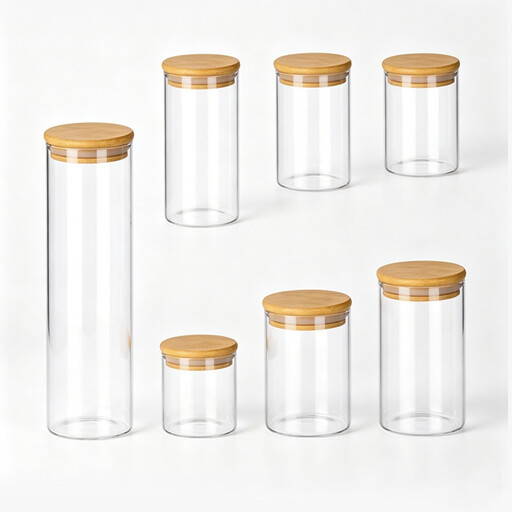
Why this choice? This food storage container set is perfect for streamlining your dry food storage. The different sizes allow you to store pasta, cereal, flour, or coffee while keeping your stock levels visible at a glance.
Unlike mismatched containers, this set offers an aesthetic and functional solution. The glass jar body is hygienic and won't absorb odours, while the airtight lids protect contents from moisture and pests.
A complete set for optimal and long-lasting pantry organisation.

Why this choice? Its large 2-litre capacity is perfect for family leftovers, baking lasagnas, or storing large batches of soup. It's the ultimate glass dish with a lid for batch cooking.
Borosilicate glass doesn't warp or absorb odours, unlike large plastic containers. Its sturdy lid ensures a secure closure to store large volumes without risk.
A large, oven-safe volume, ideal for cooking, serving, and storing in a single dish.
Our selection doesn't stop here. We've found other gems that meet our quality and safety standards. Discover all our solutions for organising your kitchen and storing your food.
1. Can you really put a glass container from the freezer straight into the oven? No, never do this directly! It's the surest way to cause thermal shock and shatter the glass, even if it's borosilicate. The golden rule is to always let the dish return to room temperature before putting it in the oven. Also, remember to always remove the plastic lid before placing it in the oven.
2. How do you effectively clean the silicone seal on an airtight lid? To prevent mould growth, it is highly recommended to remove the seal from its groove after each wash. Wash it by hand with warm, soapy water, using a small brush if necessary. Make sure the seal and the lid's groove are completely dry before putting it back.
3. Is a plastic container less healthy than a glass one? Not necessarily, as long as you choose wisely. Opt for food-grade plastics like polypropylene (PP) and make sure they are labelled as "?BPA-free?" (Bisphenol A). Glass remains a neutral and inert material that doesn't retain stains or odours, making it a top choice for many. Plastic has the advantages of being lightweight and more impact-resistant, which makes it very practical for on-the-go use.