
Same-day & Next-day Delivery

Quality Guaranteed

Unlock Your Welcome Offers: FREE Delivery | Up to 80% OFF | Free 30-day JoyPlus trial
Download the APP
Choosing a food storage container seems simple, but the wrong choice almost guarantees a leak in your bag, food that loses its flavour, or containers destined for the bin after just a few washes. As the Head of Product Selection at Joybuy, I'm breaking down the market for you to find the most practical and durable solutions, cutting through the marketing hype.
A sleek design is no guarantee of practicality. Here are the most common letdowns that turn a food container into a purchase you'll regret.
To ensure you're making a worthwhile long-term investment, here are the three technical points to check before you decide.
Each material has its strengths and weaknesses, depending on how you plan to use it.
The seal's effectiveness depends entirely on the lid. The most reliable are systems with clips on all four sides. They distribute pressure evenly across the gasket. Check that the silicone seal is removable: this is essential for a deep clean that will prevent mould growth.
Always check the pictograms or manufacturer's instructions regarding compatibility:
Rather than an endless list, we've matched user profiles with products that check all the boxes for quality and practicality.

Perfect for taking lunch to the office. Its 630 ml capacity is ideal for a single serving. The glass body allows you to reheat your meal directly in the microwave without transferring it. Lunch breaks have never been this simple.
Its 4-clip locking system and removable silicone seal ensure a foolproof, leak-proof experience. The borosilicate glass body resists stains and odours, unlike low-quality plastics.
Its versatility: oven-safe (without the lid), microwave-safe, freezer-safe, and dishwasher-safe. A healthy material that's built to last.

This set of three different-sized stainless steel containers is the ultimate meal prep ally. It allows you to prepare and store multiple meals or ingredients in advance. The lightweight yet robust stainless steel is perfect for optimising fridge organisation and transporting your lunch without fear of breakage.
316 stainless steel is a premium material: it won't stain, retain odours, and is completely non-reactive. Its durability far surpasses that of plastic, without the fragility of glass.
An ultra-durable, hygienic, and lightweight material. The containers are stackable for maximum space-saving in cupboards and the fridge.
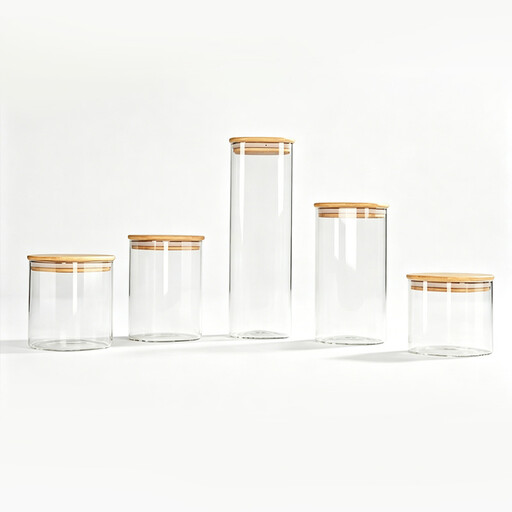
This set of 5 glass jars in various sizes is designed for impeccable kitchen organisation. It's perfect for storing dry goods (pasta, rice, cereal, legumes) while adding a stylish touch to your shelves.
Unlike simple containers, these jars feature airtight lids that effectively protect food from moisture and pests, preserving freshness for much longer.
The transparent glass lets you identify contents and check stock levels at a glance. Their sleek design with wood-style lids fits beautifully into any modern kitchen.
We have curated a complete range of products that meet our quality criteria and the strictest safety standards.
The secret is to disassemble everything. Remove the silicone seal from the lid and wash it separately with hot, soapy water, along with the lid and the container. Make sure every part is completely dry before reassembling. This prevents moisture from getting trapped, which can cause odours and mould.
Absolutely not! This is strongly discouraged, even with borosilicate glass. Such an extreme thermal shock can crack or even shatter the container. The correct method is to let the dish thaw for a few hours in the refrigerator or at room temperature before placing it in a preheated oven.
It all depends on the material and how you care for it. A well-maintained glass or stainless steel container can last for years, or even a lifetime. High-quality plastic models can last for several years, but it's often the lids and seals that wear out first. Inspect them regularly to ensure the seal is still effective.