
Livraison le jour même ou le lendemain

Qualité garantie

Débloquez vos offres de bienvenue: Livraison GRATUITE | Jusqu'à -80 % | 30 jours d'essai gratuits à JoyPlus
Téléchargez l'application
A good food storage container is an indispensable partner for a well-organised kitchen. It preserves the freshness of your food, reduces waste, and simplifies daily meal preparation. The problem? The market is saturated with promises that are rarely kept. A container that leaks in your bag, plastic that warps in the heat, lids that go missing... these daily frustrations are, however, avoidable. As the Head of Product Recommendations at Joybuy, my mission is to help you see clearly, beyond the marketing slogans.
Before you start shopping, let's review the most common pitfalls:
Making the right choice is simply a matter of understanding a few key criteria. Once you've decoded these technical aspects, you can select a model that will serve you well for years to come.
The choice of material is crucial and depends primarily on your habits.
A truly airtight food container relies on a winning combination: a robust locking mechanism (most often with clips) and a quality sealing gasket, usually made of silicone. A good gasket should be removable for deep cleaning, which is essential to prevent bacterial growth. Systems with four side clips are often a sign of reliability, as they ensure uniform pressure around the entire rim.
kitchen storage container and meal prep containerIn a well-organised kitchen, every square inch counts. Therefore, opt for stackable containers whose bases and lids nest perfectly for stable, compact storage. This modularity is the key to a kitchen storage container that doesn't turn your cupboards into chaos. For meal prep enthusiasts, freezer, refrigerator, and microwave compatibility is non-negotiable. It simplifies the entire chain: cooking, storing, and reheating.
Here are a few options that meet specific needs, taking into account our criteria for quality and practicality.
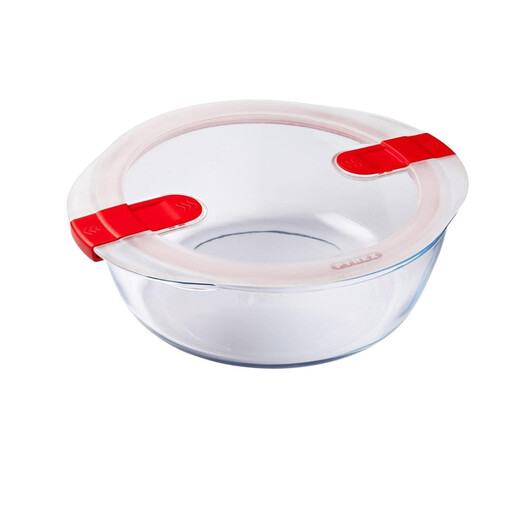
Why we love it: This large glass dish is designed for the complete meal prep cycle: cook a family-sized meal in the oven, store it in the fridge, and then reheat it directly in the microwave. A huge time-saver that also reduces washing-up.
It solves the versatility puzzle. Its borosilicate glass body is oven-safe (without the lid), while its vented lid is specially designed for safe and healthy reheating in the microwave.
Its large 2.3 L capacity is perfect for saucy dishes or bakes. The airtight lid with a silicone seal guarantees completely leak-proof transport.

Why we love it: For those looking to move away from plastic, this stainless steel set is the ultimate healthy and durable alternative. The food-grade 316 stainless steel resists corrosion and retains absolutely no odours.
It knocks out the problem of material wear and tear. Unlike plastic, stainless steel doesn't stain, warp, or absorb odours, giving it a virtually unlimited lifespan.
The set of three sizes (600 ml, 1100 ml, 2200 ml) offers maximum flexibility for storing leftovers, snacks, or full meals. The entire set is freezer and dishwasher-safe.
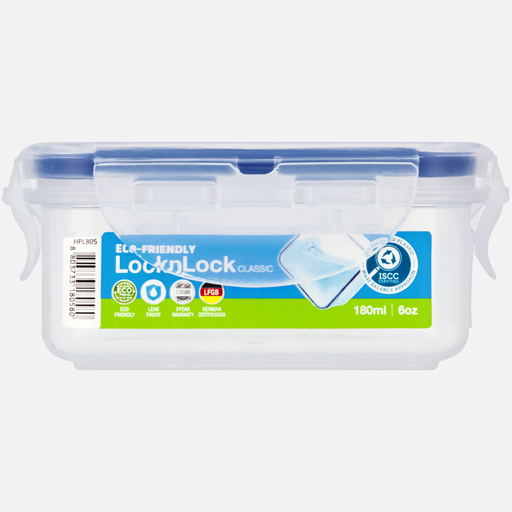
Why we love it: Its small size is perfect for kids' snacks, salad dressing, a portion of baby food, or small leftovers. Lightweight and sturdy, it slips into any bag with zero risk of leaks.
It puts an end to false promises of being leak-proof. Its patented 4-clip locking system and hollow-centre silicone seal guarantee a 100% airtight closure, even with liquids.
Made from BPA-free polypropylene, it is microwave-safe (with the lid open), freezer-safe, and dishwasher-safe. An ultra-practical, everyday all-rounder.
Discover our complete selection of products that meet our strict selection criteria and current safety standards.
The simplest and most reliable test: fill it with water, close it, then shake it and turn it upside down. If not a single drop escapes, you've got a winner. Also, be sure to inspect the silicone gasket: it should be flexible and fit perfectly into the groove of the lid.
Absolutely not. It is imperative to check the manufacturer's pictograms. Only containers displaying the dedicated symbol (often wavy lines) are compatible. In any case, it is recommended to remove the lid or open its vent before reheating. This allows steam to escape and prevents any risk of over-pressurisation. Finally, always ensure the container is certified BPA-free.
To maximise their lifespan, washing them after each use is fundamental. For a flawless clean, remember to remove the silicone gasket from the lid to wash it separately. Let all components air dry completely before reassembling and storing them. A little tip to prevent plastic lids from warping: always place them on the top rack of the dishwasher.