
Same-day & Next-day Delivery

Quality Guaranteed

Unlock Your Welcome Offers: FREE Delivery | Up to 80% OFF | Free 30-day JoyPlus trial
Download the APP
Meal prep, the art of preparing your meals in advance, can quickly turn into a nightmare if you're poorly equipped. Sauce leaking in your bag, food losing its freshness within 24 hours, a stack of containers that are impossible to pile up in the cupboard... These daily hassles are not only frustrating, but they also come at a cost.
As a product expert for the Joybuy editorial team, my mission is to help you navigate the jungle of options. Before you rush out to buy the first model you see, let's review the pitfalls to avoid and the criteria that truly make a difference.
The market is flooded with options, but they are far from being created equal. Here are three classic mistakes to avoid.
food container that often ends up in the trash.kitchen storage cupboards into total chaos.To ensure you're investing in containers that will last, focus on a few key technical points.
The choice of material directly impacts the use, durability, and hygiene of your food storage container.
A food container worthy of the "airtight" label relies on two key elements:
A good meal prep container should simplify your life. Always check the pictograms or manufacturer's instructions for compatibility with:
For maximum efficiency, some people complement their setup with a multi-cooker, which is ideal for cooking in large batches before storing the leftovers directly.
Rather than an exhaustive list, here are a few options that cater to specific user profiles, based on the objective criteria we've just discussed.

Profile: You're looking for maximum efficiency: cooking, storing, reheating, and even serving in a single dish. Versatility is key to optimising your time in the kitchen.
Its borosilicate glass body is oven-safe and resists stains and odours. The lid with a steam vent is designed for clean microwave reheating, overcoming the pitfall of limited versatility.
Cook-to-store versatility: Goes from the oven to the freezer. Large capacity (2.3 L) is ideal for family meals or *batch cooking*.

Profile: You prioritise healthy, robust materials. Wary of plastic and the fragility of glass, you're looking for a nearly indestructible solution for daily transport and storage.
Food-grade 316 stainless steel is the perfect answer to the pitfall of materials that age poorly. It is impervious to stains, retains no odours, and won't degrade over time.
Unbreakable and hygienic: Ideal for worry-free packed lunches. Set of 3 sizes (600 mL, 1100 mL, 2200 mL) to suit all needs.
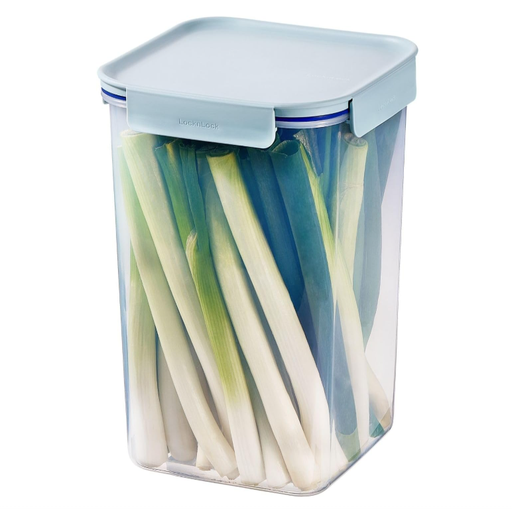
Profile: For you, space optimisation is paramount. You need large-capacity containers for dry storage (pasta, flour, cereal) or large quantities of leftovers, with a design that maximises cupboard space.
Its modular, stackable design counteracts the pitfall of containers cluttering your cupboards. The LocknLock closing system is a benchmark for airtightness, ensuring long-term preservation of dry foods.
Space optimisation: Square, stackable design. Very large capacity (4 L) and a locking system renowned for its airtight seal.
We have curated a complete selection of products that meet our demanding selection criteria and current safety standards.
1. How can I tell if a container is truly airtight before buying it? Look for a four-sided locking clip system and a thick, visible silicone seal. Brands known for their leak-proof performance, like LocknLock or Pyrex with their dedicated ranges, are often safe bets.
2. Can all glass containers go in the oven? No, this is a common pitfall. Only borosilicate glass is designed to withstand high oven temperatures. Standard soda-lime glass (used for drinking glasses) can shatter. Always check for an "oven-safe" pictogram and systematically remove the plastic lid.
3. How do you remove stubborn odours from plastic containers? For a quality plastic, a run through the dishwasher is often enough. If an odour persists, fill the container with a mixture of warm water and baking soda, let it sit for several hours, then rinse. Avoid storing very pungent foods for long periods in plastic containers if you are sensitive to this issue.