
Livraison le jour même ou le lendemain

Qualité garantie

Débloquez vos offres de bienvenue: Livraison GRATUITE | Jusqu'à -80 % | 30 jours d'essai gratuits à JoyPlus
Téléchargez l'application
A well-organised kitchen is a matter of common sense… and the right storage containers. However, choosing the ideal food storage container can quickly become a headache. Between unkept promises of an airtight seal and materials that degrade in the blink of an eye, it's easy to make a purchasing mistake. As the Head of Product Recommendations at Joybuy, I'm breaking down the market for you to help you avoid disappointment. My goal: to help you choose products that deliver on their promises, far from the siren song of marketing.
Before you pull out your credit card, watch out for these recurring problems that too often turn a good investment into a useless gadget after just a few months.
To make the right choice, focus on these three technical points. They are your guarantee of finally achieving effective kitchen storage.
Glass or plastic, the choice of material determines everything: its use, lifespan, and ease of maintenance.
A container's seal is all about its lid.
The number one enemy of organisation? Wasted space. Favour square or rectangular shapes, which line up perfectly in cupboards, unlike round containers. The ideal solution is a well-designed set with containers of various sizes whose lids are interchangeable or, at the very least, stack stably.
To help you see these criteria in action, here are a few options tailored to specific user profiles.

Why it's a great choice: This set is tailor-made for those who prep their meals for the week. The borosilicate glass allows you to cook in the oven, store in the freezer, and reheat in the microwave (without the lid). The clip-on lids guarantee transport without the slightest leak.
The borosilicate glass eliminates the risk of breakage from thermal shock, and the clip system with a gasket ensures a foolproof seal, unlike simple press-on lids.
Total versatility: oven, microwave, freezer, and dishwasher safe. An all-in-one set for every use case.
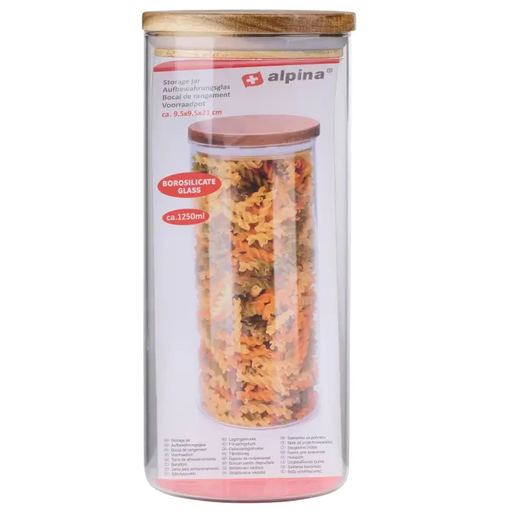
Why it's a great choice: For those who love to combine aesthetics with order in their pantry. The combination of glass and an acacia wood lid creates a harmonious look, while their square shape optimises every square inch of your shelves.
Its square shape is designed for perfect alignment, putting an end to the wasted space typical of round jars. Its use is clearly defined for dry goods, with no false promises of being leak-proof for liquids.
Elegant design and an optimised shape for dry food storage, combining aesthetics and practicality.

Why it's a great choice: This complete 12-piece set offers a versatile storage solution at an affordable price. The BPA-free plastic is lightweight, durable, and suitable for a multitude of foods, from leftovers to dry ingredients. The different sizes cover most everyday needs.
By offering a complete and coherent food storage container set, it avoids the trap of multiple, mismatched purchases. The quality plastic is designed for daily use without degrading prematurely.
Excellent value for money and versatile sizes for a complete and instant kitchen storage solution.
We have curated a complete range of products that meet our quality criteria and current safety standards.
No, and this is a common mistake. While plastic lids (especially those with a gasket) are often sold as dishwasher-safe (top rack only), hand washing is still preferable to preserve the gasket in the long run. As for wooden or bamboo lids, it's simple: they should never be put in the dishwasher. The hot water and detergent will cause them to swell, crack, or grow mould without a doubt.
The fundamental difference lies in the type of glass. A glass dish with a lid designed for the oven is made of borosilicate glass, a material treated to withstand major thermal shocks without shattering. A standard glass jar, on the other hand, is usually made of soda-lime glass: it lacks this resistance and could crack if you move it from the fridge to the oven, for example.
For a utensil holder, especially if it's made of metal, maintenance is simple but crucial. Wash it by hand with warm water and mild soap, avoiding abrasive sponges that would scratch the surface. The secret to its longevity? Dry it completely and immediately after each wash to prevent rust or water spots from forming. This will help it maintain its shine on your countertop.