
Livraison le jour même ou le lendemain

Qualité garantie

Débloquez vos offres de bienvenue: Livraison GRATUITE | Jusqu'à -80 % | 30 jours d'essai gratuits à JoyPlus
Téléchargez l'application
A well-organised kitchen and an effective fight against food waste start with one simple step?: choosing the right food storage container. But with an overwhelming number of options available, it's easy to fall into common traps. A lid that warps, plastic that stains after one use with tomato sauce, or an airtight promise that vanishes after a few washes… Fortunately, these disappointments are avoidable.
As a product recommendation expert at Joybuy, my role is to help you cut through the noise. Let's forget the marketing jargon and focus on the criteria that truly matter. Follow this guide to avoid the pitfalls and select containers that will last you for years to come.
Before you check out, learn to spot the flaws that can render a container useless in just a few months.
To make the right choice, there are three criteria to scrutinise.
The choice of material determines the use, lifespan, and hygiene of your airtight food container.
True airtightness relies on a winning combination?: a quality, removable silicone seal for leak-proofing and a sturdy clip-lock system that secures the lid evenly. A good seal should be easy to remove for deep cleaning, which is essential to prevent mould growth.
Before buying, take stock of your needs?:
lunch box)?: Lightweight and a leak-proof seal are non-negotiable.To illustrate these criteria, here are a few products that tick all the boxes, tailored for specific user profiles.

Why we chose it : This borosilicate glass container set is designed for those who prep their meals for the week. The different sizes allow for portioning main dishes and sides, while the glass ensures healthy reheating in the microwave without transferring flavours or particles.
“ False versatility. ” These containers are truly designed for the full cycle : freezing, transport (thanks to the leak-proof clip-lock), and reheating.
The hygienic and durable borosilicate glass. The 10-piece set provides a turnkey solution for weekly organisation.
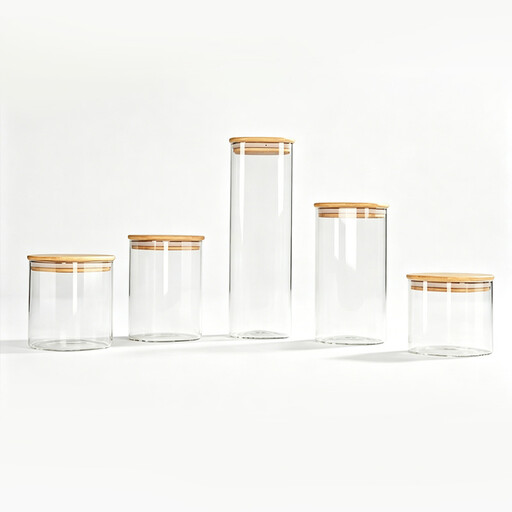
Why we chose it : For those who want a pantry that is as beautiful as it is practical. These transparent glass jars allow you to identify contents (pasta, rice, legumes) at a glance, while their wood-style lids add a modern decorative touch.
“ Unsuitable materials ” for dry storage. The perfectly inert glass protects food from moisture without ever retaining odours, not even from coffee or spices.
The set of 5 different sizes helps create a harmonious and visually pleasing pantry organisation.

Why we chose it : For those aiming for “ zero plastic ” with a virtually indestructible solution. Stainless steel is perfect for kids' snacks, picnics, or storing leftovers in the fridge. It's the ultimate sustainable investment.
“ Degradation ” and “ pseudo-airtightness. ” Stainless steel doesn't break, stain, or warp. Its performance remains intact year after year.
Unbreakable and ultra-hygienic. The 316 stainless steel used here offers far superior corrosion resistance compared to standard stainless steel.
We have curated a full range of products that meet our selection criteria and current safety standards.
Look for the official pictogram?: a logo with waves inside a square. Also, prioritise PP (polypropylene, code 5) plastic, which is more heat-stable. In any case, avoid microwaving very fatty or sugary foods at full power and always vent the lid to let steam escape.
No, “?unbreakable?” is a strong word. They are primarily highly resistant to thermal shock?: you can move a container from the fridge to the microwave without fear of it cracking, unlike standard glass. However, they remain vulnerable to mechanical shocks (especially drops).
To ensure their longevity, remove the seal from the lid after each use and wash it by hand with soapy water. Let it air-dry completely before putting it back. Avoid repeatedly running it through the dishwasher on high heat, as this can warp it over time.